

The Architecture of Social Connection
Golden Hook & Introduction
SECTION
Nova: We often chase connection, trying to earn it, negotiate for it, or even demand it. But what if the most powerful social bond you could ever forge started with absolutely zero expectation? Not even a 'thank you'?
Atlas: Whoa. That sounds… counter-intuitive, to say the least. Zero expectation? In a world where every interaction feels like a transaction, that's a big promise. It almost sounds too good to be true.
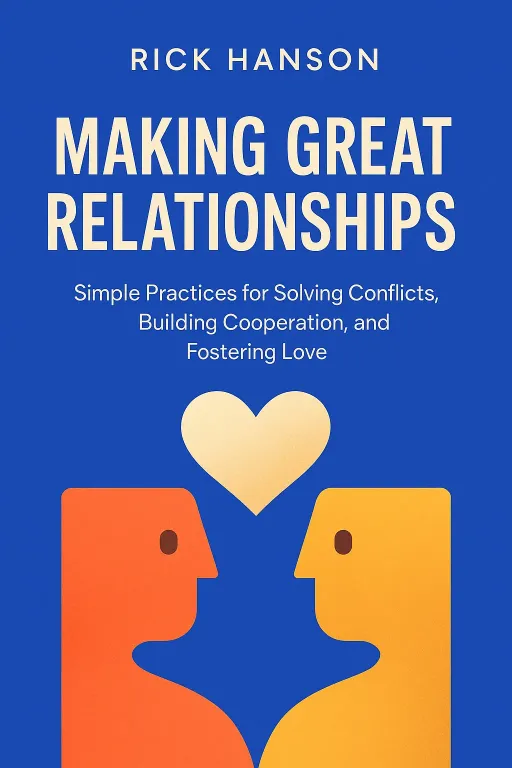
Nova: It is a big promise, Atlas, and it's backed by some fascinating insights. Today, we're diving into two brilliant minds to unpack this idea: Rick Hanson, from his acclaimed work "Making Great Relationships," and Marc Reklau, author of the highly practical guide "How to Become a People Magnet." Hanson, a seasoned neuropsychologist, often grounds his relationship advice deeply in brain science and personal well-being, focusing on practical applications of neuroscience. Reklau, on the other hand, is known for his incredibly actionable, concise strategies for social success, often distilled into straightforward, powerful steps. They offer us a powerful, combined perspective on building truly meaningful connections.
Atlas: So we're talking about more than just being "nice," then. This sounds like a strategic, almost scientific approach to human interaction. For someone who values efficiency and impactful learning, that's intriguing. How do we get from "zero expectation" to "powerful social bond"?
Nova: Exactly. It's about understanding the mechanics of connection, both within ourselves and with others, and how those mechanics can be leveraged for genuine, lasting impact. And to truly grasp that, we need to start with the concept Rick Hanson introduces: 'unilateral virtue.'
Core Topic 1: Unilateral Virtue & Personal Peace
SECTION
Nova: Hanson posits that we can, and should, act with what he calls 'unilateral virtue.' This means choosing to act with integrity, kindness, and respect, regardless of how others are behaving. It's not about being a doormat, or passively accepting poor treatment. It's fundamentally about protecting your own inner peace and maintaining your personal ethical compass, your core values.
Atlas: Okay, hold on. That sounds incredibly difficult. Especially for anyone navigating complex team dynamics or high-stakes client relationships. If someone is being difficult, or even unfair, my first instinct isn't usually to think, "How can I maintain my inner peace with unilateral virtue?" It’s more like, "How do I deal with this problem, assert myself, and protect my boundaries so I don't get taken advantage of?" That feels more pragmatic.
Nova: And that's a completely natural and valid reaction. Our brains are wired for fairness, for reciprocity, and for self-preservation. But Hanson isn't suggesting you ignore problems or become a pushover. Instead, he’s highlighting a profound internal shift. Imagine a situation: You're in a crucial team meeting, deadlines are looming, and a colleague consistently interrupts you, or perhaps takes credit for an idea you floated earlier. The traditional response might be anger, frustration, or a direct confrontation, which can often be emotionally draining.
Atlas: Which often escalates things, or at the very least, leaves you simmering for the rest of the day, right? And that simmering is a huge time and energy sink, especially when you're already struggling with limited time.
Nova: Precisely. That simmering, that internal agitation, it costs you dearly. It drains your mental energy, impacts your focus on other tasks, and can even spill over into other interactions, making you less effective overall. Unilateral virtue is about recognizing that you can't control their behavior, but you absolutely control your. It's choosing to respond with calm, clarity, and integrity – not necessarily because they deserve it, but because deserve your own peace and mental bandwidth. You're making a conscious decision to not let their actions dictate your internal state.
Atlas: So you're saying, in that meeting, instead of getting defensive or angry, I pause, acknowledge the feeling, and then choose a constructive response, like, "Thanks for building on that point, Sarah, which I actually introduced earlier." But the crucial part is that internally, I’m not letting her behavior hijack my emotional state, and I'm not carrying that resentment with me for hours?
Nova: That’s a fantastic example. It’s about detaching your internal well-being from their external actions. Hanson emphasizes that this isn't about being naive; it’s about active self-preservation and strategic emotional regulation. When you act with integrity, even when others don't, you prevent their chaos from becoming chaos. You maintain your personal ethical baseline, which is a huge source of inner strength, mental clarity, and sustained energy, especially when you're under pressure and time is a luxury. Think of it as a form of cognitive load reduction. You're not spending precious mental cycles on unproductive anger or rumination.
Atlas: I can absolutely see how that would preserve mental energy. For anyone who feels constantly drained by workplace politics or challenging personalities, this sounds like a superpower. It's about taking back control of your emotional landscape, rather than letting others dictate it. It's a way to navigate transitions and challenges with more clarity, which is a major goal for many of our listeners.
Nova: It truly is a proactive mindset shift. You're not waiting for others to change for you to feel at peace or to be productive. You're generating that peace and focus from within, allowing you to engage with challenges from a place of strength and intentionality, not reaction or depletion. And this internal strength, this unilateral virtue, sets the perfect stage for our next concept: how that intentional, unburdened action can actually transform your external world.
Core Topic 2: The Law of Reciprocity & Unilateral Kindness
SECTION
Nova: So, with that inner foundation of unilateral virtue—that personal integrity and peace—we can now look at Marc Reklau’s compelling insights into the 'law of reciprocity.' This is a fundamental principle in social psychology, demonstrating how small, unexpected acts of kindness can trigger deep neurological bonds. Reklau's work essentially shows us that when you give genuinely, without expectation, you're not just being "nice" in a passive way; you're initiating a powerful, often subconscious, cycle of connection that literally changes brain chemistry.
Atlas: Okay, so we're moving from protecting your internal state to actively influencing external dynamics. But how does a "small act of kindness" actually create a "deep neurological bond"? That sounds a bit like magic, or at least, overly optimistic for a busy, often cynical world. I mean, I can give a compliment, but how does that translate to a 'neurological bond' when everyone's just trying to hit their KPIs?
Nova: It’s not magic, Atlas, it’s rooted in neuroscience! When someone receives an unexpected act of kindness – a genuine compliment, a small favor, a thoughtful gesture – their brain often releases oxytocin. This isn't just some fluffy "love hormone"; oxytocin is a powerful neuromodulator that fosters trust, bonding, and prosocial behavior. It literally makes us feel more connected and more inclined to reciprocate. It’s like a chemical handshake, a biological signal that says, "This person is safe, this person values me."
Atlas: So, you're saying a simple, genuine compliment isn't just polite; it’s a direct hit to the brain’s bonding centers? That's incredible. How does that work if you're slammed for time and just trying to get through the day? And does it have to be a big, grand gesture?
Nova: Not at all. And that's Reklau's genius. He emphasizes the acts. Let's use the takeaway example: offering a genuine compliment to a colleague without expecting anything in return. Imagine you notice a colleague, Sarah, has been doing excellent work on a project, perhaps burning the midnight oil. Instead of just thinking it, or waiting for a formal review, you walk over and say, "Hey Sarah, I just wanted to say, I was really impressed with how you handled that client presentation yesterday. Your clarity and confidence were outstanding, and it really made an impact."
Atlas: And that's it? No follow-up, no "can you help me with something now?" Just a pure, unadulterated positive observation?
Nova: Exactly. No strings. What happens? Sarah might be surprised, maybe a little flattered, certainly appreciated. Her brain gets that little oxytocin boost. She feels seen, valued, and genuinely appreciated for her effort. This isn't about her immediately complimenting you back, or owing you a favor. It's about a subtle but powerful shift in her perception of you, and of the overall team dynamic. That one act of "unilateral kindness" has now subtly strengthened a bond, increased trust, and made the overall atmosphere just a little bit warmer, a little more collaborative.
Atlas: So it’s not about immediate quid pro quo. It’s about building social capital, almost invisibly, which then creates a more supportive and productive environment over time. For a pragmatic learner struggling with time, this is gold. It’s a low-cost, high-return investment in social well-being. It’s efficient emotional intelligence, and it directly impacts team dynamics, which is crucial for career growth.
Nova: It absolutely is. And the beauty of 'unilateral kindness' is that it perfectly marries with 'unilateral virtue.' You act from a place of inner peace and integrity, choosing to be kind not because you need something, but because it aligns with your values and you understand its inherent power. And in doing so, you inadvertently trigger these powerful neurological responses that foster deeper, more authentic connections, creating a positive feedback loop. It’s a truly virtuous cycle that benefits everyone, starting with you.
Synthesis & Takeaways
SECTION
Nova: So, when we combine these two powerful ideas—Hanson’s unilateral virtue and Reklau’s law of reciprocity—we get a truly transformative approach to social connection. Unilateral virtue is the inner strength, the personal philosophy that allows you to maintain your peace, your focus, and your integrity, even amidst relational chaos and challenges. It's your shield, your anchor.
Atlas: And unilateral kindness is the proactive force, then? Not for attacking, but for strategically forging new paths and strengthening existing ones, by leveraging the very chemistry of human connection. It's about taking responsibility for your own emotional state and then using that clarity and intention to positively influence the world around you. It's a profound strategy for personal resilience and actively building stronger, more positive connections, even when you're short on time and energy.
Nova: Exactly. You don't need grand gestures; you need genuine, consistent, and action. You initiate the positive cycle. You control the input. This empowers you, gives you agency, and ultimately reduces the mental load of constantly reacting to others. It allows you to be the architect of your own social landscape.
Atlas: That’s incredibly empowering. For our listeners who are focused strategists, driven innovators, and pragmatic learners, the actionable insight here is clear: cultivate that inner peace, that unilateral virtue, and then consciously deploy small, genuine acts of unilateral kindness. It’s about taking control of your social environment by first taking control of yourself.
Nova: Absolutely. So, practice 'Unilateral Kindness' today. Offer a genuine compliment to a colleague, a team member, or even a service person, without expecting anything in return. Just observe how it feels to give, and watch for the subtle, positive shifts it creates. You might be surprised by the deep neurological bonds you trigger, and the positive ripple effect it has on your day, and theirs. It’s a simple act with profound impact.
Atlas: That’s a powerful challenge. A small investment for a potentially huge return in human connection and personal peace. I'm definitely taking that to heart.
Nova: This is Aibrary. Congratulations on your growth!









