

Building Influence and Mastering Interpersonal Dynamics
Golden Hook & Introduction
SECTION
Nova: Atlas, quick game for you. I'm going to throw out a scenario, and you tell me: is this influence, or is it manipulation?
Atlas: Ooh, I like this. High stakes, right out of the gate. Hit me.
Nova: Alright. You convince your team to work late on a Friday, promising them pizza and eternal gratitude, knowing full well the deadline isn't until Monday, but you want to impress the boss. Influence or manipulation?
Atlas: Oh, that's a classic. Definitely leaning manipulation. The "eternal gratitude" is a nice touch, though. Almost had me.
Nova: Almost! Okay, how about this one: You consistently deliver high-quality work, you're always prepared, and you offer helpful insights in meetings. Over time, your colleagues naturally start coming to you for advice and respecting your opinions. Influence or manipulation?
Atlas: That... that feels like pure influence. That's earned. That's building trust.
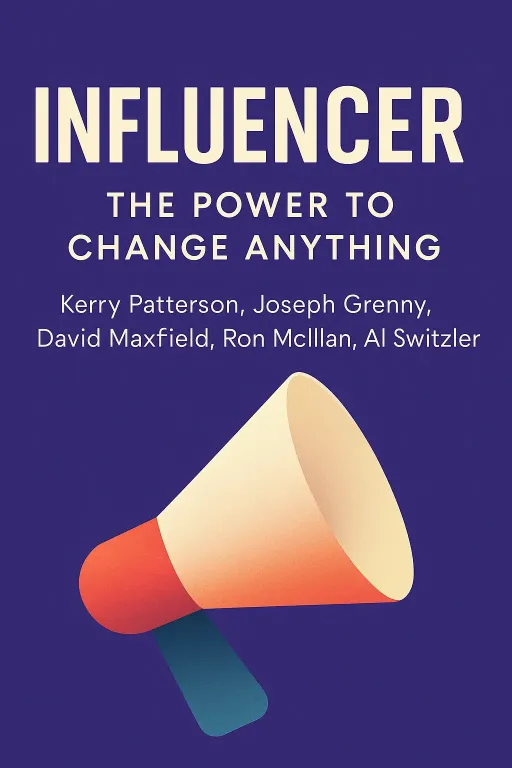
Nova: Exactly! And that distinction, Atlas, between truly influencing and merely manipulating, is at the heart of what we're unpacking today. We're diving into two brilliant books: by Kerry Patterson, Joseph Grenny, David Maxfield, Ron McMillan, and Al Switzler, and Marc Reklau's incredibly practical guide,.
Atlas: I love that pairing. Because one feels very strategic, almost like a science, and the other sounds like it's all about genuine connection. And often, those two ideas feel like they're at odds.
Nova: They can, can't they? But the truth is, the most impactful people, whether they're leading a company or just trying to get their kids to eat their vegetables, master both. Patterson and his co-authors, known for their groundbreaking work on, really dissect the mechanics of behavioral change, showing how influence isn't just charisma, but a data-driven process. And then Reklau gives us the daily playbook for the human touch.
Atlas: So this isn't about becoming some smooth operator, then. This is about being genuinely effective while staying true to yourself. I imagine a lot of our listeners, especially those driven by impact and seeking growth, are constantly trying to navigate that line in their professional lives.
Strategic Influence: The Six Sources of Power
SECTION
Nova: Precisely. Let's start with. The core premise is that to change deeply ingrained behaviors and achieve significant, lasting results, you need to tap into six sources of influence. Most of us, when we try to influence someone, whether it's a colleague or a research partner, we usually just lean on one or two sources. We try to motivate them, or we give them information.
Atlas: Right, like, "Here's why this project is important!" or "You'll get a bonus if you finish this!" I mean, that's usually my go-to. What kind of sources are we talking about beyond that?
Nova: Well, they categorize them into three pairs: personal, social, and structural, each with a motivation and an ability component. So, for personal motivation, it's about making the undesirable desirable. For personal ability, it’s about providing skills. But where it gets really interesting is the social and structural elements.
Atlas: Oh, I see. So it's not just about what think or what can do. It's about the environment around me.
Nova: Exactly. Think about a classic example that Patterson and his team often cite: reducing hospital-acquired infections. This is a deeply ingrained behavior among busy healthcare professionals. You can tell them to wash their hands more, you can teach them the proper technique, but often, that's not enough.
Atlas: No, because people are under pressure, they forget, they see others not doing it. It's a system problem, not just a personal one.
Nova: Right. So, the approach would look at the social sources. What are their peers doing? If a respected colleague consistently washes their hands, that creates social pressure and a new norm. What about social ability? Can we make it easier for them to get feedback from peers? Then there are the structural sources.
Atlas: Structural? Like, making the soap dispensers easier to access?
Nova: You got it! That’s structural ability – making it easy to do the right thing. And structural motivation could be something like publicizing infection rates, creating a healthy competition between departments. When you combine all six sources, you create an environment where the desired behavior isn't just motivated, it's,, and. It's a complete ecosystem shift.
Atlas: Wow. That's a profound shift in thinking. It’s not just about convincing someone; it’s about engineering the conditions for them to succeed. For our listeners who are leading teams, or trying to implement new protocols in a research collaboration, this is gold. It means looking beyond just telling people what to do.
Nova: It means asking, "What are all the forces at play here, and how can I activate them in concert?" It makes influence a systemic, almost architectural, endeavor. But you brought up a great point earlier: isn't there a risk here of just becoming overly strategic, losing the human touch?
Genuine Connection: Becoming a People Magnet
SECTION
Nova: That's a fantastic point, Atlas, because while influence is powerful, if it lacks genuine connection, it can feel... hollow. Or worse, manipulative. Which brings us to Marc Reklau's incredibly practical guide,.
Atlas: I like the sound of that. "People Magnet." It implies an effortless attraction, not a forced one. So this is less about the grand strategy and more about the daily interactions? Give me the quick hits, the stuff I can use.
Nova: Absolutely. Reklau’s book is filled with actionable, straightforward advice. He focuses on fundamental social skills that, frankly, many of us overlook in our busy, digitally-driven lives. Things like genuine active listening, remembering names, asking open-ended questions, and truly being present in a conversation.
Atlas: Okay, so, like, not just waiting for my turn to talk? That’s harder than it sounds sometimes.
Nova: It is! But when you truly listen, you make the other person feel heard and valued. Reklau emphasizes that connection starts with making others feel good about themselves. It’s about curiosity, about giving sincere compliments, and maintaining positive body language. It's the small, consistent gestures that build trust over time.
Atlas: So, if Patterson is about the complex behavioral architecture, Reklau is about the bricks and mortar of everyday human interaction. It sounds almost like the opposite approach, in a way. One is big picture, the other is micro-level. How do they even fit together?
Nova: That’s the magic! Think about it: if you're trying to influence a colleague to adopt a new research methodology, Patterson's framework helps you understand all the levers: what motivates them personally, what social norms are at play, what structural hurdles exist. But Reklau's principles are what make that influence.
Atlas: You mean, if I'm trying to get someone to change, I can't just come in with my six sources of influence and expect them to comply. I need to have built a foundation of trust first. I need to actually them, or at least respect them, and they need to feel the same way about me.
Nova: Exactly! If you've been genuinely present in your conversations, remembered their kids' names, offered sincere praise, and truly listened to their concerns, then when you come to them with a proposal for change, you’re not just a strategic operator. You’re a trusted ally. Your influence becomes amplified because it’s built on a bedrock of genuine connection.
The Art of Blending: Influence with Integrity
SECTION
Nova: And that, Atlas, is precisely the deep question we're trying to answer today: how do you intentionally combine strategic influence with genuine connection to elevate your impact? It's about influence with integrity.
Atlas: So it's not about being a chameleon, changing who you are, but about being genuinely effective genuinely yourself? Because that's what a pragmatic learner, a focused achiever, really wants: to make an impact without feeling like they're selling out.
Nova: Absolutely. It's about understanding that the "soft skills" of connection are actually the bedrock of "hard influence." Imagine a project leader who needs their team to embrace a challenging new software. Following Patterson, they'd identify the six sources: perhaps creating a compelling vision, providing extensive training, showcasing early adopter success stories, setting up peer mentoring, streamlining access to the software, and tying its use to project milestones.
Atlas: That’s a comprehensive plan. But what if the team already distrusts leadership, or feels unheard?
Nova: That's where Reklau steps in. The leader who genuinely connects has already built rapport. They’ve actively listened to team concerns, remembered individual preferences, acknowledged past frustrations, and shown genuine appreciation for their efforts. So when they roll out this multi-pronged influence strategy, it's not perceived as a top-down mandate. It's seen as a collaborative effort from someone who genuinely cares about their success.
Atlas: That’s a huge difference. The influence becomes almost invisible because it feels like a natural extension of a positive relationship. It's not just getting things done, but building lasting relationships and a reputation of trust. This is where the impact really comes in, because it compounds over time.
Synthesis & Takeaways
SECTION
Nova: It absolutely does. The synergy between these two approaches is where true mastery lies. It's about using the science of influence to create positive change, but always, always, always grounding it in the art of genuine human connection.
Atlas: So, for our listeners who are ready to put this into practice, the tiny step this week is to identify one professional relationship they wish to strengthen.
Nova: Yes, just one. And then, apply either a specific influence technique from Patterson's work—maybe identifying a specific social or structural lever you can pull—or a connection-building strategy from Reklau's advice, like truly actively listening in your next interaction with them.
Atlas: That feels incredibly manageable. It’s not about overhauling your entire network, but making one intentional, impactful move.
Nova: Exactly. Because small insights add up, and consistent, focused action creates monumental change. The deep question for all of us is: how can you intentionally combine strategic influence with genuine connection to elevate your impact in your professional network and research collaborations? It’s a powerful question, and the answer, we believe, lies in this beautiful blend.
Atlas: What a powerful way to think about our interactions. It’s not just about what you, but how you with people.
Nova: And the amazing thing is, both of these books give you the tools to be both strategically effective and genuinely human.
Atlas: So, go forth, influence with integrity, and build those magnetic connections.
Nova: This is Aibrary. Congratulations on your growth!









