

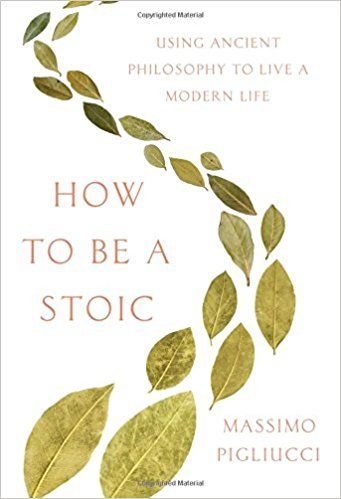
How to Be a Stoic
Using Ancient Philosophy to Live a Modern Life.
Introduction: The Scientist's Guide to Ancient Resilience
Introduction: The Scientist's Guide to Ancient Resilience
Nova: Welcome to the show. We’re diving into a philosophy that’s older than Christianity, yet somehow, it’s become the secret weapon for Silicon Valley CEOs and stressed-out millennials alike. I’m talking about Stoicism, specifically through the lens of Massimo Pigliucci’s essential guide, "How to Be a Stoic."
Nova: : That’s right, Nova. And what makes Pigliucci’s book so compelling is his background. He’s not just some armchair philosopher; he’s a former evolutionary biologist, a scientist who spent decades studying complex systems. So when he turns to ancient wisdom, he’s looking for repeatable, testable frameworks for living, not just flowery prose.
Nova: Exactly. The hook of the book is that Pigliucci frames his journey as a dialogue with the great Stoic master, Epictetus. It’s like a modern student asking the ancient slave-turned-teacher how to handle traffic jams, toxic bosses, and existential dread. It grounds the philosophy immediately.
Nova: : It strips away the academic dust. We’re not just reading about virtue; we’re learning how to virtue. But before we get into the exercises, I want to know, why did a man steeped in empirical science like Pigliucci feel the need to turn to a philosophy developed two millennia ago?
Nova: That’s the perfect starting point. Pigliucci felt that modern life, despite all its technological advancements, was leaving people emotionally bankrupt. He saw a gap between what we and how we. He realized that Stoicism offered a complete operating system for human flourishing, one that didn't rely on external validation or fleeting happiness. It’s about building an internal fortress.
Nova: : A fortress against what, exactly? Because in our world of constant connectivity, it feels like the external world is always winning. I’m eager to see how he bridges that gap between the Roman Empire and my overflowing inbox.
Nova: We’re about to find out. We’ll explore the core principle that underpins everything, the practical mental workouts he recommends, and why Pigliucci thinks Stoicism is superior to some of the fluffier self-help out there. Let’s start with the bedrock of the entire system.
Nova: : Lead the way, Nova. I’m ready to build that fortress.
Pigliucci's Unique Perspective
The Scientist Meets the Sage: Why Epictetus Leads the Way
Nova: Chapter one in Pigliucci’s journey is understanding his choice of guide. While Marcus Aurelius is the celebrity Stoic, famous for his private, Pigliucci leans heavily on Epictetus, the former slave whose teachings were recorded by Arrian in the and the.
Nova: : That’s a fascinating choice. Marcus Aurelius feels so regal, so burdened by empire. Epictetus, on the other hand, was literally property. Doesn't that make his advice feel more universally applicable, less dependent on having vast resources or power?
Nova: Precisely. Pigliucci highlights that Epictetus is the ultimate pragmatist. He had nothing to lose, which forced him to focus only on what was truly his: his mind and his choices. Pigliucci, coming from a scientific background, respects this radical focus on the controllable variables. He notes that Epictetus’s approach is less about lofty contemplation and more about daily, gritty training.
Nova: : I remember reading that Pigliucci contrasts this with the more literary style of Seneca. Seneca is great for eloquent prose, but Epictetus gives you the direct commands, the philosophical boot camp, right?
Nova: Absolutely. Pigliucci sees Seneca as perhaps too comfortable, too wealthy, which sometimes colors his advice on poverty or hardship. Epictetus, however, was stripped bare. He teaches that true freedom isn't about political liberty; it’s about internal sovereignty. Pigliucci emphasizes that Epictetus forces us to confront our own internal slavery to desire and fear.
Nova: : So, Pigliucci, the scientist, respects Epictetus because his philosophy is highly operational. It’s a set of procedures. He’s not just theorizing about the good life; he’s giving you the step-by-step manual for achieving it, regardless of your external circumstances.
Nova: That’s the key takeaway from this section. Pigliucci argues that Stoicism isn't a set of beliefs you adopt; it’s a set of skills you practice. He even mentions that his scientific training helped him appreciate the Stoic emphasis on logic and physics—understanding the nature of the universe is necessary before you can properly manage your reactions to it.
Nova: : That makes sense. You can’t effectively manage your internal world if you don’t have a coherent model of the external world. The Stoic physics, which posits a rational, interconnected cosmos, provides that framework. It tells us that everything happens for a reason, even if that reason is beyond our immediate comprehension.
Nova: And Pigliucci is careful to update this. He doesn't demand we believe in fate in the ancient sense, but he insists we accept the reality of cause and effect, and the inevitability of change. He’s essentially saying: use the best available science to understand the world, and use Epictetus to manage your response to it.
Nova: : It’s a powerful synthesis. The rigor of science married to the resilience of ancient ethics. I feel like we’re ready to move from the 'who' to the 'what.' What is the first, non-negotiable principle that Pigliucci drills into us?
Nova: It’s the concept that separates Stoicism from almost every other philosophy: The Dichotomy of Control. It’s the foundation upon which the entire fortress is built.
What Is Truly Ours?
The Unshakeable Core: The Dichotomy of Control
Nova: The Dichotomy of Control is the first and most crucial lesson Pigliucci extracts from Epictetus: Some things are up to us, and some things are not up to us. Everything else is noise.
Nova: : This sounds simple, but it’s deceptively hard to implement. When I’m stuck in traffic, my immediate reaction is to blame the city planner, the other drivers, the universe! Where does Pigliucci draw the line so clearly?
Nova: He draws the line very precisely. What is up to us are our judgments, our intentions, our desires, and our aversions—essentially, our internal responses and moral choices. What is up to us are our bodies, our possessions, our reputation, the weather, and the actions of other people. Pigliucci stresses that any time we invest emotional energy into the latter category, we are guaranteeing ourselves frustration.
Nova: : So, if I’m worried about a job interview, the outcome—getting the job—is external. But my preparation, my honesty during the interview, and my attitude while waiting for the call—those are internal and controllable. Is that the Pigliucci interpretation?
Nova: That’s the perfect application. He uses the analogy of an archer. The archer controls the practice, the quality of the bow, the aim, and the release of the arrow. That is their domain. The wind, the target moving, whether the arrow hits the bullseye—those are external. The Stoic archer is judged only on the quality of their and, not the result.
Nova: : That’s a massive shift in perspective, especially in a culture obsessed with metrics and outcomes. If I fail, the Stoic framework allows me to say, 'I executed my plan with virtue and diligence; the outcome was indifferent to my moral character.' That must be incredibly freeing.
Nova: It is the source of Stoic tranquility. Pigliucci notes that when we try to control the uncontrollable, we are essentially trying to force the universe to bend to our immediate will, which is hubris. He says, quote, 'If you want to be happy, you must desire that things happen as they do happen, and not as you wish them to happen.' That’s the core discipline of desire.
Nova: : But wait, Nova, doesn't this lead to passivity? If I don't care about the outcome of the election, or whether my favorite sports team wins, am I just checking out of life? I thought Stoics were supposed to be engaged citizens.
Nova: That’s a common challenge, and Pigliucci addresses it head-on. Engagement is controllable; the of that engagement is not. You control your vote, your advocacy, your reasoned argument. You do control whether others listen or how the system ultimately functions. So, you act virtuously in the public sphere, and then you release the outcome to fate. It’s active participation without anxious attachment.
Nova: : So, the goal isn't to stop caring, but to stop over things outside your sphere of influence. It’s about channeling all that anxious energy into focused, virtuous action where it actually matters—your own character development.
Nova: Exactly. Pigliucci frames it as maximizing your internal agency. By rigorously applying this dichotomy, you stop wasting mental energy fighting reality and start using that energy to perfect your own internal responses. It’s the ultimate efficiency hack for the mind.
Nova: : I can see why this concept is so powerful. It’s the filter through which all other Stoic practices must pass. If we’re done with the foundation, I’m ready to look at the tools Pigliucci recommends for actually building on top of it.
Premeditatio Malorum and Negative Visualization
The Toolkit: Spiritual Exercises for Modern Stress
Nova: If the Dichotomy of Control is the foundation, the spiritual exercises are the daily construction work. Pigliucci dedicates significant space to these, framing them as mental training routines, much like an athlete trains their body.
Nova: : The one that always catches people off guard is —the premeditation of evils. In a world obsessed with positive visualization, actively thinking about things going wrong feels counterintuitive, almost inviting disaster.
Nova: Pigliucci argues that this is precisely why it works. It’s stress inoculation. By mentally rehearsing potential setbacks—losing your job, suffering a mild illness, having a difficult conversation—you rob the actual event of its shock value. You’ve already run the simulation.
Nova: : So, it’s not about wishing for bad things; it’s about building emotional shock absorbers. When the inevitable bad thing happens, instead of spiraling into panic, the Stoic response is, 'Ah, I considered this possibility. Now, what is my virtuous response in this situation?'
Nova: Exactly. Pigliucci points out that the Stoics preferred this preparation over the modern tendency to suppress negative thoughts. Suppression just makes the negative thought stronger when it inevitably breaks through. By confronting the worst-case scenario rationally, you realize that even the worst outcome rarely destroys your ability to be virtuous.
Nova: : That brings up a key point Pigliucci makes about preferences. The Stoics don't say you should to be sick or poor. Health and wealth are 'preferred indifferents.' How does interact with that preference?
Nova: It clarifies the preference. You prefer health, so you take reasonable steps to maintain it—diet, exercise, etc.. But if sickness strikes, you accept it as an external event, and your focus shifts entirely to handling the illness with courage and patience. The exercise prevents the of health from becoming a moral catastrophe.
Nova: : It sounds like a constant calibration process. What other exercises does Pigliucci champion? I recall something about looking at things from above, a cosmic perspective?
Nova: Yes, the View from Above. Pigliucci describes this as zooming out from your immediate problem until you see your entire life, your city, your planet, and the vastness of time. It’s a powerful antidote to self-importance. Your current frustration, which feels like the end of the world, is revealed to be a tiny blip in the cosmic timeline.
Nova: : That’s the ultimate perspective check. It deflates the ego that insists our current drama is the most important thing happening in the universe. It forces humility.
Nova: And finally, Pigliucci strongly advocates for journaling, echoing Marcus Aurelius. But for Pigliucci, the journal isn't just a place to vent; it's a place to review the day against the Stoic principles. Did I get angry today? Where did I violate the Dichotomy of Control? What could I have judged better?
Nova: : It’s accountability training. It turns reflection into measurable self-improvement. It’s not enough to the theory; you have to grade your performance daily. This systematic approach is what makes Pigliucci’s book so much more than just a collection of nice quotes.
Nova: It’s a training manual. And this leads us perfectly to the next point: how this rigorous, ancient training compares to the often superficial advice we get today about achieving success and happiness.
The Goal of Flourishing (Eudaimonia)
Stoicism vs. Modern Self-Help: Virtue Over Victory
Nova: One of the most valuable contributions Pigliucci makes is drawing a sharp line between true Stoicism and what often passes for self-help today. Modern culture is obsessed with 'winning'—winning the argument, winning the promotion, winning happiness.
Nova: : Right. Modern self-help often promises immediate emotional fixes or external acquisition. Pigliucci brings us back to the Stoic goal:, often translated as flourishing, but more accurately described as living excellently in accordance with virtue.
Nova: He makes it clear: Stoicism is not about feeling good all the time; it’s about being good, period. If being good requires you to endure pain, loss, or public disapproval, then that is the path you must take. The feeling of satisfaction is a byproduct, not the goal.
Nova: : That’s a crucial distinction. If I use Stoicism to become a better negotiator so I can get a bigger salary, I’m using it as a tool for acquisition, which is antithetical to the philosophy. If I use Stoicism to remain calm and fair during a difficult negotiation, regardless of the salary outcome, then I am practicing virtue.
Nova: Pigliucci champions the four cardinal virtues: Wisdom, Justice, Courage, and Temperance. He argues that if you focus solely on perfecting these four internal qualities, the external results—the 'victory'—become secondary, almost irrelevant to your core well-being. He’s essentially saying, 'Be the best version of yourself, and stop worrying about the scoreboard.'
Nova: : It’s a radical redefinition of success. In a world where success is often measured by net worth or social media followers, Pigliucci insists the only true measure is the quality of your character.
Nova: And he uses the concept of 'preferred indifferents' again here. We prefer health, wealth, and good reputation because they make it easier to practice virtue. It’s easier to be generous when you have money, but poverty doesn't you from being generous. The indifferent is what you, but the virtue is what you.
Nova: : That’s a sophisticated argument against the extreme asceticism some might associate with Stoicism. It’s not about rejecting the good things in life; it’s about refusing to let them become necessary conditions for your happiness or moral worth.
Nova: Exactly. Pigliucci’s scientific mind appreciates this structure. It’s a robust system that accounts for the reality that life is messy, unfair, and often painful, while still providing a path to internal excellence. It’s a philosophy built to withstand the unexpected variables of life.
Nova: : So, if we synthesize this, Pigliucci is giving us a philosophical operating system that prioritizes internal moral consistency over external validation. It’s about being the archer who controls the aim, not the wind.
Nova: Precisely. And that leads us to wrap up. What is the final, actionable message we should take away from this brilliant book?
Conclusion: Living the Practice
Conclusion: Living the Practice
Nova: We’ve covered Massimo Pigliucci’s journey from biology to philosophy, his deep dive into Epictetus, the bedrock of the Dichotomy of Control, and the practical mental workouts like.
Nova: : If I had to boil down the entire book into one takeaway, it’s this: Stoicism is not a destination; it is a daily, active practice. Pigliucci makes it clear that you don't a Stoic; you being one, every single day, through deliberate mental exercises.
Nova: And the ultimate payoff isn't some mystical state of bliss, but —a deep-seated sense that you are living excellently, regardless of what the external world throws at you. It’s about aligning your will with reality.
Nova: : For listeners feeling overwhelmed by the noise of modern life, the actionable step Pigliucci offers is simple but profound: Identify one thing today that is causing you anxiety, and rigorously apply the Dichotomy of Control to it. Is the outcome truly yours? If not, redirect your energy to your judgment about it.
Nova: And couple that with the. Spend five minutes tonight contemplating a minor inconvenience—a delayed flight, a critical email—and decide how you will respond with patience and reason. That’s how you build resilience.
Nova: : Pigliucci successfully bridges the gap between the ancient masters and our hyper-connected, high-anxiety world. He proves that a philosophy built on logic, virtue, and rigorous practice is not just relevant—it’s essential for modern flourishing.
Nova: It’s a philosophy that doesn’t ask you to change the world, but gives you the tools to master yourself within it. A truly powerful message from a truly unique voice in modern philosophy.
Nova: : Indeed. Thank you for joining us on this deep dive into "How to Be a Stoic."
Nova: This is Aibrary. Congratulations on your growth!