The Philosophy of Modern Well being
Opening
SECTION
Nova: Content` format used.
Nova: Section Name]`.
Golden Hook & Introduction
SECTION
Nova: We're told to innovate, disrupt, and constantly scale, especially in tech. We chase the next big thing, the breakthrough product, the viral moment. But what if the true path to well-being, and even greater professional success, lies not in the next big leap, but in the quiet, overlooked details of your daily grind?
Atlas: That sounds almost… heretical. For a lot of our listeners, especially those deeply immersed in high-growth tech careers, the 'grind' is the problem they're trying to escape, not something to find profound meaning in. I imagine many are thinking, "My daily stand-up call is not exactly a moment of Zen."
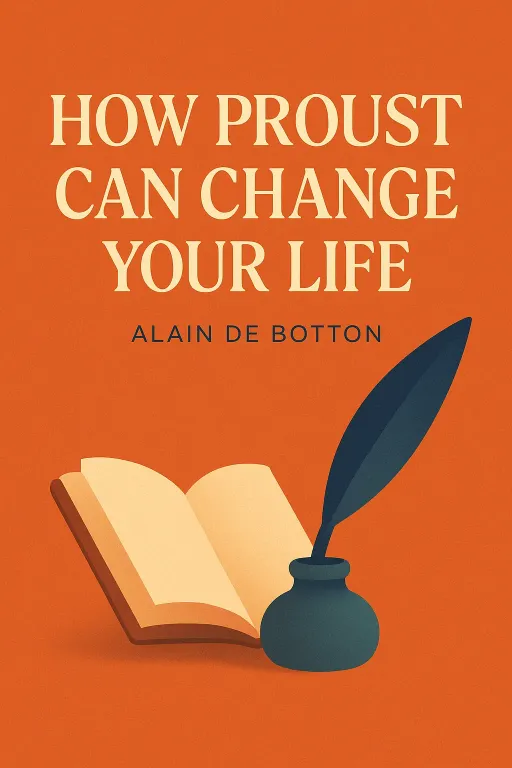
Nova: Ah, but that's precisely where the wisdom we're exploring today comes in. We’re diving into a philosophy of modern well-being that challenges our assumptions about where fulfillment truly resides. We're drawing insights from two brilliant minds: first, the philosopher Alain de Botton, particularly his wonderfully unconventional book, "How Proust Can Change Your Life." De Botton has a remarkable knack for demystifying profound philosophical and literary thinkers, making their ancient wisdom incredibly relevant to our modern anxieties. He's widely acclaimed for his ability to bridge high culture with everyday life.
Atlas: Okay, so a philosopher who makes old books useful for today's tech world. I'm intrigued. What's the other perspective?
Nova: Our second guide is Christopher Peterson, a pioneering figure in the field of positive psychology. His work, like "Pursuing the Good Life," provides a robust, evidence-based framework for understanding how our inherent character strengths don't just make us good people, but are actually crucial drivers of professional fulfillment. Peterson's contributions to positive psychology are highly respected, offering practical, research-backed ways to cultivate a good life. So while de Botton shifts our external gaze, Peterson turns it inward.
Atlas: So we're looking at external perspective and internal strengths. I can see how that could be powerful. Many of our listeners are driven achievers, constantly seeking self-growth, and they're always asking, "How can I make a bigger impact without burning out?"
Nova: Exactly. And that naturally leads us into our first deep dive: how to transform the seemingly mundane into a source of profound engagement.
Finding Craft and Meaning in the Mundane
SECTION
Nova: So, let's start with Alain de Botton and his surprising take on preventing burnout. De Botton argues that in our relentless pursuit of "more," especially in high-growth environments, we often overlook the richness that's already present in our daily lives. He looks to Marcel Proust, the French novelist famous for his incredibly detailed observations, to show us how to appreciate the nuances of daily existence.
Atlas: But wait, Proust? The guy who wrote thousands of pages about dipping a madeleine into tea? How does that help someone who's staring at lines of code all day, or managing a never-ending stream of project updates? That sounds like the opposite of fast-paced tech.
Nova: That's the beauty of it, Atlas. De Botton isn't suggesting you start writing a seven-volume novel about your commute. What he's saying is that Proust’s meticulous to detail, his ability to find profound meaning in the seemingly insignificant, is a blueprint for cultivating well-being. Think of it this way: a common scenario in tech is the repetitive task. Maybe it's debugging code, refining a user interface, or even just responding to a deluge of emails. The brain often categorizes these as "chores," leading to mental fatigue and burnout.
Atlas: Oh man, I know that feeling. The mental energy drain from tasks you label as 'boring but necessary' is real. It's like a constant low-level hum of dread.
Nova: Right. Now, imagine Sarah, a senior software engineer. She's brilliant, highly skilled, but she's reached a point where daily code reviews feel like a soul-crushing chore. She's excellent at catching subtle errors, ensuring elegant solutions, but the sheer volume makes her feel like a cog in a giant machine. De Botton, channeling Proust, would challenge her to reframe that task. Instead of just "fixing bugs," she could approach it as a moment of craft.
Atlas: A moment of craft? Like, she’s a digital artisan? That’s a cool way to put it, but how does that actually play out?
Nova: Precisely. She’s not just reviewing code; she’s ensuring the structural integrity of a complex system, the elegance of its internal logic. She’s like a master watchmaker, meticulously examining gears, ensuring every component works in harmony, not just functionally, but beautifully. The beauty isn't just in the final product, the flawless app or system, but in the precision of her process, the clarity of her logic, the foresight of her problem-solving. This shift in perspective transforms the of debugging from a monotonous chore into an act of creation and refinement, a personal challenge to achieve perfection within her domain.
Atlas: I see. So it's not about magically making the task fun, but about finding an angle of engagement that elevates it beyond mere obligation. It's about bringing a craftsman’s pride to something that might typically be seen as just grunt work. That actually sounds really powerful for someone who values quality and impact. It’s like finding a micro-purpose in every action.
Nova: Absolutely. It’s about bringing your full attention and intention to the present moment, even if that moment involves a spreadsheet. It prevents the mind from drifting into anxiety about future tasks or regret about past ones. This "moment of craft" approach is a direct antidote to the feeling of being overwhelmed and disconnected, which are hallmarks of burnout. It’s a way of reclaiming autonomy and meaning in the seemingly unglamorous parts of our professional lives, by making the process itself the reward.
Leveraging Character Strengths for Professional Fulfillment
SECTION
Nova: Now, while de Botton helps us shift our external perception of tasks, Christopher Peterson takes us deeper, into our internal landscape. He asserts that true professional fulfillment isn't just about what you, but you do it, and crucially, when you do it. His groundbreaking work in positive psychology introduced the concept of character strengths – innate positive traits that contribute to our well-being and flourishing.
Atlas: So, it's not just about being good at your job, but understanding you're good at it, and then doing more of? Is this like a personality test, or something more profound? Because I've seen a lot of those come and go in the corporate world.
Nova: It's much more profound than a simple personality test, though it can start with self-assessment. Peterson and his colleague Martin Seligman identified 24 universal character strengths – things like creativity, curiosity, kindness, perseverance, leadership, humility, humor, and appreciation of beauty. The idea is that when we identify our – those core traits that feel most authentic and energizing to us – and consciously apply them, especially in our work, we experience a deeper sense of engagement, meaning, and fulfillment. It’s about playing to your innate strengths rather than constantly trying to fix weaknesses.
Atlas: That makes me wonder about Mark, a project lead in a rapidly expanding tech startup. He's often lauded for his ability to navigate complex stakeholder relationships and unite disparate teams. He’s technically competent, but his real superpower is his ability to foster collaboration and inspire trust, even when tensions are high.
Nova: Perfect example. Mark's signature strengths might be teamwork, leadership, and perhaps social intelligence or empathy. In a high-pressure environment, it would be easy for him to get bogged down trying to shore up perceived technical weaknesses, or just focus on hitting deadlines. But Peterson's work would advise Mark to lean his strengths. Instead of seeing conflict resolution as a necessary evil, he could view it as an opportunity to genuinely connect, to build bridges, to apply his innate talent for bringing people together. When he uses his empathy to understand different team perspectives, or his leadership to guide them towards a common goal, that's when he feels most alive and effective.
Atlas: So, he's not just managing a project; he's people, using his natural ability to empower them, which in turn makes him feel more alive and effective. That sounds like a much more sustainable path to impact, especially for someone who is driven to make a difference. It’s about leveraging what comes naturally.
Nova: Exactly. When Mark operates from his strengths, his work feels less like effort and more like genuine expression. He experiences what positive psychologists call "flow" – that state of complete absorption in an activity. This isn't about ignoring areas for development; it's about shifting the primary focus from "fixing what's wrong" to "amplifying what's right." It's about understanding that professional fulfillment isn't solely about external achievements, but about the intrinsic satisfaction of deploying your best self for a meaningful purpose. It's a key to finding your inner calm, even when the demands are high.
Atlas: Honestly, that sounds like a game-changer for many driven achievers who are constantly pushing themselves. It’s about finding a more authentic alignment between who they are and what they do. It’s not just about productivity hacks, but about deeper, more sustainable engagement and a path to mental well-being.
Nova: And that's the crucial link between these two philosophies. De Botton reminds us to find the sacred in the secular, the craft in the routine. Peterson gives us the tools to understand to bring to that craft.
Synthesis & Takeaways
SECTION
Nova: So, bringing it all together, we have Alain de Botton urging us to look at our daily tasks with the meticulous, appreciating eye of a literary master, finding meaning and craft in the repetitive. And then we have Christopher Peterson, reminding us that our deepest professional fulfillment comes from identifying and leveraging our innate character strengths.
Atlas: It’s like De Botton gives us the lens through which to view the world, and Peterson gives us the internal compass to navigate it. For someone like our listeners, who are constantly seeking self-growth and impact in a demanding field, this is truly transformative. It's about cultivating well-being the work, not just outside of it.
Nova: Absolutely. It means that profound well-being isn't a break from your demanding career, but a quality of engagement it. It's about bringing your whole, intentional self to the present moment, whether you're debugging code, strategizing a new feature, or mentoring a junior colleague. The data from positive psychology consistently shows that when people operate from their strengths and find meaning in their daily tasks, their engagement, resilience, and overall life satisfaction skyrocket.
Atlas: Okay, so if we had to give our listeners one concrete action, one simple step they could take today to start integrating this philosophy into their lives, what would it be?
Nova: Here’s the challenge: Today, try 'reframing' one repetitive tech task as a moment of craft. It could be anything – writing an email, reviewing a report, updating a database. Focus intently on the quality of your process, the elegance of your solution, or the clarity of your communication. Treat it not as a chore, but as an artisan would approach their work. See if that shift in attention changes your experience. The healing can be in the quality of your process, not just the final output.
Atlas: I love that. It’s not about adding more to your plate, but changing you approach what’s already there. It's a subtle but powerful shift from dread to deliberate engagement. It's about finding that inner calm amidst the external chaos, and realizing that growth unfolds through intentional engagement, not just by chasing the next big thing.
Nova: Exactly. It reminds us that profound well-being isn't found by escaping our realities, but by deeply engaging with them, with intention and awareness.
Atlas: That’s a really hopeful way to look at it.
Nova: This is Aibrary. Congratulations on your growth!