

The Philosophy of Flourishing
Golden Hook & Introduction
SECTION
Nova: What if the secret to a richer, more fulfilling life isn't found in chasing grand achievements, but in the very tasks you dread doing every single day?
Atlas: Whoa, that's a bold claim, Nova. My daily to-do list just sent a shiver down my spine. Are we talking about, like, enjoying expense reports? Because that sounds... ambitious.
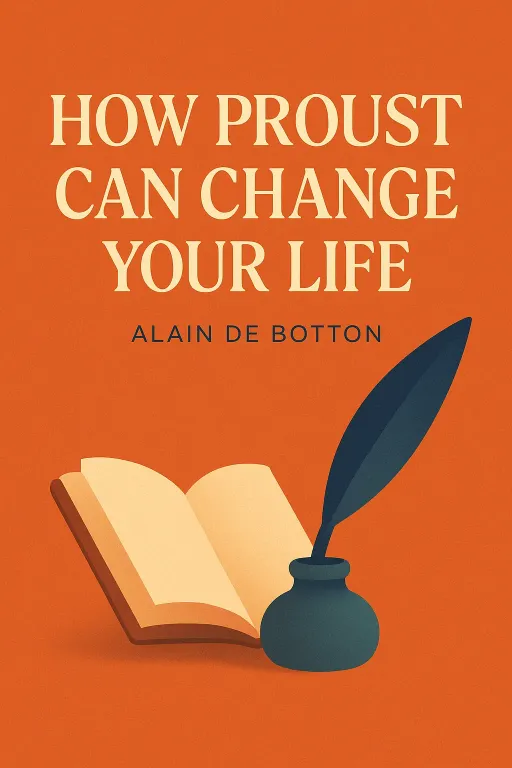
Nova: Ambitious, yes, but entirely possible, Atlas! Today, we're diving into what we're calling "The Philosophy of Flourishing," and it's all about transforming our perspective on the mundane. We're drawing wisdom from two fascinating authors: Alain de Botton, with his brilliant book "How Proust Can Change Your Life," and Christopher Peterson's insightful reflections in "Pursuing the Good Life."
Atlas: Okay, so de Botton, he’s the philosopher who makes existential crises sound… approachable, right? I know his work often bridges philosophy with everyday living.
Nova: Exactly! De Botton has this incredible knack for extracting profound, practical life lessons from literature, making philosophy feel less like an academic pursuit and more like a guide for navigating the messiness of being human. He’s been widely praised for making complex ideas accessible, almost like a modern-day sage for the emotionally intelligent. He doesn't just theorize; he shows you how to with the ideas.
Atlas: And Peterson, "Pursuing the Good Life" – that sounds like positive psychology. So we’re blending literary wisdom with scientific insights into well-being? That’s a fascinating combination.
Nova: It is! Peterson was a true pioneer in the field of positive psychology, known for his rigorous, research-backed approach to understanding what makes life worth living. His work, often in collaboration with Martin Seligman, really laid the groundwork for understanding character strengths and the importance of relationships, grounding "the good life" in empirical evidence. It's less about abstract philosophy and more about actionable, psychological truths.
Atlas: So basically, we're taking a journey from the introspective depths of literature to the scientific validation of what makes us tick, all to figure out how to… enjoy our Mondays?
Nova: Precisely! And more than just enjoying them, Atlas, it’s about flourishing them. This isn't about ignoring challenges. It's about seeing the hidden utility and even beauty in those small, often overlooked aspects of our work and our lives.
Finding Meaning in the Mundane with Alain de Botton
SECTION
Nova: Let’s start with Alain de Botton and his extraordinary take on Marcel Proust. Now, Proust's "In Search of Lost Time" is this monumental, sprawling work, often seen as intimidating. But de Botton doesn't just summarize it; he extracts these incredible, actionable lessons about life. One of his core ideas is about learning to "suffer successfully" and, crucially for our topic today, appreciating the mundane.
Atlas: "Suffer successfully"? That sounds… counterintuitive. Most of us are trying to suffering, not become proficient at it. And appreciating the mundane, especially at work, feels like a stretch when deadlines are looming and the inbox is overflowing.
Nova: I hear you. But de Botton argues that much of our dissatisfaction comes from our expectation that life should be perpetually pleasurable. When suffering inevitably arrives, we're blindsided, or we interpret it as a failure. He suggests that if we learn to understand suffering—its origins, its lessons, its temporary nature—we can navigate it with greater resilience, even finding a peculiar kind of wisdom within it.
Atlas: So, it's not about being a masochist, but more about reframing our relationship with discomfort?
Nova: Exactly. Consider the famous example of Proust and the madeleine. It’s not just a cookie; it’s a trigger for an entire world of memories, sensations, and profound insights into the nature of time and memory. De Botton uses this to show how seemingly insignificant objects or moments in our daily lives hold immense, untapped potential for meaning.
Atlas: Okay, but how does a philosophical deep dive into a French pastry help me with, say, a monotonous data entry task or a seemingly endless meeting? I'm trying to be a focused achiever here, not a literary critic.
Nova: That's a perfect question, and it's where de Botton truly shines. He challenges us to apply that same Proustian lens to our own lives. Think about that data entry task. On the surface, it’s tedious. But what is its? Perhaps it ensures accuracy in financial reporting, which underpins the stability of your entire company. Or it allows a team to make critical decisions that impact hundreds of people.
Atlas: So, instead of just seeing the "input numbers" part, I should be thinking about the "preventing chaos and enabling strategic growth" part?
Nova: Precisely! De Botton teaches us to look past the immediate, often dull surface, and search for the underlying purpose, the intricate connections, the quiet contribution that task makes to a larger, more meaningful whole. It’s about cultivating a kind of "philosophical gaze" that finds dignity in details. He argues that often, the most profound meaning isn't in grand, sweeping gestures, but in the quiet, consistent acts that sustain us and our world. It's a way of turning the ordinary into something extraordinary, simply by changing how we perceive it.
Atlas: I like that. It’s like a mental reframing. Instead of "I have to do this," it becomes "This small action contributes to X, Y, and Z." It shifts from obligation to contribution.
The Practical Psychology of Appreciation with Christopher Peterson
SECTION
Nova: That shift from obligation to contribution is a beautiful segue into Christopher Peterson’s work. While de Botton uses literature to guide us, Peterson uses the rigorous framework of positive psychology to validate the importance of focusing on what’s good. His book, "Pursuing the Good Life," is a collection of 100 reflections, each grounded in research, that underscore the significance of character strengths and relationships.
Atlas: So, what does Peterson's science tell us about appreciating the mundane, or finding meaning in everyday work? Is it just a "think positive" mantra, or is there more to it?
Nova: It's far more profound than just "think positive." Peterson, along with his colleagues, identified 24 universal character strengths—things like curiosity, perseverance, kindness, leadership, humor. His work suggests that true flourishing comes not from eliminating weaknesses, but from identifying and intentionally deploying our signature strengths in daily life.
Atlas: Okay, so if I’m someone who values self-growth and wants to maximize my learning, how do I apply a "character strength" to, say, reviewing a lengthy contract?
Nova: Excellent question, and this is where Peterson’s work becomes incredibly practical. Let's say your top character strength is "curiosity." Instead of seeing the contract review as a chore, you could approach it with genuine curiosity: "What hidden clauses might I discover here? How does this legal language protect our interests? What can I about this industry from this document?" You're not just reviewing; you're exploring, you're learning.
Atlas: That's a great example. Or if my strength is "attention to detail," I could find satisfaction in knowing I'm making sure every comma is in place, every number is correct, preventing future headaches. It transforms a task from "boring" to "essential and impactful."
Nova: Exactly! You're actively engaging your inherent strengths, which not only makes the task more tolerable but actually imbues it with meaning and personal satisfaction. Peterson's research consistently shows that when people use their signature strengths regularly, they report higher levels of engagement, meaning, and well-being. It's a scientific validation of what de Botton might call "finding the hidden utility."
Atlas: So, the literary approach helps us the meaning, and the psychological approach gives us the to actively engage with it using our best selves. It’s about leveraging who we are to make what we do more fulfilling.
Nova: And it extends beyond individual tasks to relationships. Peterson emphasized that strong relationships are a cornerstone of the good life. Even in a work context, those small, mundane interactions – a quick, genuine thank you to a colleague, a moment of shared laughter, offering a helping hand – these aren't just pleasantries. They're micro-investments in your social capital, your sense of belonging, and your overall flourishing. These seemingly small acts of connection are profoundly validated by positive psychology as essential for our well-being.
Atlas: That makes perfect sense. As someone driven by making progress and refining influence, I can see how intentionally applying these strengths and fostering positive relationships, even in the "small stuff," isn't just fluffy feel-good; it's genuinely impactful for leadership and team dynamics. It builds a more robust, resilient, and, frankly, more productive environment.
Synthesis & Takeaways
SECTION
Nova: So, what we see from both de Botton and Peterson, from the literary philosopher to the positive psychologist, is a powerful, converging message: flourishing isn't about escaping the ordinary; it's about transforming our relationship with it. It's about cultivating a mindset where we actively seek out the hidden utility, the quiet dignity, the inherent meaning in the tasks and moments we might otherwise dismiss as mundane.
Atlas: And it’s not just about a passive acceptance. It's about an active, engaged appreciation. De Botton gives us the philosophical framework to see the depth, and Peterson gives us the psychological tools, like character strengths, to actually something with that insight. It’s a powerful one-two punch.
Nova: It truly is. This isn't just about making your work less boring; it's about investing in your own well-being and sense of purpose. It’s about recognizing that every moment, every task, holds a potential for growth and meaning if we choose to look for it. It's a profound act of self-leadership.
Atlas: So, for our pragmatic learners and focused achievers out there, the challenge today is truly practical, isn't it?
Nova: Absolutely. Our takeaway for you today is simple, yet powerful: Take five minutes today to find one small, seemingly 'mundane' aspect of your work that you usually overlook. Instead of just getting through it, actively pause and find a way to appreciate its hidden utility or beauty. Ask yourself: "What purpose does this serve? What strength am I using here? How does this small piece connect to the larger whole?"
Atlas: I love that. It’s not about adding more to your plate, but changing how you eat what’s already on it. It’s a tiny shift that could lead to a monumental change in how you experience your entire day. That's impactful knowledge right there.
Nova: It’s those small steps that truly lead to big leaps, Atlas. This isn't just about philosophical musings; it’s about actively building a more meaningful, flourishing life, one appreciated mundane moment at a time. It's a continuous practice of engaging with life as it is, finding depth in what we often dismiss.
Atlas: That’s actually really inspiring. I'm going to look at my inbox with a newfound sense of purpose tomorrow morning.
Nova: That’s the spirit! It’s about realizing that the profound isn't always distant. Sometimes, it's right there, hidden in plain sight.
Atlas: Thanks, Nova. This has been a truly illuminating discussion.
Nova: My pleasure, Atlas.
Nova: This is Aibrary. Congratulations on your growth!









