

The Learning Mind: How Cognitive Science Shapes Our Mental Wellbeing
Golden Hook & Introduction
SECTION
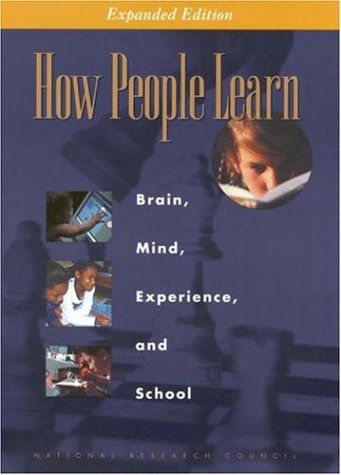
Nova: Imagine sitting in a classroom or a high-stakes meeting, feeling your chest tighten as a wave of information washes over you. You are trying to memorize every single word, but it feels like trying to catch a waterfall with a teacup. We have all been there, equating learning with stress, pressure, and anxiety. But what if the problem isn't your brain's capacity? What if the problem is simply the way we are learning? Today, we are diving into the National Research Council's landmark book, How People Learn: Brain, Mind, Experience, and School. But we are looking at it through a very special lens. We are exploring how the science of learning is secretly the science of mental health and emotional wellbeing. Joining me today is laiba, a wonderfully analytical thinker who loves connecting the dots across different domains. Welcome, laiba.
laiba: Thanks, Nova. I am so excited to be here. You know, when we look at the research in How People Learn, it is easy to treat it as just a manual for teachers or cognitive scientists. But as I was reading through it, I kept making connections to how our cognitive processes directly dictate our emotional states. If our learning strategies are out of sync with how our brains are naturally wired to process information, we do not just fail to retain the knowledge, we actually experience genuine psychological distress. It is a fascinating intersection of cognitive science and mental health.
Nova: Oh, absolutely. It is like trying to run diesel fuel in a petrol engine and then wondering why the engine is smoking and making terrible noises. We are going to tackle this from three fascinating angles today. First, we will look at how cognitive overload from rote learning triggers anxiety, and how deep, conceptual understanding acts as a mental release valve. Second, we will discuss metacognition, which is basically our ability to monitor our own thinking, and how it acts as an emotional shield against imposter syndrome. And finally, we will explore how community-centered learning environments build the psychological safety we all need to thrive. Let's start with that first point, the heavy weight of cognitive overload.
Deep Dive into Core Topic 1 - Cognitive Load and the Anxiety of Rote Learning
SECTION
Nova: So, laiba, the book talks a lot about how experts and novices organize information differently. There is this classic study mentioned where researchers looked at how physics experts versus physics novices categorize problems. The novices looked at the surface features, like, oh, this problem has an inclined plane, so it goes in the inclined plane pile. But the experts? They completely ignored the surface stuff and categorized the problems based on major physical laws, like the conservation of energy.
laiba: Yes, that study is a perfect illustration of how deep conceptual frameworks change everything. For the novice, every single problem is a brand-new, terrifying obstacle because they do not see the underlying pattern. They are forced to rely on rote memorization of specific formulas for specific situations. In cognitive science, we call this a massive cognitive load. Your working memory is working overtime, trying to hold onto disconnected pieces of information. And from a mental health perspective, that constant state of cognitive overload is incredibly exhausting. It triggers our body's stress response.
Nova: Right, it is like trying to navigate a brand-new city without a map, relying only on a list of turn-by-turn directions you memorized five minutes ago. The moment you miss one turn, the whole system collapses, and panic sets in. But if you have a conceptual map of the city, a missed turn is just a minor detour.
laiba: Exactly. When we force ourselves, or our students, to learn through rote memorization, we are essentially forcing them to navigate without a map. This creates a constant background hum of anxiety. You are always worried that you will forget that one crucial, disconnected fact that holds the whole house of cards together. But when we focus on what the book calls meaningful learning, we are building deep, interconnected conceptual frameworks. We are linking new information to what we already know. This actually reduces the cognitive load because the brain can chunk information together.
Nova: It is like cleaning up a messy room and putting everything into labeled drawers. Suddenly, finding your keys doesn't require a frantic, stressful search. It is just a quick, effortless reach into the right drawer.
laiba: Yes, and that transition from a cluttered, chaotic working memory to an organized, conceptual framework has a massive impact on our emotional wellbeing. When we understand the underlying concepts, we experience a sense of mastery and control. Neurobiologically, that sense of understanding triggers a release of dopamine, our brain's reward chemical. It feels good to understand. On the flip side, chronic cognitive overload keeps our cortisol levels high, which over time leads to burnout, fatigue, and a feeling of helplessness. So, deep learning isn't just about getting better grades or performing better at work; it is about protecting our nervous system from chronic stress.
Nova: That is such a powerful way to look at it. We often blame ourselves for feeling overwhelmed by new information, thinking, oh, I am just not smart enough for this. But really, we are just using an inefficient filing system that is overloading our mental bandwidth.
laiba: Exactly. It is a systemic issue of how we approach learning, not a personal deficit in intelligence. When we realize that, we can start to show ourselves a lot more compassion.
Deep Dive into Core Topic 2 - Metacognition as an Emotional Shield
SECTION
Nova: That compassion piece leads us beautifully into our second topic, metacognition. The book defines metacognition as the ability to monitor and regulate one's own comprehension and learning. It is basically stepping outside of your own mind and asking, do I actually understand this, or am I just reading the words? And the book highlights how successful learners are highly metacognitive. They know when they are confused, and they have strategies to fix it. But laiba, how does this connect to our mental health?
laiba: This is where it gets really exciting for me. Metacognition is essentially the ultimate emotional shield against things like imposter syndrome and academic anxiety. Think about what happens when a novice learner encounters a difficult concept and gets stuck. Without metacognitive skills, their immediate reaction is often emotional. They think, I don't get this, which means I am stupid, which means I don't belong here. They internalize the difficulty as a personal failure.
Nova: Oh, yes. The classic spiral. It goes from, this paragraph is confusing, to, I am going to fail this course and end up living under a bridge, in about three seconds flat. We have all been in that spiral.
laiba: We really have. But a metacognitive learner handles that exact same moment of confusion completely differently. Instead of an emotional reaction, they have a cognitive reaction. They think, okay, I don't understand this paragraph. Why? Is it because I don't know the vocabulary? Or is it because I lost focus? What strategy can I use to fix this? Should I reread it, look up a word, or ask for help? By focusing on the process of learning rather than their own identity, they completely bypass that emotional spiral.
Nova: That is brilliant. It is like being a scientist observing your own brain. Instead of saying, I am a failure, you say, ah, look at that, the brain is experiencing a temporary processing error. Let's run a diagnostic test.
laiba: Yes, exactly. It objectifies the struggle. The book describes a wonderful intervention called reciprocal teaching, which was used to help middle school students who were struggling with reading comprehension. The teachers taught the students four specific metacognitive strategies: summarizing, questioning, clarifying, and predicting. The students practiced these in small groups, taking turns being the teacher. And the results were staggering. Not only did their reading comprehension skyrocket, but their confidence and self-efficacy improved dramatically. They stopped seeing reading as this magical ability that they either had or didn't have, and started seeing it as a set of tools they could control.
Nova: That is so empowering. It shifts the locus of control from external factors, like luck or innate talent, to internal factors, like strategy and effort. And we know from psychology that having an internal locus of control is one of the biggest predictors of mental wellbeing and resilience.
laiba: Absolutely. When you believe that your success is a result of strategies you can learn and apply, you are much more resilient in the face of failure. You don't see a bad grade or a setback at work as a definition of your worth. It is just data. It is feedback telling you that you need to adjust your strategy. This completely defangs the fear of failure, which is one of the leading causes of anxiety in both students and professionals. Metacognition allows us to treat ourselves with curiosity instead of judgment.
Nova: I love that. Curiosity instead of judgment. That is a phrase we should all write on a sticky note and put on our computer screens. It turns learning from a high-stakes performance into an ongoing, low-stakes experiment.
laiba: It really does. And it frees up so much mental energy that would otherwise be wasted on self-doubt and anxiety, allowing us to actually focus on the learning itself.
Deep Dive into Core Topic 3 - Community-Centered Environments and Psychological Safety
SECTION
Nova: Now, let's talk about where all of this learning happens. The book outlines four critical lenses for designing effective learning environments: learner-centered, knowledge-centered, assessment-centered, and community-centered. I want to focus on that last one, community-centered environments, because it has such a direct impact on our psychological safety and mental health. The book points out that learning is a deeply social activity. We don't learn in a vacuum; we learn in communities.
laiba: Yes, and the quality of that community determines whether our brain is in a state of threat or a state of growth. When we are in a learning environment that is highly competitive, punitive, or hyper-focused on performance and grades, our brain perceives it as a threat. The amygdala, which is the brain's emotional alarm system, fires up. And when the amygdala is highly active, it actually downregulates the prefrontal cortex, which is the part of the brain responsible for working memory, critical thinking, and creative problem-solving.
Nova: So, quite literally, fear makes us less intelligent. We cannot think clearly when we are terrified of making a mistake.
laiba: Exactly. It is a biological impossibility to perform at your cognitive best when your brain is flooded with cortisol and adrenaline. The book references several studies on collaborative learning, showing that when students work together in cooperative groups where mistakes are treated as valuable learning opportunities, their conceptual understanding is much deeper. In a community-centered environment, there is a shared norm that learning involves struggle, and that making mistakes is a natural, necessary part of the process.
Nova: That is so different from the traditional classroom model where the teacher asks a question, one student gets it right, and everyone else feels like they are lagging behind. In a collaborative environment, we are all in this together, helping each other build that conceptual map we talked about earlier.
laiba: Yes, and that sense of connection and belonging is a fundamental human need. When we feel supported by our peers and our mentors, our brain releases oxytocin, which promotes feelings of trust, safety, and bonding. This counteracts the stress response, lowering our heart rate and allowing our prefrontal cortex to function at its peak. We feel safe enough to take intellectual risks, to ask the silly questions, and to admit when we are confused. And that is where real, transformative learning happens.
Nova: It makes so much sense. If we want people to learn deeply and protect their mental health, we have to design environments that prioritize psychological safety. This is just as true for corporate offices as it is for school classrooms. If employees are terrified of looking foolish in front of their boss, they are going to play it safe, hide their mistakes, and burn themselves out trying to look perfect.
laiba: Spot on, Nova. The pressure to appear perfect is incredibly damaging to our mental health. A community-centered environment dismantles that pressure by normalizing vulnerability. It says, we don't expect you to know everything; we expect you to be willing to learn. That shift in culture can completely transform a high-stress environment into a thriving, creative, and mentally healthy community.
Synthesis & Takeaways
SECTION
Nova: This has been such an eye-opening conversation, laiba. We have covered how shifting from rote memorization to deep, conceptual learning reduces cognitive load and stress. We have looked at how metacognition acts as an emotional shield by turning self-judgment into curiosity. And we have explored how community-centered environments build the psychological safety we need to keep our brains in a growth state. If you had to leave our listeners with one actionable takeaway that they can apply today to improve both their learning and their mental wellbeing, what would it be?
laiba: I would challenge everyone to practice what I call the metacognitive check-in. The next time you are learning something new, or working on a difficult task, and you feel that familiar wave of frustration or anxiety starting to rise, don't ignore it, and don't judge yourself for it. Instead, pause. Take a deep breath, step outside of your emotions, and ask yourself three simple, curious questions: What am I currently trying to achieve? Where exactly am I getting stuck? And what is one different strategy I can try right now? By shifting from an emotional reaction to a strategic, curious inquiry, you will not only find a way forward, but you will also protect your peace of mind.
Nova: That is a beautiful, practical tool. A metacognitive check-in to turn panic into progress. I love it. Thank you so much, laiba, for sharing your wonderful insights and helping us connect the science of learning to the art of living well. And thank you to all our listeners. Remember, your brain is an incredible, adaptable organ, and when we treat it with the care, curiosity, and community it deserves, there is no limit to how we can grow. Until next time, keep learning, keep growing, and take care of yourselves.
laiba: Thank you, Nova. It was a pleasure. Take care, everyone.