Stop Building Features, Start Building Habits: The Guide to Lasting User Engagement.
9 minGolden Hook & Introduction
SECTION
Nova: What if I told you that building the 'best' product might actually be the fastest way to failure?
Atlas: Oh, I like that. That sounds like something designed to upset every product manager and engineer listening right now. Go on, Nova, spill the tea.
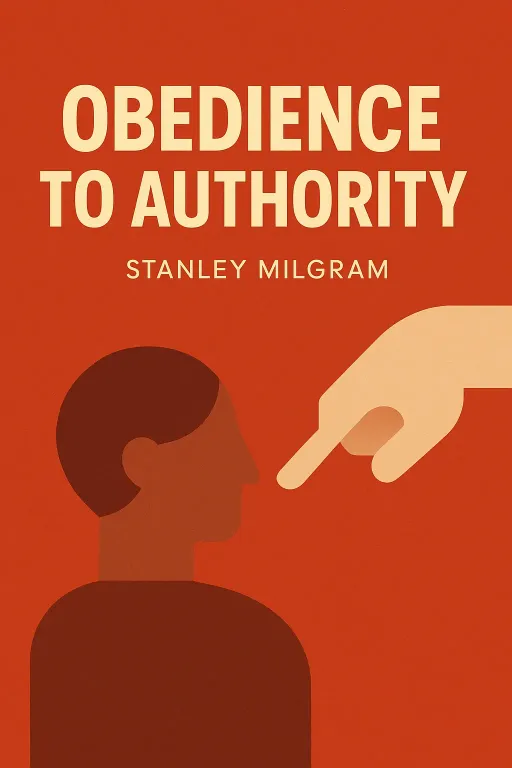
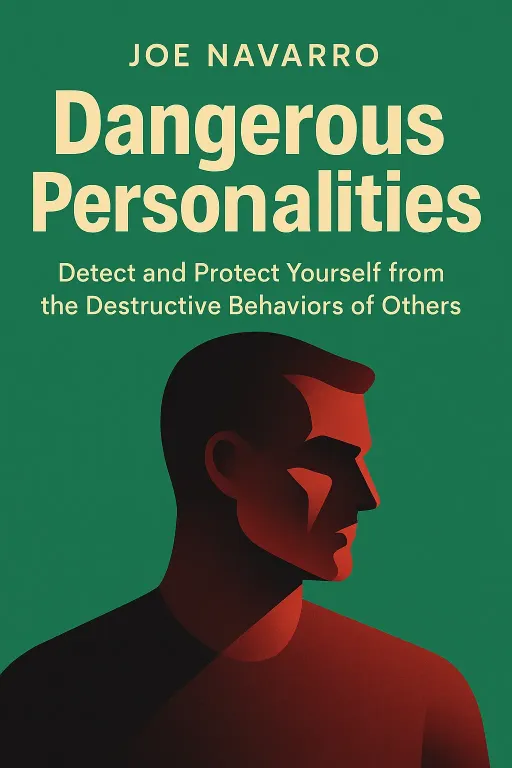
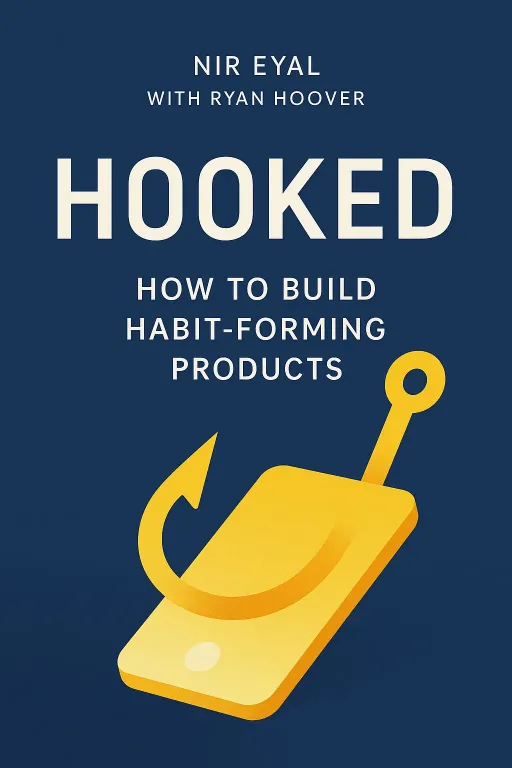
Nova: Well, it's a provocative thought, isn't it? Today, we're dissecting a critical idea from a powerful blend of insights, drawing heavily from Nir Eyal's and James Clear's. What's fascinating about these works is how they independently, yet convergently, illuminate the deep psychology behind user behavior. Eyal, a former ad-tech entrepreneur, shows us the business side of habit formation, while Clear, a renowned habit expert, provides the personal mastery angle, often celebrated for its practical, no-nonsense approach to behavioral change.
Atlas: That's a bold claim, especially for those of us who live and breathe feature development. We spend countless hours perfecting features, optimizing performance, ensuring scalability. But wait, Nova, what makes a 'brilliant' product fail if it's genuinely brilliant? Aren't features exactly what users want?
The Paradigm Shift: From Features to Formed Habits
SECTION
Nova: Exactly, Atlas. That's the cold, hard fact: many brilliant products, despite their technical superiority or innovative features, often fail because they don't become an integral part of daily routines. Users are busy. They're not looking for another tool to to their mental load; they need solutions that seamlessly fit into their lives, almost disappearing into the background.
Atlas: So it's not about the sheer number of features, then? Or even the elegance of the code?
Nova: Not solely. Think of it like this: you build a state-of-the-art, super-efficient coffee machine that can brew 50 different types of coffee, perfectly calibrated to your taste with AI-powered bean selection. It's a marvel of engineering. But if it takes 15 complex steps to operate every morning before your first cup, and people are rushing out the door, they'll inevitably revert to their old, simpler, perhaps less 'brilliant' pod machine. Why? Because the pod machine, for all its limitations, became a habit. It was effortless. It integrated into their hurried morning ritual.
Atlas: Oh, I know that feeling all too well. I built an internal tool once – incredibly powerful, could automate a dozen tasks, save hours a week. But the login flow was clunky, required multiple authentications, and it took a minute longer than just doing it manually. Guess what? No one used it. The friction was too high. So you're saying the 'brilliance' of the underlying technology is irrelevant if the user experience creates too much resistance to form a habit?
Nova: Precisely. It's about engineering user behavior, not just engineering functionality or raw processing power. The product isn't truly successful until it's. This represents a fundamental shift in perspective for architects and value creators. We're not just creating tools; we're designing environments and interactions that foster specific, beneficial behaviors.
Atlas: That's a profound reframe. It makes me think about our work with Agent products. We're building complex, intelligent systems that are supposed to augment human capabilities. Are we supposed to make our AI's decision-making process 'habit-forming'? That sounds… almost manipulative or, at the very least, a bit abstract when we're dealing with backend architecture.
Engineering Engagement: The Mechanics of Habit Formation in Products
SECTION
Nova: That's a great question, Atlas, and it gets to the heart of ethical and effective design. It's not about manipulation; it’s about making valuable interactions effortless, intuitive, and inherently rewarding. This is where Nir Eyal's Hook Model becomes incredibly insightful as a blueprint. He breaks down habit formation into four simple, interconnected steps: Trigger, Action, Variable Reward, and Investment.
Atlas: Okay, break that down for me, especially in the context of an Agent that helps developers debug complex code or optimize system performance. How does that 'hook' actually work in practice?
Nova: Let's take your debugging Agent. A could be an error message popping up in the console, or a new code commit failing a CI/CD pipeline, or even just a developer opening their IDE in the morning. It's the external or internal cue that prompts the user to engage. The is the simplest behavior done in anticipation of a reward. For our Agent, that could be the user clicking to activate the Agent's analysis, or perhaps it runs proactively in the background, subtly highlighting potential issues.
Atlas: So, the trigger is the problem, and the action is letting the Agent address it. That seems straightforward enough. But what about the? That sounds like the secret sauce here.
Nova: It absolutely is. Variable rewards are crucial because they create a craving, a sense of anticipation. Instead of just a predictable "debugging successful" message every time, what if your Agent sometimes offered a new, unexpected optimization suggestion? Or a surprising insight into a common vulnerability pattern it just detected in the codebase? It might sometimes just fix the bug, sometimes it teaches you something new and valuable, sometimes it even suggests a refactoring strategy you hadn't considered. That variability keeps you coming back for more, wondering what valuable nugget you’ll get next.
Atlas: Ah, I see! So it's not just a predictable utility; it's like a slot machine for insights. You don't know exactly what you're going to get, but you know it could be good, it could be incredibly valuable. That definitely sounds more engaging, more sticky, than a static report or a predictable output. And then the final step,?
Nova: Investment is about the user putting something into the product, which makes them more likely to use it again and invest even more. For your Agent, that could be customizing its preferences, training it on your specific codebase's quirks and conventions, or even just curating its output by upvoting helpful suggestions and downvoting unhelpful ones. The more you put into the Agent, the more personalized and valuable it becomes to. This creates a personal stake, a sense of ownership.
Atlas: That's actually really clever. It’s like, the more I teach the Agent about code, about team's patterns, the better it gets at its job, and the harder it is for me to switch to another tool. It becomes a bespoke, indispensable assistant, custom-tailored to my workflow. But where does James Clear's fit into this for product design? Clear talks a lot about environment and identity.
Nova: Clear’s work complements Eyal beautifully. While Eyal gives us the loop, Clear teaches us how to make that loop irresistible by leveraging environmental design. He focuses on making good habits obvious, attractive, easy, and satisfying. For product design, this translates directly: making your Agent’s trigger – perhaps integrated directly into the IDE as a subtle overlay, or a notification that pops up exactly when and where it's needed. Making the action – one click, minimal cognitive load, perhaps even automating the action when confidence is high. And the reward, as we discussed, – not just functional, but delightful and valuable.
Atlas: So it’s about reducing friction at every single step of the user journey. It’s about making the desired behavior – interacting with this powerful Agent – the path of least resistance. For an architect, that means designing the system not just for performance and robustness, but for inherent ease of interaction that subtly guides the user into a beneficial routine. It’s about building the 'on-ramp' to the habit.
Synthesis & Takeaways
SECTION
Nova: Exactly. This isn't just about making a product; it’s about engineering an entire ecosystem where beneficial user habits naturally flourish. It’s about understanding that the true, long-term value of your Agent isn't just its raw processing power, its advanced algorithms, or its ability to solve complex problems. It's its seamless integration into a developer's daily workflow, making it an indispensable, almost invisible, partner in their creative and problem-solving processes. The goal is to build something so integrated, so rewarding, that its absence would feel like a limb was missing.
Atlas: Wow, that’s a powerful distinction. It fundamentally shifts the focus from "what can my product do" to "what can my product help my user or." For those of us building high-performance, intelligent systems, it means our definition of 'optimization' needs to broaden significantly to include human behavior and sustained engagement. It’s about creating systems that elevate human potential and efficiency, not just automate tasks in isolation.
Nova: Absolutely. It’s about recognizing that the greatest value isn't just created by the technology itself, but by the consistent, positive behaviors it enables and reinforces in its users. That’s how you build not just a product, but a lasting legacy of value.
Atlas: So, for our listeners, especially the architects and value creators out there, if you're looking to take a tiny step forward, identify one core interaction in your Agent product. Then, brainstorm how you could introduce a variable reward to make that interaction more engaging for repeat use. Think beyond just "it works" to "it surprises, it delights, it teaches."
Nova: A perfect challenge. That's how you start building products that don't just solve problems, but become an integral, almost invisible, part of success and growth.
Atlas: This is Aibrary. Congratulations on your growth!