

Unlocking User Psychology: Building Products People Love
Golden Hook & Introduction
SECTION
Nova: Think about your phone. How many times a day do you pick it up without even thinking? It's not just a tool anymore, is it? It's a reflex. That little device has become an extension of your will, or perhaps, your habits.
Atlas: Oh man, it's more than a reflex for me; it's practically a third arm at this point! And honestly, sometimes I feel less in control of that reflex than I'd like to admit. It’s like my thumb has a mind of its own.
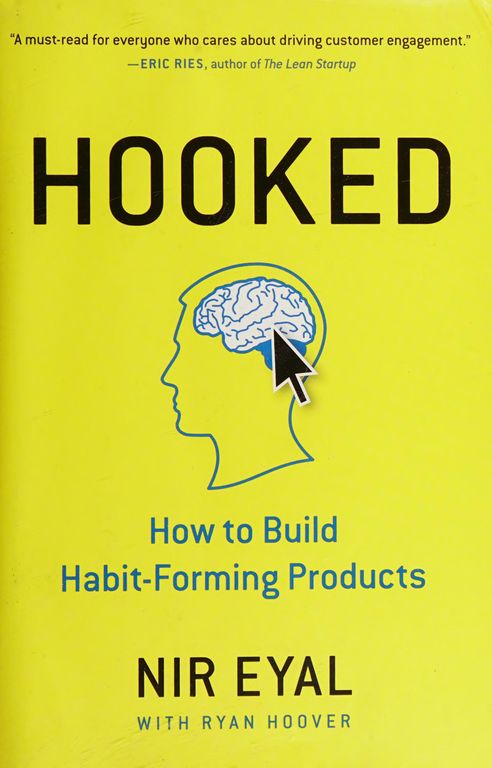
Nova: Exactly! And that feeling, that almost involuntary pull, is no accident. It’s often the result of incredibly sophisticated design, rooted in a deep understanding of human psychology. And that's what we're dissecting today. We're diving into the fascinating world of user psychology, drawing heavily from two groundbreaking books: Nir Eyal’s "Hooked: How to Build Habit-Forming Products" and the Nobel Prize-winning "Nudge: Improving Decisions About Health, Wealth, and Happiness" by Richard H. Thaler and Cass R. Sunstein.
Atlas: Ah, "Hooked" – that book is practically a bible for product managers, isn't it? I remember when it first came out, everyone was buzzing about it. It really shone a light on how some of the most successful tech companies built their empires, almost by reverse-engineering our brains.
Nova: Absolutely. Eyal, who built his career in the gaming and advertising industries, essentially codified the mechanics of what makes products addictive. He moved from teaching and consulting to writing this book, which became a runaway success for its practical, almost surgical breakdown of user behavior. It’s been widely acclaimed for its insights, though it has also sparked debates about the ethics of designing for habit. And then you have "Nudge," which is equally impactful, but from a slightly different angle. Thaler, an economist, and Sunstein, a legal scholar, explored how subtle interventions can steer choices without removing freedom. Their work is so significant that Thaler actually won the Nobel Memorial Prize in Economic Sciences for his contributions to behavioral economics.
Atlas: So basically, one book tells you how to make people hooked, and the other tells you how to make people make better decisions… sometimes using similar psychological levers. That’s a powerful combination, and it makes me wonder: where do we even begin with understanding this science of engagement?
The Hook Model: Engineering User Habits
SECTION
Nova: We start with Eyal's Hook Model, because it's a fantastic framework for understanding how products create those almost automatic user behaviors. It's a four-step cycle: Trigger, Action, Variable Reward, and Investment. Think of it as a loop that gradually, almost imperceptibly, forms a habit.
Atlas: Okay, so Trigger, Action, Variable Reward, and Investment. Break that down for me. I’m curious, for our listeners who are building products, how does this actually manifest?
Nova: Let’s take Instagram as a classic example. The can be internal or external. An external trigger might be a notification pop-up – "Someone liked your photo!" An internal trigger is more powerful: boredom, loneliness, a desire for connection, or even just a moment of downtime, like waiting in line. That feeling, that itch, becomes the internal trigger.
Atlas: So the trigger isn't always a direct prompt from the app itself—it can be a feeling or a state of mind that drives you to it. That's a good distinction.
Nova: Exactly. Once triggered, the user performs an. For Instagram, this is opening the app and scrolling through the feed. This action needs to be simple and require minimal effort. The less friction, the more likely the action.
Atlas: Right, it's not like you're solving a complex puzzle to get to your feed. It’s just tap, scroll.
Nova: Then comes the. This is the magic ingredient. When you scroll through Instagram, you don't know what you're going to see next. You might see a hilarious meme, a beautiful landscape from a friend's vacation, or a validating comment on your own post. This unpredictability, this variability, makes the experience incredibly engaging. Our brains are wired to seek out variable rewards; it's what kept our ancestors hunting for food, never knowing what they'd find. It releases dopamine, creating a craving for more.
Atlas: That’s a great analogy. It's like a slot machine, isn't it? You pull the lever, and you don't know if you're going to hit the jackpot or just get lemons. That uncertainty is what keeps you coming back.
Nova: Precisely. And finally,. This is where the user puts something into the product – time, data, effort, or social capital. On Instagram, this might be posting your own photo, commenting on someone else's, or curating your profile. These investments load the next trigger, making the product more valuable to you and increasing the likelihood you'll return. The more you invest, the more committed you become.
Atlas: So, if I post a photo, I've invested time and effort, and now I'm waiting for likes and comments, which triggers me to check the app again. It’s a self-reinforcing loop. That makes total sense. But wait, I mean, isn't this a bit… manipulative? It sounds like product designers are deliberately trying to get us hooked, even if it's not always in our best interest.
Nova: That's a critical question, and it brings us to the ethical tightrope. Eyal himself addresses this, arguing that the Hook Model is a double-edged sword. It can be used to create products that genuinely improve lives – think Duolingo making language learning a habit, or Headspace making meditation a routine. But it can also be used for less benevolent purposes, for products that exploit vulnerabilities. The model itself is neutral; the intent behind its application is what matters.
Atlas: Okay, so the tool isn't inherently good or bad, it's how you wield it. I guess that's true for a lot of powerful concepts. So, understanding these habits are formed gives us the power to both build better products and also to be more mindful consumers.
Nudging Positive Decisions: The Subtle Art of Influence
SECTION
Nova: Absolutely. And that leads us beautifully into "Nudge." While Eyal focuses on building habits, Thaler and Sunstein explore how subtle interventions can guide choices towards better outcomes, often without us even realizing we're being guided. They call these 'nudges.'
Atlas: Nudges. I’ve been thinking about this. So, it's not about forcing anyone to do anything, but just making the desired action easier or more appealing?
Nova: Exactly. A nudge is any aspect of the choice architecture that alters people's behavior in a predictable way without forbidding any options or significantly changing their economic incentives. To count as a mere nudge, the intervention must be easy and cheap to avoid. Putting fruit at eye level is a nudge. Banning junk food is not.
Atlas: That’s a perfect example. So, it’s about making the healthy choice the default, or the most obvious one. Can you give me another example where this has had a real-world impact?
Nova: One of the most famous examples comes from retirement savings. In many companies, employees had to actively opt-in to a 401 plan. Participation rates were often low. But when companies switched to an "opt-out" system – where employees were automatically enrolled but could choose to leave the plan – participation rates skyrocketed. People are far more likely to stick with the default option due to inertia and the psychological cost of making an active change.
Atlas: Wow. So just by changing the default, without taking away anyone's choice, you can dramatically improve people's financial well-being. That's incredibly powerful and, honestly, a bit mind-blowing when you think about the impact across millions of people.
Nova: It is. Another example involves organ donation. In countries where people have to opt-in to be organ donors, rates are significantly lower than in countries where the default is organ donation, and you have to opt-out. It’s the same underlying principle: defaults are powerful.
Atlas: I see. So it's leveraging cognitive biases, like the status quo bias, where people prefer things to stay the same. Are there other types of nudges apart from changing defaults?
Nova: Definitely. One is. How you present information can significantly influence choice. Telling someone a procedure has a "90% survival rate" is more effective than saying it has a "10% mortality rate," even though the information is identical. Another is. If a hotel chain puts a sign in bathrooms saying, "75% of guests reuse their towels," people are more likely to reuse theirs than if the sign just asks them to help the environment. We tend to follow what others are doing.
Atlas: That's fascinating. It’s like the subtle art of persuasion, but applied at a systemic level. It really highlights how much our decisions are shaped by context, not just pure rational thought.
Nova: Precisely. And this is where the intersection with "Hooked" becomes so interesting. While Eyal talks about building habits, Thaler and Sunstein talk about guiding individual decisions. Both are about understanding the deep psychological underpinnings of human behavior to design better experiences and, hopefully, better outcomes.
Atlas: So, for our listeners who are building products or designing experiences, this isn't just about making things functional. It’s about understanding the human element. It's about how you can ethically 'nudge' users towards actions that benefit both them and your product's goals. And, on the flip side, as users, it's about being aware of these mechanisms so we can make more conscious choices ourselves.
Synthesis & Takeaways
SECTION
Nova: Absolutely. The core takeaway from both these works, and indeed, from the entire field of user psychology, is that human behavior is not always rational. We are creatures of habit and context. When we design products, whether they're apps, services, or even public policies, understanding these psychological levers is fundamental. It's about moving beyond just 'what works' to 'what truly helps people thrive.'
Atlas: It’s about building with purpose, as our listeners often aim to do. It’s not just about getting people to click a button, but understanding the deeper motivation, the deeper need you’re trying to meet. And then structuring the path to meet that need in a way that feels natural, almost inevitable, for the user.
Nova: And that’s the deep question both these books pose: How can you ethically 'nudge' your users towards actions that benefit both them and your product's goals? It requires a blend of empathy, analytical rigor, and a profound respect for human autonomy. It's about designing an experience where the desired behavior is not just possible, but delightful, rewarding, and ultimately, feels like a choice the user made for themselves.
Atlas: That’s actually really inspiring. It frames product design not just as a technical challenge, but as a deeply human one. It pushes us to think about the impact we're having, not just the features we're shipping. And for me, that's what building something meaningful and sustainable is all about.
Nova: And that's a powerful thought to leave our listeners with today. This is Aibrary. Congratulations on your growth!