Unseen Forces: The Power of Ritual in Human Experience
Golden Hook & Introduction
SECTION
Nova: Atlas, quick, what's the first thing that comes to mind when I say 'ritual'?
Atlas: Hmm. Old habits, dusty ceremonies, maybe a slightly awkward family holiday tradition we all pretend to love.
Nova: See? And that's exactly why we're missing one of the most profound and powerful forces shaping our lives, our communities, and even our sense of self. We tend to dismiss rituals as outdated or superstitious, failing to grasp their deep psychological and social power.
Atlas: Oh, I like that. So, we're talking about something beyond just going through the motions. Something with actual, tangible impact?
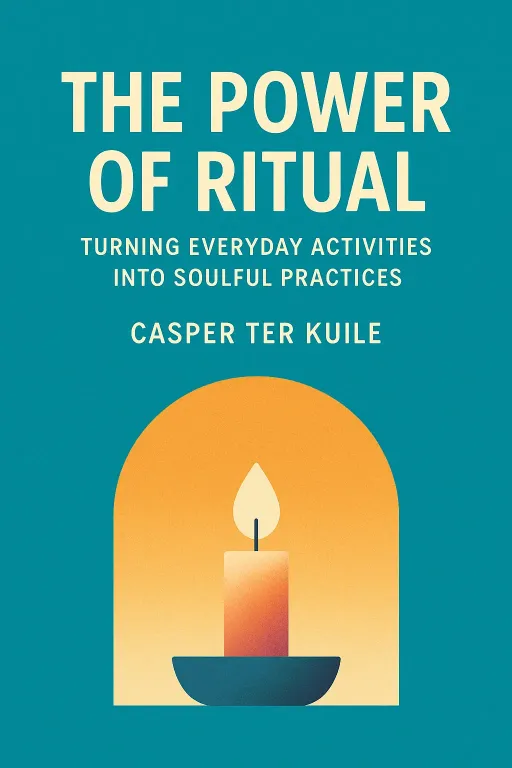
Nova: Absolutely. And a brilliant mind who has illuminated this is Casper Ter Kuile, particularly in his book, "The Power of Ritual." Ter Kuile, who was a fellow at Harvard Divinity School, approaches this topic not from a place of religious dogma, but from a deeply human, interdisciplinary perspective. He explores how ancient practices can offer profound insights for our modern, often fragmented, lives.
Atlas: That's fascinating. Bridging ancient wisdom with contemporary needs. It’s like he’s providing a missing manual for human connection and purpose.
Nova: Exactly. And the core of our podcast today is really an exploration of how we've collectively developed a blind spot to the power of ritual, and how reclaiming it can be a vital system for meaning, connection, and order.
The Blind Spot: Why We Dismiss Rituals and What We Lose
SECTION
Nova: Many of us, especially in an age that prizes efficiency and rationality, tend to relegate rituals to the realm of the quaint or the unnecessary. We think of them as anachronisms, things our ancestors did, not things we to do. But ignoring the role of these shared practices means missing a profound way that meaning, connection, and order are created in our lives.
Atlas: Hold on. But isn't it just about being efficient? Who has time for elaborate rituals in a fast-paced, high-stakes world? For someone building products or systems, time is money, and rituals often seem like a time sink.
Nova: That's the common perception, isn't it? We optimize for output, for speed, for immediate results. But in doing so, we often strip away the very elements that provide psychological stability and social cohesion. Think about it: why do so many people feel increasingly disconnected, even while being hyper-connected online? Why is there an epidemic of loneliness, a crisis of meaning?
Atlas: Yeah, I can definitely relate to that. A lot of our listeners are trying to build resilient teams and sustainable systems, and the human element, that sense of belonging, is often the hardest to engineer. So, if we’re dismissing rituals, what specifically are we losing? What's the cost?
Nova: We're losing the invisible scaffolding of shared meaning. Yuval Noah Harari, although not exclusively on ritual, touches on this in "Homo Deus," where he discusses how shared human experiences, often ritualistic in nature, create collective meaning beyond pure utility. Without these shared markers, without these common practices that bind us, we become islands. We lose predictable ways to mark transitions, celebrate successes, mourn losses, or simply reinforce our collective identity.
Atlas: So, if we ignore this fundamental human need, we're essentially designing systems that are fundamentally unstable or incomplete for human needs. It's like building a high-tech building without considering the foundation's integrity. Is this dismissal purely about rationalism, or is there something deeper at play?
Nova: It's a complex mix. Part of it is the rise of scientific rationalism, which tends to dismiss anything that isn't empirically quantifiable. Part of it is consumerism, which often replaces communal meaning-making with individualistic consumption. But the consequence is clear: the erosion of community bonds, an increase in anxiety, and a profound sense of aimlessness for many. We're left with a spiritual and social vacuum.
Atlas: That's a powerful point. It challenges the idea that we can simply innovate our way out of these human dilemmas without understanding the deeper psychological architecture.
The Shift: Reclaiming Ritual for Meaning, Connection, and Order
SECTION
Nova: But here's where Ter Kuile offers a profound and hopeful shift in perspective. It's not about returning to ancient rites blindly, or becoming rigidly traditional. It's about understanding the of ritual and intentionally designing new ones, or rediscovering the power in existing ones, for our modern lives. Thoughtfully designed rituals, he argues, provide structure, foster belonging, and help us navigate life's biggest questions.
Atlas: Okay, 'thoughtfully designed' – that sounds like behavioral design to me. For someone who’s looking to build effective systems for people, this is critical. What are the core components of an effective ritual? How do we engineer meaning?
Nova: That’s a brilliant way to frame it, Atlas. Ter Kuile unpacks this beautifully. He identifies four key elements:,,, and. A ritual isn't just a habit; it's a habit infused with mindful attention and a clear intention. It's something you repeat, which builds consistency and meaning over time. And ideally, it connects you to a community, whether that's a small family unit or a larger organization.
Atlas: So, it's about intentionality over mere formality? It's not just about the 'what' you do, but the 'why' you do it and 'how' it connects you to something larger? Can you give an example that isn't about, you know, burning incense or anything overtly spiritual?
Nova: Absolutely. Think about a simple morning routine. You could just rush out of bed, grab coffee, and check emails. Or, you could intentionally start your day with a five-minute meditation, or journaling, or even just making your coffee with a specific, focused appreciation for the process. That small act, infused with attention and intention, becomes a personal ritual that grounds you before the chaos begins. For a team, it could be a daily stand-up meeting that always starts with a shared success story, or a weekly check-in where everyone shares one "win" and one "learn."
Atlas: That makes sense. It's about creating a moment of shared experience and reflection. And you mentioned resilient community bonds. How does a small, intentional ritual scale up to impact an entire team or organization, especially when you're trying to build something sustainable in a competitive environment?
Nova: It scales through consistency and shared narrative. When a team consistently engages in a small ritual – say, a weekly "gratitude circle" or a "lessons learned" session after every project – it builds a shared understanding of values and fosters psychological safety. These small, repeated acts create micro-cohesions that accumulate. They become part of the team's identity, a subtle but powerful operating system that reinforces trust, communication, and a sense of shared purpose. It builds the kind of intangible yet indispensable glue that makes a team unbreakable.
Atlas: That's actually really inspiring. It sounds like a practical, almost scientific, approach to building better human systems. It’s not soft; it’s strategic.
Synthesis & Takeaways
SECTION
Nova: Exactly. So, what we're really talking about today is moving past the blind spot of dismissing rituals as outdated. Instead, we're recognizing them as profound tools for creating meaning, connection, and order in our personal lives and our communities. As Ter Kuile's work shows, it's about harnessing these unseen forces to build a more resilient, purposeful existence.
Atlas: So, the question isn't "do we need rituals," but "what small, intentional ritual could we introduce into our day or week to bring more meaning or focus?" It’s about building an internal operating system for meaning, and external systems for connection. That's a system worth designing.
Nova: Precisely. Whether it's a personal moment of reflection, a shared family practice, or a team ritual at work, the power lies in the intentionality and the consistent effort to infuse our lives with purpose. It's a way to reclaim agency over our experience and build the kind of deep connections we all crave.
Atlas: That gives me chills, Nova. It’s a powerful reminder that sometimes the most profound solutions are found not in more complexity, but in more intentional simplicity.
Nova: Indeed. And it leaves us with that deep question: What small, intentional ritual could you introduce into your day or week to bring more meaning or focus? Just one small step can make a world of difference.
Nova: This is Aibrary. Congratulations on your growth!