Beyond History: How Narratives Shape Our Culture and Future
Golden Hook & Introduction
SECTION
Nova: What if everything you thought you knew about history was wrong? Not the dates, not the names, but its very nature, its fundamental operating system?
Atlas: Whoa, that's a bold claim, Nova. Are you saying the pyramids are actually just very elaborate sandcastles or something? Because my history teacher would have a lot to say about that.
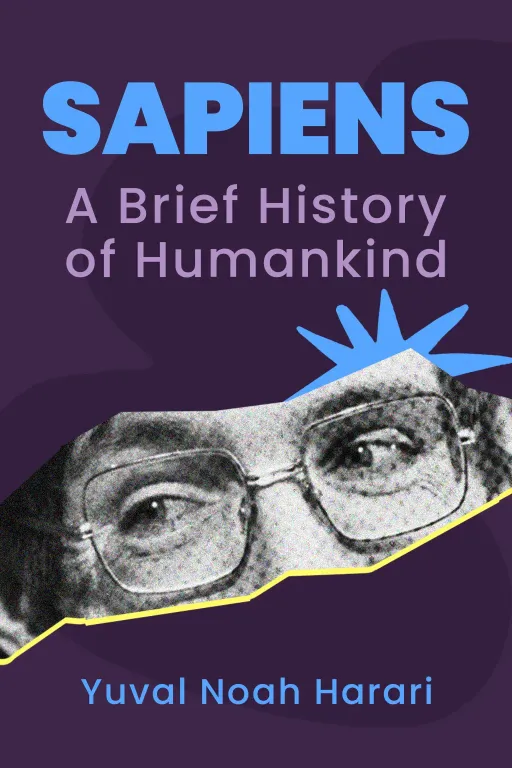
Nova: Not quite sandcastles, Atlas, but it's far more fluid and powerful than we usually give it credit for. Today, we're diving into the profound insights inspired by Yuval Noah Harari's groundbreaking work, particularly "Sapiens" and "Homo Deus," which collectively unpack how narratives shape our culture and future. Harari, he's a historian who uniquely blends biology, anthropology, and economics, showing us the sweeping story of humanity from a truly fresh perspective.
Atlas: Okay, so it’s not about correcting dates, but about the of history itself. That makes me wonder, how does that apply to something that feels so… factual? Like, the signing of a treaty, or the invention of the wheel; those are facts, right?
Nova: Absolutely they are facts, but the meaning we ascribe to those facts, the connections we draw between them, the "why" and the "what next"—that's where the narrative comes in. And here’s the crucial part: failing to grasp that power leaves us profoundly vulnerable.
The Narrative Fabric of Reality: Why History Isn't Just Facts
SECTION
Nova: We have this blind spot, don't we? We tend to view history as a collection of immutable facts, a timeline etched in stone. But Harari brilliantly argues that history is, at its core, a story. More specifically, it’s a collection of shared fictions.
Atlas: Shared fictions? That sounds a bit… whimsical for something as impactful as, say, forming a nation or building an economy. I mean, money isn't a fiction, I need it to pay my rent!
Nova: Ah, but that's exactly the magic trick, isn't it? Money a shared fiction. It’s a piece of paper, or now, just data on a screen, that only has value because billions of people collectively agree to believe it has value. Without that shared narrative, it's just paper or pixels. Harari points out that our unique ability to believe in these shared fictions – like money, like nations, like religions – is precisely what allowed humans to cooperate on a massive scale.
Atlas: That’s a great way to put it. So, in other words, it's not that these things aren't real, but that their reality is contingent on our collective agreement to a story. For anyone trying to build robust systems or vibrant communities, you're essentially building on top of these invisible, agreed-upon narratives.
Nova: Exactly! Think about a modern corporation. It doesn't have a physical body, it can't feel pain, it can't go to jail in the same way a person can, but it can own property, sue, and be sued. It’s a legal fiction, an intersubjective entity, a story we've all agreed to believe in. This story allows millions of strangers to collaborate efficiently, enabling global supply chains and massive projects.
Atlas: That makes me wonder, if the foundation of so much of our world is built on these shared stories, what happens when those stories start to fray? Or when new, competing narratives emerge? For someone who's constantly trying to build something lasting, this feels like we're building on shifting sands.
Nova: That's the vulnerability. These narratives operate beneath our conscious awareness, often unchallenged. We inherit them, internalize them, and then live by them without ever questioning their origin or purpose. When we fail to grasp that history is fundamentally a story, we become passive recipients of cultural forces rather than active participants in shaping them. It’s like being a character in a play but not realizing you can contribute to rewriting the script.
Shaping the Future: From Unseen Forces to Intentional Cultivation
SECTION
Nova: And if we're vulnerable to these unseen forces, the next logical step is to ask: can we actually them, and more importantly, them? That naturally leads us to the second key idea we need to talk about, which often acts as a critical lens to what we've just discussed: how we can move from being subject to these narratives to becoming conscious architects of our future.
Atlas: Okay, so if "Sapiens" explained how we got here through shared fictions, "Homo Deus" sounds like it’s about where we're going. What's the dominant narrative shaping future right now, especially for someone trying to build lasting value and sustainable growth?
Nova: In "Homo Deus," Harari explores how our current narratives about data and algorithms are shaping the next stage of human evolution and culture. He posits the rise of "dataism" – the belief that the universe is data flow, and organisms are algorithms. This isn't just about technology; it's a new worldview, a narrative where data optimization becomes the ultimate value.
Atlas: That sounds a bit dystopian, Nova. But isn't that just progress? I mean, data helps us build more efficient systems, optimize resources, and understand user motivations better. For someone who thrives on concrete solutions, data is a goldmine. How do we distinguish between a beneficial narrative and one that might lead us astray?
Nova: That's the critical lens we need. It's not that data is inherently bad, but that the we tell ourselves about data – that it's the ultimate arbiter of truth, the sole path to progress, the key to all optimization – can blind us to other values. Think about a company focused solely on maximizing user engagement through algorithmic feeds. The narrative here is "more engagement equals more success." But what if that narrative unintentionally leads to echo chambers, polarization, or mental health issues?
Atlas: That's a perfect example. I can see how that would be a blind spot for many. You’re building a system, you’re optimizing for a metric, but you might not be questioning the underlying story about what "success" or "value" truly means. So, how do we, as Nova puts it, "recognize culture as a web of shared stories" to critically analyze existing narratives and consciously shape new ones?
Nova: It starts with awareness. It's about stepping back and asking, "What story is this system telling? What future is this algorithm optimizing for?" For those who are trying to build robust systems and vibrant communities, it means intentionally crafting narratives that prioritize sustainable growth, human connection, and long-term well-being, rather than simply defaulting to the prevailing stories of endless growth or pure data-driven efficiency.
Atlas: That makes sense. It’s about being an architect of the story itself, not just the structure. It’s about building foundational narratives that truly serve a long-term vision, not just the immediate metrics.
Synthesis & Takeaways
SECTION
Nova: Exactly. This shift in perspective, from seeing history as static facts to dynamic stories, and from being passively shaped by narratives to actively shaping them, is incredibly empowering. It reveals that our present and future aren't predetermined; they're constantly being written by the stories we tell ourselves and each other.
Atlas: That gives me chills, but in a good way. It’s like realizing you're not just reading a book, you're one of the authors. It connects so deeply with the idea of building lasting value and human connection – you have to build the right story first.
Nova: Which brings us back to the deep question from today's exploration: What core cultural narrative guides your current endeavors, and is it truly serving your long-term vision? Take a moment this week, dedicate 15 minutes to reflective journaling, and really question the underlying story you're living and building by.
Atlas: I totally know that feeling of getting caught up in the day-to-day and forgetting to check in with that deeper narrative. That journaling recommendation is a concrete solution right there. It’s about trusting your intuition as much as your data, to ensure your inner compass is guiding your vision.
Nova: Absolutely. By understanding the power of these narratives, we gain the clarity and agency to intentionally sculpt our evolving future.
Atlas: A powerful thought to end on.
Nova: This is Aibrary. Congratulations on your growth!