

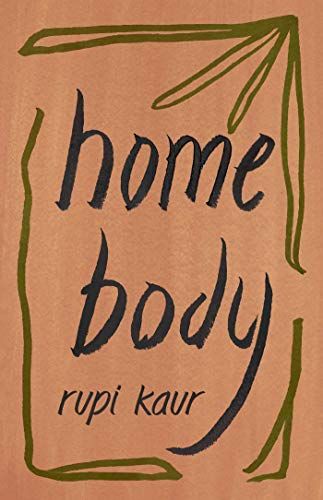
Home Body
Introduction
Nova: What if the home you've been searching for your entire life isn't a place, a person, or even a feeling — but your own body? That's the core question Rupi Kaur poses in her third poetry collection, "Home Body," which dropped in November 2020, smack in the middle of a global pandemic when we were all locked inside, staring at our walls — and ourselves. It shot straight to number one on the New York Times bestseller list, which, for a poetry book, is practically unheard of.
Nova: That's the thing — Rupi Kaur basically proved the entire publishing industry wrong. Her first two collections, "Milk and Honey" and "The Sun and Her Flowers," had already sold over eight million copies combined, translated into more than forty languages. And then came "Home Body," completing what many consider her trilogy. She wrote it between 2018 and 2020, during a period when she says she felt like her mind, her body, and her sense of self were — and I'm quoting her — "three completely different people."
Nova: Exactly. The very first poem in the book says it all: "after feeling disconnected for so long / my mind and body are finally / coming back to each other / - home body." It's the thesis statement for the entire collection. And today, we're diving into what makes this book such a phenomenon — the four stages of its journey, the raw vulnerability, the political fire, the controversy around her style, and why millions of readers feel so deeply seen by her words.
Mind, Heart, Rest, Awake
The Architecture of Healing
Nova: So "Home Body" is structured into four distinct sections — mind, heart, rest, and awake. And this isn't just a random organizational choice. It actually traces a psychological arc: from trauma and disconnection, through emotional processing, into rest and recovery, and finally to awakening and empowerment.
Nova: That's a great way to put it. The first section, "mind," is easily the darkest. Kaur writes unflinchingly about depression, anxiety, self-hatred, and the experience of being sexually abused starting at age four. There's a poem where she says: "i have never known anything more / quietly loud than anxiety." That oxymoron — "quietly loud" — captures something so true about how anxiety operates internally. It's screaming inside you while the world sees nothing.
Nova: Right. "Heart" shifts into relationships — romantic, familial, the messy ones. She writes about loving people who hurt her, about the confusion between love and violence. There's this devastating line: "i have difficulty separating / abusive relationships / from healthy ones / i can't tell the difference / between love and violence / it all looks the same." It's brutally honest about how trauma warps our understanding of love.
Nova: In some ways, yes. "Rest" is where Kaur turns her critical eye outward — onto capitalism, productivity culture, the grind. She asks: what if your worth isn't measured by your output? She writes about her immigrant father who drove trucks, working until his "bones become dust." It's a meditation on rest as an act of resistance. But the title is a bit misleading because this section is still full of heavy critique.
Nova: Yes, and it's where everything comes together. "Awake" is about finding your voice, community, solidarity. Kaur brings in politics — Black Lives Matter, the 1984 Sikh genocide, racism, feminism. She argues that personal healing and collective awakening are intertwined. You can't fully come home to yourself without also engaging with the world around you. One reviewer from the Harvard Crimson called it Kaur's "holy trinity for a rich life — mind, body, and identity."
Trauma, Survival, and Self-Reclamation
The Body as Battleground and Sanctuary
Nova: One thing that sets this collection apart from Kaur's earlier work is how directly she confronts the physical experience of trauma. The book opens with her processing being molested at the age of four, and she traces how that early violation made her feel foreign in her own skin for decades afterward.
Nova: I think because she's drawing a direct line between trauma and disconnection from the body. The whole concept of being a "home body" — of feeling at home inside yourself — only makes sense if you first understand what it means to feel homeless in your own skin. She writes: "my mind / my body / and i / all live in one place / but it feels like we are / three completely different people." That fragmentation is a classic trauma response.
Nova: Yes, and she's very clear that this isn't a linear, tidy process. One poem that reviewers keep highlighting is called "balance." It rejects toxic positivity — the idea that healing means being happy all the time. Instead, Kaur insists that true emotional health means sitting with negative feelings, letting them pass through you, not pretending they don't exist.
Nova: Exactly. And Kaur gets very embodied about it. She writes about masturbation as meditation — "masturbation / is meditation" — and it sounds provocative, but what she's really saying is: reconnecting with your own body, on your own terms, is a spiritual practice. She's reclaiming physical pleasure from the shame that trauma and patriarchal culture attach to it.
Nova: She does. Simple black line sketches — a face in profile, hands reaching, a curled-up figure. They're sparse, like the poems, but they add this intimate, almost diary-like quality. About every other poem has an accompanying drawing, and they reinforce this sense that you're being invited into someone's private process of putting themselves back together. The visual minimalism mirrors the verbal minimalism.
Capitalism, Immigrant Hustle, and Learning to Rest
Productivity Guilt and the Machine
Nova: Let me read you one of the most talked-about poems in this collection. It's called "productivity anxiety," and it's one of the few longer pieces in the book. Kaur writes: "i measure my self-worth / by how productive i've been / but no matter / how hard i work / i still feel inadequate."
Nova: Right? And she goes deeper. She traces this anxiety to two sources — her immigrant parents' work ethic, and capitalism. She described it in an interview as her immigrant parents and capitalism coming together to create "the most dangerous tag team." Her father drove trucks for a living. She writes about him having to "keep his head down" and work until his bones turned to dust.
Nova: Exactly. And then capitalism takes that survival instinct and weaponizes it, convincing us that our entire value as human beings equals our output. Kaur writes: "capitalism got inside my head / and made me think my only value / is how much i produce for people to consume." This poem resonated massively during the pandemic, when everyone was stuck at home, feeling guilty for not being productive enough during a global crisis.
Nova: That's the tragedy of it. And Kaur offers an antidote: deliberate rest. In the "rest" section, she argues that rest is not laziness — it's a form of resistance against a system that wants to extract everything from you. By the end of "productivity anxiety," the frantic, long lines melt into short, calm ones. The poem itself performs the act of slowing down.
Nova: She also connects this to community. There's a line: "Even if we managed to / make all the money in the world / we'd be left feeling empty for something / our souls ache for community." It's a pretty radical statement for a poet who's also a massive commercial success. She's essentially saying: I've achieved the capitalist dream, and it's not enough.
Accessibility, Criticism, and the Redefinition of Poetry
The Instapoet Paradox
Nova: We can't talk about Rupi Kaur without addressing the huge controversy around her work. She's been called the queen of "Instapoetry" — and not always as a compliment.
Nova: That's definitely one camp. Critics argue her work lacks depth, that the short lines and simple language don't qualify as poetry. Some have even accused her of plagiarism, suggesting her themes and style borrow too heavily from other poets. There's a common complaint that many of her pieces are really just aphorisms — witty sayings — not poems.
Nova: The defense is that Kaur never set out to write for literary elites. She uses all lowercase letters — that's a tribute to the Gurmukhi script of Punjabi, where there's no concept of uppercase and lowercase. She uses only the period as punctuation. She has said her style is "a visual representation of what I want to see more of within the world: equalness." Her goal is accessibility — poetry that anyone can pick up and immediately understand without needing a literature degree.
Nova: That's exactly the debate. When she was in university, she was told not to bother publishing because poetry doesn't sell. She got rejection after rejection. So at twenty-one, she self-published "Milk and Honey." Now she's sold over eleven million books. The gatekeepers said no, and she built her own gate.
Nova: Fair question, and even some of her more sympathetic reviewers acknowledge that "Home Body" feels rushed in places. Janice Greenwood, a poet and reviewer with an MFA from Columbia, wrote that many poems feel like they were "fretfully and fitfully sitting in a room for a few nights, hashing it out." She said Kaur exhibits self-awareness about this — she even has a line that goes "your rushing is / suffocating the masterpieces."
Nova: She seems to. And Greenwood made an interesting point: maybe what Kaur is offering isn't poetry in the traditional sense, but something closer to self-help — and in the middle of a pandemic that killed hundreds of thousands of people, maybe that's exactly what readers needed. A "list of things to heal your mood" might not be Keats, but it served a purpose.
Nova: And millions of readers — especially young women, especially women of color, especially immigrants and daughters of immigrants — have said: this made me feel seen. That's not nothing.
Conclusion
Nova: So where does "Home Body" leave us? I think the title poem itself captures the entire message in just six lines: "i dive into the well of my body / and end up in another world / everything i need / already exists in me / there's no need / to look anywhere else."
Nova: And that's Kaur's whole project. She's saying: stop searching outside yourself for validation, for healing, for home. The well is already there. You just have to dive in. And yes, the water is dark and scary — there's trauma there, there's depression, there's the legacy of abuse and systemic violence — but there's also everything you need.
Nova: First: healing is not linear. Kaur maps it across mind, heart, rest, and awake — but these aren't stages you complete and leave behind. They're cycles you move through over and over. Second: your worth is not your productivity. In a world that wants to turn you into a machine, rest is revolutionary. And third: the personal and the political are inseparable. You can't heal yourself in isolation from community, and you can't build community without doing your own inner work.
Nova: Exactly. During a pandemic when we were all trapped at home, Kaur asked: but are you at home in yourself? That question turned a poetry collection into a cultural moment. Whether or not you think her lines qualify as poetry, the resonance is undeniable. Eleven million readers can't all be wrong about feeling something.
Nova: Beautifully said. This is Aibrary. Congratulations on your growth!