

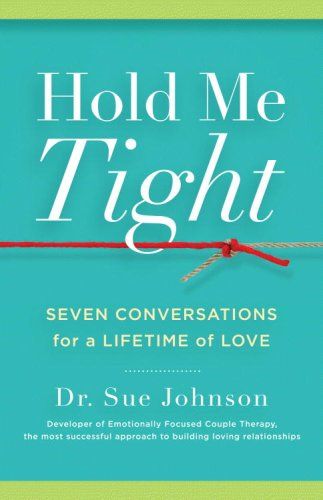
Hold Me Tight
Seven Conversations for a Lifetime of Love
Introduction
Nova: For centuries, we have been told that love is a mystery. It is this ethereal, unpredictable force that strikes like lightning and, just as easily, vanishes into thin air. We write poems about it, we sing songs about it, but for a long time, science stayed far away from it. But what if I told you that love is actually a survival code? That there is a logical, biological map to the human heart?
Nova: That is exactly what Dr. Sue Johnson argues in her groundbreaking book, Hold Me Tight. She says we have been looking at relationships all wrong. We treat adults like they are supposed to be these perfectly independent islands, and when they struggle in love, we tell them to communicate better or negotiate their chores. But Sue says the problem is much deeper. It is about attachment. It is about our primal need for a safe haven.
Nova: Exactly. Today, we are diving into the science of Emotionally Focused Therapy, or EFT, and exploring the seven conversations that can literally rewire a relationship. We are going to look at why we fight, why we freeze, and how we can find our way back to each other. This is not just a book summary; it is a look at the new science of love.
Key Insight 1
The Science of Adult Attachment
Nova: To understand Hold Me Tight, we have to go back to the 1950s and a man named John Bowlby. He was the father of attachment theory, but back then, people only applied his work to children. The idea was that infants need a secure bond with a caregiver to survive. If they do not have it, they literally wither away.
Nova: Precisely. But the radical shift Sue Johnson made was realizing that we do not outgrow that need. We do not suddenly become self-sufficient islands the moment we turn eighteen. Adult romantic love is just another version of that same attachment bond. We need our partners to be our secure base.
Nova: That is one of the biggest myths Sue Johnson debunks. She calls it the myth of self-sufficiency. In reality, the more securely attached we are to someone, the more independent we can actually be. Think about it like a mountain climber. If you know your safety rope is rock solid, you are going to climb higher and take more risks. If you are constantly worried the rope is going to snap, you are going to be paralyzed by fear.
Nova: Exactly. Sue calls it attachment distress. When we feel like our partner is not there for us, or that they do not see us, our brain goes into a full-blown panic. The amygdala, the fear center of the brain, takes over. And that is when things get messy. That is when the fights start, but they are not really about the dishes or the money. They are about the question: Are you there for me?
Nova: It really is. And because we do not realize that is what is happening, we fall into these toxic patterns that Sue calls the Demon Dialogues. We think we are arguing about logic, but we are actually screaming for connection.
Key Insight 2
The Demon Dialogues
Nova: When that attachment alarm goes off, we usually fall into one of three predictable patterns. Sue calls these the Demon Dialogues. The first one is the most common, and she calls it Find the Bad Guy.
Nova: Exactly. It is a defensive move. If I can prove you are the problem, then I do not have to feel the pain of being disconnected from you. But the problem is, it is a dead end. No one ever wins, and the distance between you just grows. The second dialogue, though, is the one that really defines most struggling relationships. It is called the Protest Tango.
Nova: Usually, it is a pursuer and a withdrawer. One person is protesting the loss of connection by getting loud, critical, or demanding. They are basically banging on the door saying, Talk to me! Notice me! But the other person feels overwhelmed by that intensity, so they pull back. They shut down. They withdraw to protect themselves.
Nova: Precisely. It is a self-reinforcing loop. The pursuer thinks, If I do not scream, they will never hear me. The withdrawer thinks, If I stay and talk, I will just get attacked more. They are both trying to save the relationship in their own way, but they are actually driving each other crazy.
Nova: It is a total paradox. And the third dialogue is the most dangerous of all: Freeze and Flee. This happens when the pursuer finally gives up. They stop banging on the door. Both people just go numb. They live like roommates, polite but distant. There is no more fighting, but there is also no more fire. The relationship is essentially in a coma.
Nova: Exactly. Sue says that even a fight is a sign of life. It is a protest against the loss of connection. But when you hit Freeze and Flee, the attachment bond has almost completely withered. The goal of the book is to help couples recognize these dialogues as the enemy, rather than seeing their partner as the enemy.
Key Insight 3
The Seven Conversations
Nova: So, how do we stop the Demon Dialogues? Sue outlines seven specific conversations that form the heart of Emotionally Focused Therapy. The first step is simply Recognizing the Demon Dialogue. You have to be able to step back in the middle of a fight and say, Hey, we are doing that thing again. You are withdrawing, and I am pursuing. The cycle is the enemy, not you.
Nova: It does, but it is the only way to de-escalate the brain's panic response. Once you name the cycle, it loses some of its power. Then you move into the second conversation: Finding the Raw Spots. This is where you dig under the anger to find the actual hurt. Maybe when you do not answer your phone, I do not just feel annoyed; I feel unimportant. I feel like I do not matter to you.
Nova: It is terrifyingly vulnerable. But that is the point. Vulnerability is the only thing that can pull a partner back in. If I attack you, you defend. If I tell you I am hurting and I need you, you are much more likely to reach out. This leads to the most important conversation in the book, the one it is named after: the Hold Me Tight conversation.
Nova: It is a very specific request for emotional connection. It is about being able to say, I am afraid of losing you, and I need you to reassure me that I am safe with you. It is about creating what Sue calls an Enactment. You are not just talking about your feelings; you are actively reaching for your partner in the moment.
Nova: That is conversation five: Forgiving Injuries. Sue argues that you cannot just move on from an attachment injury. You have to go back and heal it. The person who caused the pain has to truly see and feel the impact of that pain on their partner. They have to offer a deep, emotional apology that says, I see how I broke your trust, and it hurts me that I hurt you. Without that, the wound stays open and keeps the Demon Dialogues alive forever.
Key Insight 4
The A.R.E. Model and EFT Success
Nova: One of the most practical tools Sue gives us is the A. R. E. acronym. It stands for Accessible, Responsive, and Engaged. These are the three pillars of a secure bond. If you want to know if your relationship is on solid ground, you ask these three questions.
Nova: Accessible means: Can I reach you? When I am struggling, or even when I am just excited, are you available to me? Do you put down the phone? Do you look me in the eye? It is about being present.
Nova: Responsive is: Can I rely on you to respond to me emotionally? If I show you I am sad, do you offer comfort? If I am happy, do you celebrate with me? It is about showing that my emotions have an impact on you. You are tuned into my frequency.
Nova: Engaged is the long-term version. It is: Do I know you value me and will stay close? It is that deep sense of being cherished. When all three are present, you have a secure attachment. And the data on this is actually incredible. Emotionally Focused Therapy, which is based on these principles, has a success rate of about 70 to 75 percent.
Nova: It usually is! Traditional behavioral therapy, where you learn to negotiate who does the laundry, often has a high relapse rate. People go back to fighting within a year. But EFT is different because it changes the underlying emotional bond. Once you feel safe with your partner, the laundry doesn't matter as much. You stop fighting about the surface stuff because the foundation is solid.
Nova: Exactly. Sue Johnson often says that love is not the icing on the cake of life; it is a basic primary need, like oxygen or water. When we have it, we are more resilient, we are healthier, and we actually live longer. The science shows that people in secure relationships have lower blood pressure and stronger immune systems. Connection is literally medicine.
Conclusion
Nova: We have covered a lot today. From the evolutionary roots of attachment to the destructive cycles of the Protest Tango, and finally to the healing power of the Seven Conversations. If there is one thing to take away from Hold Me Tight, it is that your need for connection is not a weakness. It is your greatest strength.
Nova: I love that. Effectively dependent. It is about building that safe haven so you can go out and face the world with confidence. If you are listening and you feel like you are stuck in a Demon Dialogue, remember: the cycle is the enemy. Try reaching out with a raw spot instead of a criticism. It might just change everything.
Nova: Absolutely. For anyone looking to dive deeper, I highly recommend picking up a copy of Hold Me Tight by Dr. Sue Johnson. It is a game-changer for any relationship, whether you are in crisis or just want to get closer.
Nova: Me too, Leo. This is Aibrary. Congratulations on your growth!