The Unseen Architect: Rethinking Your Family's Foundation.
Golden Hook & Introduction
SECTION
Nova: Many of us believe that if we just love our families enough, everything will fall into place. We pour our hearts into it, right? But what if that 'good intention' is actually a blind spot, leading to more chaos than connection?
Atlas: Oh, I know that feeling. It's like you're trying your absolute best, you're putting in the hours, you're saying all the right things, but somehow, you still end up feeling reactive, always playing catch-up. It's an exhausting cycle for anyone trying to balance a demanding career with a thriving home life.
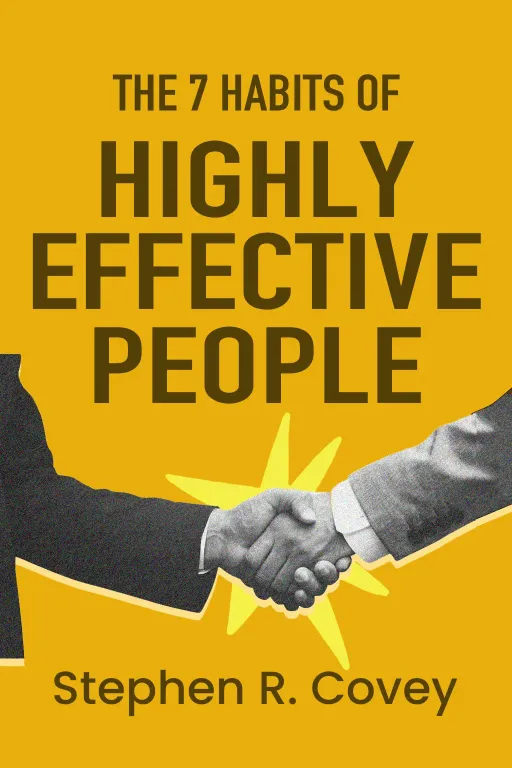
Nova: Absolutely. And that's exactly what we're tackling today on Aibrary, as we unpack 'The Unseen Architect: Rethinking Your Family's Foundation.' We're drawing powerful insights from two seemingly disparate but incredibly complementary fields. We're talking about Stephen Covey, the renowned business and leadership guru whose work has shaped boardrooms worldwide, and Sue Johnson, a clinical psychologist who pioneered Emotionally Focused Therapy, transforming countless relationships.
Atlas: What an incredible pairing! You typically don't hear those two names in the same sentence when discussing family. It makes me wonder, what's the common thread that brings a leadership expert and a relationship therapist together for family dynamics? What are they seeing that we're missing?
The Proactive Family Architect: Applying Strategic Habits
SECTION
Nova: Well, the common thread is precisely that 'blind spot' we mentioned. We often approach family life with good intentions, but without a clear, proactive framework. It's like trying to build a magnificent skyscraper without an architectural blueprint. You might have great materials and skilled workers, but without a plan, it's just a collection of parts. Covey, through his '7 Habits,' essentially offers us that blueprint for our families.
Atlas: Okay, so you're saying family life isn't just about love and good vibes; it's also about strategy? That's a fascinating reframing for someone who's used to thinking strategically in their professional life, but maybe not so much at home. What's the first habit we need to put into practice?
Nova: The most foundational habit, and frankly, the one that shifts everything, is 'Begin with the End in Mind.' For a family, this means articulating your core values, your shared vision for what a thriving home environment looks like. It’s not just about getting through the day; it’s about consciously deciding what kind of family you want to be five, ten, twenty years from now.
Atlas: But how does a busy parent actually 'begin with the end in mind' when they're just trying to survive the daily whirlwind of school runs, work deadlines, and dinner negotiations? It sounds like more work on an already overflowing plate.
Nova: It’s less about adding work and more about intentionality. Think of the Smith family struggling with screen time. Their kids were constantly glued to devices, leading to arguments and isolation. They were reacting to every new game or app. When they 'began with the end in mind,' they realized their core family vision was about connection, creativity, and outdoor adventure. This didn't mean banning screens entirely. Instead, it meant proactively scheduling 'connection zones' without devices, setting up creative projects, and planning weekly hikes.
Atlas: Oh, I see. So, the 'end in mind' wasn't 'no screens,' it was 'more connection and creativity.' And the screen rules became a natural outcome of that vision, not just a knee-jerk reaction to a problem. That makes a lot of sense. It shifts from being prescriptive to principle-driven.
Nova: Exactly. It's about designing your family culture. Another crucial habit from Covey that really shines in this context is 'Seek First to Understand, Then to Be Understood.' It sounds simple, but in the heat of family disagreements, how often do we really listen to understand, rather than just waiting for our turn to speak?
Atlas: Honestly, not often enough. Especially when you're tired, it's easy to jump to conclusions or just want to solve the problem quickly. Can you give an example of how that plays out in a common family conflict? Let's say, a teenager who just slams their bedroom door after being asked to do chores.
Nova: Perfect scenario. A reactive parent might yell back, demand obedience, or ground the teen. But if you 'seek first to understand,' you might take a breath, approach calmly later, and ask, "Hey, I noticed you seemed really upset when I asked about chores. What's going on for you right now?" You might discover they had a terrible day at school, felt overwhelmed, or had a friend issue. It doesn't excuse the behavior, but understanding the underlying emotion opens a pathway for connection and resolution, rather than just escalating conflict.
Atlas: That’s a great example. It's about getting to the root, not just pruning the leaves. It really highlights how these habits are less about strict rules and more about cultivating a deeper, more empathetic way of being with your family.
The Emotional Foundation: Building Secure Attachment with Scientific Insight
SECTION
Nova: And that naturally leads us to the second key idea we need to talk about, which often acts as the unseen, emotional counterpoint to Covey's strategic habits: Sue Johnson's work on Emotionally Focused Therapy. While Covey gives us the logical blueprint, Johnson shows us the unseen forces – the emotional currents that truly bind a family. It’s like, you can build a beautiful house with a perfect blueprint, but if the foundation isn't solid, or if the internal systems like plumbing and electricity are faulty, it won't stand the test of time, or feel like a home.
Atlas: Unseen forces? What exactly does that mean for how we interact with our kids or partners? Are we talking about subconscious drives here?
Nova: We're talking about secure attachment. Johnson's research, rooted in attachment theory, highlights our innate need for safe, reliable connection. When we feel securely attached, we thrive. When that attachment feels threatened, we activate what she calls 'protest behaviors' – things like crying, withdrawing, lashing out – all attempts to re-establish connection, even if they look like rejection. She gives us a scientific lens to understand why our loved ones behave in certain ways.
Atlas: That’s fascinating. So, a child having a meltdown, or a partner being distant, might not just be 'being difficult,' but actually signaling an emotional need for connection? That really shifts the perspective. What does that look like in a real-life family situation?
Nova: Imagine a young child having a massive tantrum in a grocery store. A reactive parent might see it as defiance, embarrassment, or manipulation. But through Johnson's lens, it could be a 'protest behavior.' Perhaps they’re overwhelmed, tired, or feeling disconnected from their parent who’s been busy. The child is essentially crying, "Are you there for me? Do I matter?"
Atlas: That sounds great in theory, but in the heat of the moment, when emotions are high, and you're surrounded by judging eyes, how do we actually 'seek to understand' those signals instead of just reacting with frustration? It feels almost impossible.
Nova: It’s absolutely a learned skill, not an innate one. It requires pausing, observing, and then responding not to the behavior, but to the underlying emotional signal. For the grocery store example, instead of yelling, a parent might kneel down, make eye contact, and say, "You're really upset right now, aren't you? I'm here. Let's take a breath together." This validates the emotion, signals availability, and re-establishes connection. It's applying Covey's 'Seek First to Understand' but with a deep, empathic understanding of emotional signals.
Atlas: Wow, that’s actually really inspiring. It means we're not just trying to manage behavior; we're actively building a stronger emotional bond. It's like the architectural blueprint from Covey gives us the plan, but Johnson's insights give us the structural integrity, ensuring that the house we build is not just functional, but deeply connected and resilient. One without the other feels incomplete.
Synthesis & Takeaways
SECTION
Nova: Exactly! So, we have the strategic framework from Covey, helping us 'begin with the end in mind' and 'seek first to understand' from a logical, intentional perspective. And then we have the profound emotional science from Johnson, showing us the critical importance of secure attachment and understanding those unspoken emotional signals. It's about designing your family's future while also nurturing its deep, emotional core.
Atlas: It's like building a strong, functional structure, but also ensuring it truly feels like a home, a sanctuary of connection and understanding. For anyone who's driven by impact and cares about legacy, understanding both these levels of 'architecture' for their family is absolutely crucial. It's not just about what you achieve professionally, but the thriving environment you cultivate at home.
Nova: And that brings us back to our deep question: What 'end in mind' do you truly hold for your family, and what one habit could you cultivate to move closer to that vision? Maybe it's scheduling a weekly 'emotional check-in' with your partner or kids. Or perhaps it's simply taking five intentional breaths before reacting to a family challenge.
Atlas: I think for me, it's about consciously choosing to interpret 'protest behaviors' as bids for connection, rather than just annoyances. That one shift could change everything. It's about building that legacy of deep connection, not just a list of accomplishments.
Nova: That's a powerful commitment, Atlas. Because ultimately, the unseen architecture of our families, built on both strategic intent and emotional understanding, is the most profound legacy we can leave.
Atlas: Absolutely.
Nova: This is Aibrary. Congratulations on your growth!