

History of Economic Thought
Introduction
Nova: Have you ever wondered why we look at the world the way we do? I mean, why do we talk about supply and demand, or inflation, or the invisible hand as if they are laws of nature? Most people think economics is just a bunch of dry math and spreadsheets, but William J. Barber argues it is actually a gripping story of human ideas evolving over centuries.
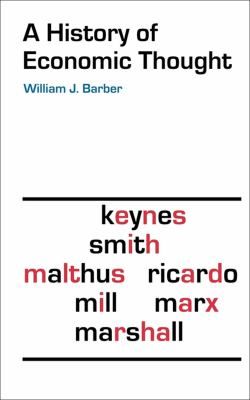
Nova: Exactly. And that is what we are diving into today. We are looking at William J. Barber's classic book, A History of Economic Thought. It is not just a list of names and dates. Barber treats economic theories like living organisms that grow, adapt, and sometimes die out when the world changes. He focuses on four major schools of thought that shaped the modern world: the Classicals, the Marxians, the Neoclassicals, and the Keynesians.
Nova: It is definitely an argument. A very long, very sophisticated argument. Barber's goal is to show us the analytical skeleton of these ideas. He wants us to see why these thinkers believed what they did, given the problems they were trying to solve in their own time. By the end of this, you will see that the debates we are having today about taxes, jobs, and the government are actually hundreds of years old.
Key Insight 1
The Classical Foundation
Nova: We have to start with the Classicals, and that means Adam Smith. Barber points out that before Smith published The Wealth of Nations in 1776, there was no systematic way of thinking about the economy. People mostly thought about how to make the King rich. Smith flipped that on its head.
Nova: Not exactly. Barber explains that Smith was obsessed with the idea of natural liberty. He saw a world where if you let individuals pursue their own interests, they would inadvertently create a wealthy and orderly society. He used the example of the pin factory to show how division of labor makes us incredibly productive. One person making a pin might make twenty a day, but ten people specializing in different parts of the process could make forty-eight thousand.
Nova: In many ways, yes. But then came David Ricardo, and things got a bit darker. Barber describes Ricardo as the man who turned economics into a rigorous, abstract science. While Smith was looking at the big picture of growth, Ricardo was worried about how the pie gets divided between workers, landlords, and capitalists.
Nova: Precisely. Ricardo developed the theory of rent. He argued that as population grows, we have to farm less fertile land, which pushes up food prices and makes landlords rich while squeezing the profits of the people actually running the businesses. This is where the term dismal science comes from. Ricardo saw a future where growth would eventually grind to a halt because the landlords would suck up all the surplus.
Nova: That is exactly what Barber emphasizes. These thinkers were responding to the Industrial Revolution. They were trying to figure out if this new system could last forever or if it had built-in limits. They also introduced the labor theory of value, the idea that the value of a product comes from the amount of work put into it. That might sound like a technicality, but it set the stage for the biggest challenge the system ever faced.
Nova: You got it. But before we get to Marx, we have to appreciate that the Classicals gave us the vocabulary we still use today. They defined the factors of production: land, labor, and capital. They made us think about the economy as a self-regulating system rather than something the King should micromanage.
Key Insight 2
The Marxian Challenge
Nova: Now, Barber's treatment of Karl Marx is really interesting because he does not look at him as just a political revolutionary. He looks at him as the person who took the Classical ideas of Smith and Ricardo and turned them against the system.
Nova: Remember that labor theory of value I mentioned? Marx took that and ran with it. He argued that if labor is the source of all value, then the profit the business owner takes is essentially unpaid labor. He called this surplus value. Barber explains that for Marx, this was not just a moral failing of the boss; it was a structural necessity of capitalism.
Nova: Exactly. And Barber highlights how Marx saw this leading to an inevitable collapse. Marx argued that capitalists are forced to compete with each other, so they buy more machines to replace workers. But if value only comes from labor, and you have fewer workers, your rate of profit starts to fall. To make up for it, you squeeze the remaining workers even harder.
Nova: That is the big question. Barber points out that Marx underestimated the system's ability to innovate and the role of technology in making everyone more productive, not just replacing people. But Marx's real contribution to economic thought was his focus on the macro-level cycles. He was one of the first to say that capitalism is inherently unstable and prone to crises.
Nova: Definitely. Barber shows that Marx forced other economists to look at the social relations of production. He made it impossible to ignore the fact that the economy is not just a neutral machine; it is a system that affects different groups of people in very different ways. But while Marx was looking at the grand sweep of history and the clash of classes, another group of thinkers was about to zoom in really close on the individual consumer.
Nova: It does. And it changes the definition of value entirely. We move from the factory floor to the mind of the shopper.
Key Insight 3
The Neoclassical Revolution
Nova: In the late 1800s, thinkers like Alfred Marshall changed the game. Barber calls this the Neoclassical school. They moved away from the idea that value comes from labor. Instead, they argued that value is subjective. It is all about utility, or how much satisfaction a consumer gets from a product.
Nova: Exactly. This is the marginal revolution. Barber explains that these economists focused on the margin, the next unit of something. You might pay a lot for one bottle of water if you are in the desert, but you wouldn't pay much for the hundredth bottle. This solved the old diamond-water paradox that had stumped earlier thinkers.
Nova: It is. This is where we get the supply and demand curves you see in every intro textbook. Barber notes that the Neoclassicals wanted to make economics more like physics. They wanted to find the equilibrium point where everything balances out. They assumed that if you just leave markets alone, they will naturally find a state where everyone is as well off as they can be.
Nova: That is the classic critique. Barber points out that the Neoclassical model is beautiful in its logic, but it assumes a lot. It assumes perfect competition, perfect information, and that prices can change instantly. It basically treats the economy like a giant, self-correcting calculator.
Nova: A massive one. The Great Depression was the ultimate challenge to Neoclassical thought. According to their theories, a long-term depression shouldn't really be possible. If there are people out of work, wages should just drop until it becomes profitable to hire them again. The market should clear.
Nova: Not quite, but they needed a new one. And that is when John Maynard Keynes entered the scene. He realized that what works for an individual doesn't always work for the whole economy.
Key Insight 4
The Keynesian Shift
Nova: John Maynard Keynes is the final major figure Barber covers in detail. Keynes basically invented modern macroeconomics. Before him, economists thought that if you saved money, it was always good because that money would be invested. Keynes said, wait a minute, if everyone tries to save at the same time, nobody is spending, and if nobody is spending, businesses stop producing and fire people.
Nova: Exactly. He called this the paradox of thrift. Barber explains that Keynes shifted the focus from the long run to the short run. There is a famous quote from Keynes: In the long run, we are all dead. He meant that telling people the market will eventually fix itself is useless if they are starving right now.
Nova: Yes. Barber describes this as the birth of the idea that the government has a responsibility to manage the economy. If the private sector isn't spending enough to keep everyone employed, the government should run a deficit to jumpstart the engine. It was a revolutionary idea at the time.
Nova: Barber shows how Keynesianism became the new orthodoxy after World War II. It seemed to work perfectly for a few decades. But he also leaves us with a warning. Every school of thought we have discussed was a response to a specific set of problems. The Classicals responded to the birth of industry, the Marxians to the hardships of workers, the Neoclassicals to the need for efficiency, and the Keynesians to the disaster of the Depression.
Nova: That is the core takeaway of the book. Barber argues that we shouldn't get too attached to any one model. As the world changes, our economic theories have to change too. When we hit the stagflation of the 1970s, the simple Keynesian models started to struggle, which led to a resurgence of some of those older Neoclassical ideas. It is a constant cycle of revision.
Conclusion
Nova: We have covered a lot of ground today, from Adam Smith's pin factory to Keynes's deficit spending. William J. Barber's A History of Economic Thought shows us that economics is not just about numbers; it is about the stories we tell ourselves to make sense of how we live together.
Nova: That is a great way to put it. The Classicals show us the power of growth and markets. Marx reminds us to look at power and inequality. The Neoclassicals give us tools for efficiency and individual choice. And Keynes shows us how to manage the big picture when things go wrong.
Nova: You are right. And that is why studying this history is so important. It gives us the context to build the next set of ideas. We are all part of this ongoing conversation. If you want to understand the world around you, you have to understand the ideas that built it.
Nova: My pleasure. If you enjoyed this deep dive into the history of ideas, definitely check out Barber's book for the full technical breakdown. It is a masterclass in intellectual history. This is Aibrary. Congratulations on your growth!