

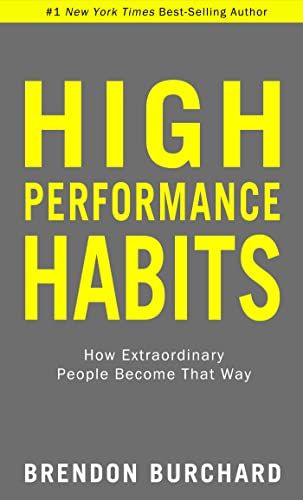
High performance habits
Introduction
Nova: Have you ever looked at someone who seems to be winning at everything—their career, their health, their relationships—and wondered if they just have better DNA than the rest of us? Like they were born with some kind of success software pre-installed on their hard drive?
Nova: Well, today we are looking at a book that completely dismantles that idea. It is called High Performance Habits by Brendon Burchard. After conducting one of the largest studies on high performers ever—covering over 190 countries and tens of thousands of data points—Burchard found that success is not about who you are, it is about what you do consistently. It is not about biology; it is about habits.
Nova: That is exactly what we are going to dive into. Burchard defines high performance as succeeding beyond standard norms over the long term. It is not a one-hit wonder situation. It is about sustained excellence. And he identified six specific habits that make the difference. We are going to break them down today and see how they can actually change the way we live and work.
Seeking Clarity and Generating Energy
The Personal Pillars
Nova: To start off, let us look at the first two habits, which are really about your internal state. The first one is Seek Clarity. Now, most people think clarity is something you just have or you do not, like an epiphany that hits you while you are in the shower.
Nova: Exactly, but Burchard says that is a myth. High performers do not just wait for clarity; they seek it. They are constantly asking themselves questions about who they want to be, how they want to interact with others, and what will bring the most meaning to their day. It is an active, ongoing process.
Nova: Precisely. He found that high performers check in on their intentions much more frequently than underperformers. They are clear on the feeling they want to bring to a meeting before they even walk in the door. They do not just show up; they set the tone. This leads directly into the second habit: Generate Energy.
Nova: He actually looks at energy through three lenses: physical, emotional, and mental. One of the most interesting things he discovered is how high performers manage transitions. Most of us carry the stress from one task right into the next. If you had a frustrating phone call, you carry that frustration into your next meeting.
Nova: High performers use a technique called Release Tension, Set Intention. When they finish a task, they close their eyes for a minute, repeat the word release to let go of the previous stress, and then they consciously choose their intention for the next task. It is like hitting the reset button on your brain multiple times a day.
Nova: Exactly. And on the physical side, he found that high performers actually exercise more than the average person, even though they are busier. They realize that energy is not something you have; it is something you generate through movement and mental focus. If you wait to feel energetic before you start working, you are going to be waiting a long time.
Raising Necessity
The Psychological Driver
Nova: Now we get to the habit that Burchard says is the real secret sauce. It is called Raise Necessity. This is the difference between someone who wants to do something and someone who must do it.
Nova: In a way, yes, but it is a specific kind of pressure. He calls it the obsession of the high performer. It is the internal drive where your identity is tied to your performance. For a high performer, doing a good job is not just a preference; it is a necessity for them to feel like themselves.
Nova: It is both. He found that high performers have a mix of internal and external forces. Internally, they have a high level of personal standards. Externally, they often have people counting on them. They feel a sense of duty or social obligation to perform well. When you feel that what you are doing truly matters to others, your brain switches into a higher gear.
Nova: That is exactly it. High performers tap into that feeling on purpose. They do not wait for a crisis to feel necessity. They create it by constantly reminding themselves of their why and who they are serving. They ask themselves: Who needs me on my A-game right now?
Nova: Exactly. Burchard found that when necessity is high, people do not just work harder; they work smarter. They stop wasting time on trivial things because they feel the weight of their mission. It is the antidote to procrastination. You do not procrastinate on things that are absolutely necessary for your identity.
Productivity and Influence
The Social and Tactical Game
Nova: Moving from the internal to the external, the fourth habit is Increase Productivity. But here is the catch: high performers are not just busy. They focus on what Burchard calls Prolific Quality Output, or PQO.
Nova: It means identifying the one or two things in your job that actually move the needle and spending sixty percent of your time on those. Most people spend their day reacting—responding to emails, sitting in purposeless meetings, or doing minor tasks that feel like work but do not produce anything of lasting value.
Nova: High performers figure out what their primary contribution is. If you are a writer, your PQO is finished pages. If you are a salesperson, it is closed deals. They obsess over those outputs and minimize everything else. They are not trying to be good at everything; they are trying to be prolific at the things that matter most.
Nova: Yes, the fifth habit is Develop Influence. This was a fascinating finding in the research. Influence is not about being bossy or having a high title. It is about how you lead people to think. High performers consistently do three things: they teach people how to think, they challenge people to grow, and they role model the behavior they want to see.
Nova: It is more about framing. If a team is facing a challenge, a high performer might say, instead of looking at this as a failure, let us look at it as a data-gathering mission. They are influencing the perspective of the group. They also do not shy away from challenging people. They ask others to step up and be better, which, surprisingly, makes people like and respect them more, not less.
Nova: Exactly. People follow those who make them feel better about themselves and their future. High performers are not just focused on their own output; they are focused on elevating the people around them. That is how they build the support systems they need to sustain their high performance.
Courage and the Three Traps
The Final Frontier
Nova: The final habit is Demonstrate Courage. And Burchard is not talking about running into burning buildings. He is talking about everyday courage—sharing your truth, taking risks when the outcome is uncertain, and standing up for yourself and others.
Nova: That is the big takeaway from the book. Courage is a muscle. High performers do not feel less fear than everyone else; they just act despite it more often. They speak up when an idea is unpopular. They take the leap on a new business venture before they feel one hundred percent ready. Every time they do that, their courage grows.
Nova: But there is a dark side to all of this that Burchard is very careful to mention. He identified three big traps that can cause even the most successful people to crash and burn: Superiority, Dissatisfaction, and Neglect.
Nova: And once you think you are better than everyone, you stop listening. You stop seeking clarity. You stop growing. Dissatisfaction is the second one—the idea that you can never be happy until you reach the next goal. If you are never satisfied, you eventually lose the joy that fuels your energy. You just become a high-performing robot.
Nova: Exactly. Many high performers get so obsessed with their PQO or their necessity that they stop paying attention to their relationships or their physical well-being. Burchard found that the truly extraordinary performers are the ones who manage to avoid these traps by staying humble and maintaining their energy and relationships along the way.
Conclusion
Nova: We have covered a lot today. From seeking clarity and generating energy to raising necessity, increasing productivity, developing influence, and demonstrating courage. The overarching message of Brendon Burchard's work is that these are deliberate choices. They are not accidents of birth.
Nova: That is the best place to start. You do not have to master all six habits by Monday morning. Just picking one—like seeking clarity for five minutes every morning or focusing on your Prolific Quality Output—can shift your trajectory. High performance is a journey of becoming, not a final destination.
Nova: If you are looking to elevate your game, maybe it is time to stop looking for a shortcut and start looking at your habits. The data shows that the path is there if you are willing to walk it.
Nova: This is Aibrary. Congratulations on your growth!