

Magic, Mentorship, and Mindset: What Hogwarts Teaches Us About Learning
Golden Hook & Introduction
SECTION
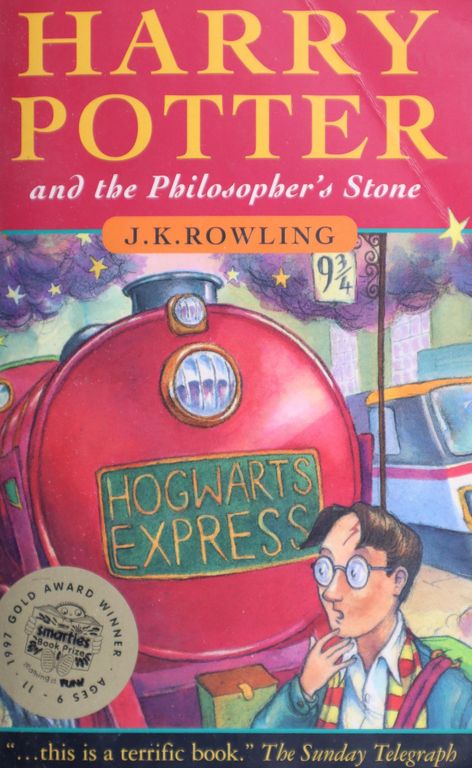
Nova: Imagine stepping into a classroom where the ceiling reflects the night sky, the staircases move on their own whim, and your final exam involves turning a teacup into a gerbil. It sounds like pure fantasy, right? But what if the magical world of Hogwarts actually holds the ultimate blueprint for how we learn, grow, and overcome challenges in the real world? Today, we are diving deep into J. K. Rowling's masterpiece, Harry Potter and the Philosopher's Stone, but we are looking at it through a completely different lens. We are going to tackle this book from three unique angles. First, we will explore Hogwarts as a psychological learning environment and how mentorship shapes identity. Then, we will break down the gauntlet of challenges protecting the Philosopher's Stone as a brilliant example of experiential learning. And finally, we will look at how collaborative problem-solving unlocks potential that traditional testing completely misses. I am Nova, and joining me today is William, an analytical thinker with over a decade of experience in education who also happens to appreciate the comforting perfection of a great bowl of mac and cheese. William, welcome!
William: Thanks, Nova! It is great to be here. And you know, you are so right about the comfort of mac and cheese, but honestly, looking at Harry Potter through an educational lens is just as satisfying. When you strip away the wand-waving and the potions, Hogwarts is essentially a massive case study in developmental psychology and instructional design. I am really excited to unpack how these magical elements map onto real-world learning theories.
Nova: Oh, I love that! A case study in instructional design. That is exactly where we are going today. Let us start right at the beginning, because before Harry can even cast a spell, he has to enter this entirely new world.
Deep Dive into Core Topic 1
SECTION
Nova: Think about Harry's life before Hogwarts. He is living under the stairs, constantly told he is nothing, completely isolated. Then, suddenly, he is thrust into this grand castle. But it is not just the magic that changes him; it is the people who guide him. We see these incredibly distinct styles of mentorship right away. You have Hagrid, who offers unconditional warmth; Professor McGonagall, who represents high standards and structure; and Professor Dumbledore, who provides quiet, strategic wisdom. William, from an educational perspective, how do these different mentors impact Harry's transition into this high-stakes environment?
William: It is fascinating, Nova, because what Harry experiences is a rapid reconstruction of his psychological safety. In education, we talk a lot about how a learner cannot absorb new information or take intellectual risks if they are stuck in a survival state. The Dursleys kept Harry in a perpetual state of survival. Hagrid is the one who breaks him out of that, not with academic lessons, but with emotional validation and, well, a giant birthday cake! He is the emotional anchor. Once Harry gets to Hogwarts, McGonagall steps in. She is strict, yes, but she is incredibly fair. She sets high expectations, which actually signals to Harry that he is capable. It is a classic example of the Pygmalion effect, where high expectations lead to better performance.
Nova: That is so true! She does not coddle him. Remember when Harry flies on his broom for the first time to catch Neville's Remembrall? He completely disobeys orders, but instead of expelling him, McGonagall recognizes his raw talent and puts him on the Gryffindor Quidditch team. She sees the potential behind the rule-breaking.
William: Exactly! She channels his behavior into a structured, positive outlet. And then you have Dumbledore, who plays a much longer game. Dumbledore does not just give Harry the answers. Think about the Mirror of Erised. Harry is obsessed with looking at his lost family, which is completely understandable but emotionally paralyzing. Dumbledore finds him there and explains how the mirror works, but instead of just banning him from the room, he helps Harry understand the danger of getting lost in dreams. He guides Harry to make the conscious choice to let go of the illusion. That is high-level cognitive coaching.
Nova: It really is. But we also have to talk about the flip side of mentorship at Hogwarts, which is, of course, Professor Snape. The moment Harry walks into Potions class, Snape targets him. He asks him highly specific questions that Harry could not possibly know yet, like the difference between monkshood and wolfsbane, and then docks points. It is a complete contrast to the supportive environment. How does that kind of negative mentorship affect a learner?
William: Snape is the ultimate example of creating a high-threat, low-challenge environment for Harry. He uses public humiliation, which immediately triggers a threat response. When a student is in that state, their prefrontal cortex essentially goes offline. They are not thinking about the chemistry of potions; they are thinking about survival and escape. It is a brilliant narrative contrast by Rowling because it shows that even in a magical world, bad pedagogy can completely shut down a student's desire to learn. Harry instantly hates Potions, not because of the subject, but because of the environment Snape creates.
Nova: Right, it becomes a barrier rather than a gateway. But despite Snape, Harry still manages to thrive, largely because of the peer support and the hands-on experiences he gets. Which actually leads us perfectly into our next big topic: how Hogwarts designs its challenges.
Deep Dive into Core Topic 2
SECTION
Nova: Let us fast-forward to the climax of the book. The Philosopher's Stone is hidden beneath the school, protected by a series of magical obstacles created by the teachers. Now, on the surface, this is a security system to keep Voldemort out. But when you look closely, it is also a perfectly scaffolded, experiential exam for three first-year students. We have the three-headed dog, Fluffy, which requires observation and music to soothe. Then there is the Devil's Snare, the flying keys, the giant wizard's chess game, and the potion riddle. William, when you look at this gauntlet, what stands out to you about how these challenges are structured?
William: What is brilliant here is that these challenges are not just tests of rote memorization. They are authentic assessments. In modern education, we try to move away from standardized bubble tests and toward performance-based assessments where students have to apply what they have learned in real-world, high-stakes scenarios. Each teacher's obstacle perfectly matches a specific domain of intelligence and requires a different cognitive strength.
Nova: Yes! Let us break those down. First, they fall through the trapdoor and land in the Devil's Snare, this terrifying, constricting plant. Hermione remembers from Herbology that it hates light and fire, but she panics under pressure. Ron has to remind her that she is a witch and can cast a spell to create fire. It is not just about knowing the fact; it is about managing anxiety to apply the knowledge under pressure.
William: That is a classic executive functioning challenge. Under stress, our working memory shrinks. Hermione has the academic knowledge, but her emotional regulation falters. Ron, who is usually less academically inclined, provides the grounding presence she needs to access that knowledge. It is a beautiful demonstration of distributed cognition, where the group's collective intelligence is greater than any single individual's.
Nova: And then they move on to the flying keys. Harry has to use his physical skills as a Seeker to spot the correct, damaged key and catch it while being chased. It is kinesthetic intelligence at its finest. But the one that always gets me is the giant wizard's chess game designed by Professor McGonagall. Ron has to step up as the leader. He has to play a real game where the pieces are literally smashed to pieces. He has to visualize multiple moves ahead and, ultimately, make a huge personal sacrifice so Harry can go on.
William: That chess game is a masterclass in strategic thinking and systems analysis. Ron has to understand the rules of the system, predict the opponent's moves, and manage his resources, which in this case are his friends. When he decides to sacrifice his own piece, his own safety, for the larger goal, he is demonstrating incredibly high levels of moral reasoning and leadership. It is not just about winning a game; it is about understanding the ethical weight of decision-making. That is something you can never measure on a multiple-choice test.
Nova: Absolutely not. And then, of course, there is Snape's challenge, which is actually a logic puzzle, not a magic test. There are bottles of potion, some are poison, some are wine, one moves you forward, and one takes you back. Hermione solves it using pure deduction. She even remarks that many of the greatest wizards do not have an ounce of logic in them and would be stuck there forever.
William: I love that scene because it highlights the difference between specialized skill and general critical thinking. Hermione recognizes that magic is just a tool, but logic is the operating system. By stripping away the magic and making it a pure logic puzzle, Rowling is showing that analytical thinking is the ultimate gatekeeper. It is about analyzing patterns, eliminating variables, and making a reasoned decision. For a curious, analytical thinker, that scene is incredibly satisfying because it validates the power of quiet, systematic thought over flashy, dramatic action.
Synthesis & Takeaways
SECTION
Nova: It really does. When you look at all these challenges together, they did not solve them individually. Harry could not have done it alone. Hermione could not have done it alone. And Ron certainly could not have. It was the synthesis of their diverse strengths that got them through. We see this beautiful picture of collaborative learning where different cognitive profiles come together to achieve something extraordinary.
William: Exactly, Nova. And that is really the core takeaway here. True learning and problem-solving are rarely solitary endeavors. Hogwarts, with all its flaws, succeeds when it allows students to bring their whole selves to a problem. Harry brings his intuition and physical courage, Hermione brings her deep knowledge and analytical logic, and Ron brings his strategic vision and loyalty. They scaffold each other's weaknesses.
Nova: That is a powerful lesson for all of us, whether we are in a classroom, a corporate office, or just navigating our daily lives. We need to value diverse ways of thinking and understand that our unique strengths are amplified when we work together.
William: Well said, Nova. If there is one actionable piece of advice we can take from this magical journey, it is to actively seek out collaborators who think differently than we do. If you are an analytical thinker, partner with someone who has high emotional intuition. If you are a big-picture strategist, find someone who loves the details. Build your own "trio" to tackle the challenges in your life.
Nova: I love that. Build your own trio. What a perfect note to end on. William, thank you so much for sharing your incredible insights with us today. This has been a truly magical conversation.
William: Thank you, Nova. It was an absolute blast!
Nova: And to our listeners, thank you for joining us. Next time you face a daunting challenge, ask yourself: which of your strengths will you call upon, and who can you invite into your circle to help you solve the puzzle? Until next time, keep learning, keep exploring, and remember, the magic is in the mindset.