

Rewiring the Brain for Daily Resilience
Golden Hook & Introduction
SECTION
Nova: Your brain is actively lying to you every single day, and it is doing it for your own survival.
Atlas: That is a comforting thought to start the morning with. What kind of lies are we talking about here?
Nova: The lie that everything is urgent, everything is a threat, and that the one negative comment you received yesterday matters infinitely more than the ten compliments you got last week. It is a biological illusion, and today we are looking at how to shatter it.
Atlas: Oh, I know that feeling all too well. It is like you can have a perfectly productive day, build a great system, hit all your targets, and then one tiny thing goes sideways and suddenly your brain decides the entire day was a disaster.
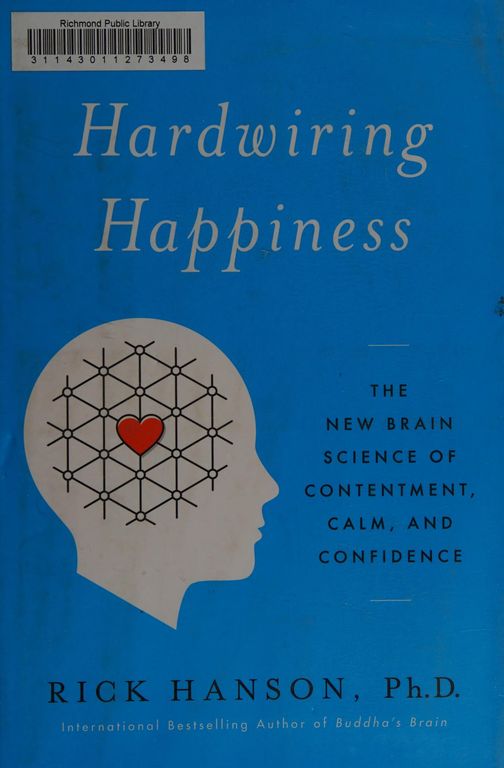
Nova: Exactly. And that is why we are diving into Hardwiring Happiness by Dr. Rick Hanson. He is a renowned neuropsychologist who has spent decades studying how we can actually override this default programming. What makes his work so compelling is his background. He is not just a therapist; he is a senior fellow at the Greater Good Science Center at UC Berkeley, and he has spent years merging ancient mindfulness practices with cutting-edge neuroscience. This book became a massive bestseller because it offers a highly practical, scientifically grounded blueprint for changing how our physical brain processes daily life.
Atlas: This is exactly what our listeners need. We are talking about people who want to build systems for growth, preserve their mental energy, and make their time count. They do not want vague, feel-good advice. They want to understand the underlying mechanics and get a concrete blueprint.
Nova: And that is exactly what Hanson provides. He shows us that we do not have to be victims of our evolutionary history. We can actually build new neural structures that stick to positive experiences, turning everyday moments into lasting mental strength.
The Ancient Glitch: Why the Brain is Velcro for the Bad
SECTION
Atlas: Let us start with this evolutionary history you mentioned. Why is the brain so determined to make us feel stressed and anxious? It feels incredibly counterproductive for modern life.
Nova: To understand that, we have to travel back about fifty thousand years. Imagine our ancestors living on the African savannah. They faced two distinct types of threats. On one hand, there were paper tigers, which were false alarms. You hear a rustle in the bushes, you think it is a predator, you run away, but it was just the wind. On the other hand, there were real tigers. You hear a rustle, you assume it is the wind, you stay put, and you get eaten.
Atlas: Right, so the ancestor who was hyper-vigilant, slightly paranoid, and always assumed the worst was the one who survived to pass on their genes.
Nova: You hit the nail on the head. Evolution does not care about your happiness. It only cares about your survival and reproduction. Because of this, our brains evolved what neuropsychologists call the negativity bias. Hanson has this brilliant way of describing it. He says the brain is like Velcro for negative experiences, but Teflon for positive ones.
Atlas: That Velcro and Teflon analogy is incredibly vivid. It explains why we can ruminate over a single awkward interaction at the water cooler for hours, while a genuine thank-you note from a colleague barely registers for more than a few seconds.
Nova: That is the negativity bias in action. When we experience something negative, like a threat, a loss, or a criticism, our brain registers it instantly and stores it deeply. The amygdala, which is the brain's alarm system, uses about two-thirds of its neurons to look for bad news. Once it finds a threat, it immediately flags it and writes it into our long-term memory. Positive experiences, however, have a much harder time getting registered. They usually just wash right through the brain without leaving any lasting trace.
Atlas: Wow, two-thirds of the alarm system is dedicated solely to finding the bad. That is a massive design imbalance. It sounds like our brains are essentially running on outdated software that was designed for a world of physical predators, but we are using it in a world of deadlines, emails, and social media.
Nova: That is a perfect way to frame it. The threats we face today are rarely life-threatening, yet our brain reacts to a critical email from a boss with the exact same physiological response as it would to a predator in the bushes. Cortisol and adrenaline flood our system, our heart rate increases, and our focus narrows. This constant activation of the stress response takes a massive toll on our cognitive load, draining our energy and making it incredibly difficult to think strategically or creatively.
Atlas: I imagine a lot of our listeners are feeling this deeply. They are trying to build businesses, manage teams, and stay productive, but they are constantly fighting this internal drag. It is like trying to drive a high-performance car with the parking brake permanently engaged.
Nova: That is exactly what it is. And the worst part is that this process is self-reinforcing. There is a famous rule in neuroscience known as Hebb's Law: neurons that fire together, wire together. Every time you ruminate on a worry, or re-read that critical email, you are firing those negative neural pathways. You are literally building a physical highway in your brain for stress and anxiety, making it even easier for you to fall into those states in the future.
Atlas: That sounds incredibly daunting. If our brains are physically wiring themselves to be stressed, how do we even begin to fight back? Is it just a matter of positive thinking?
Nova: Actually, Hanson is very clear that simple positive thinking is not enough. Just telling yourself to look on the bright side does not change the physical structure of your brain. The positive thoughts just slide right off the Teflon. To actually change the brain, we have to move from temporary states of mind to lasting traits of being. We have to learn how to actively transition those passing positive experiences into permanent neural structures.
The HEAL Method: Operationalizing Joy
SECTION
Atlas: Okay, now we are getting to the systems. How do we actually transition a temporary state into a lasting trait? What is the operational blueprint here?
Nova: This is where Hanson's signature framework comes in. It is a four-step process called the HEAL method. Each letter stands for a specific step in the rewiring process: Have a positive experience, Enrich it, Absorb it, and Link positive and negative material.
Atlas: That sounds like a highly structured approach. Let us break those down one by one. The first letter is H: Have a positive experience. That sounds simple enough, but how do we actually do it when we are constantly surrounded by stress?
Nova: It is actually much easier than it sounds because positive experiences are happening around us all the time. They are just incredibly quiet. It could be the feeling of satisfaction when you finally clean up your inbox, the warmth of a hot cup of coffee in the morning, or the sense of relief when you finish a difficult task. The key is that we have to actively notice these moments. We have to shine the spotlight of our attention on them. If we do not actively notice them, they just slip away without leaving a trace.
Atlas: So it is about active awareness. It is about stopping the automatic scroll of our minds and actually registering the good stuff that is already happening.
Nova: Exactly. You can also actively create positive experiences by bringing to mind things you are grateful for, recalling a recent success, or thinking about someone who cares about you. But once you have that positive experience, you cannot just let it go. You have to move to the second step, which is E: Enrich it. This is where the actual rewiring begins.
Atlas: How do we enrich an experience? What does that look like in practice?
Nova: To enrich an experience, you have to stay with it. Instead of immediately moving on to the next thing on your to-do list, you hold onto that positive feeling for ten, twenty, or even thirty seconds. You want to make the experience as intense as possible, letting it fill your mind and body. You want to explore the sensory details of it. What does it feel like physically? Is there a sense of warmth in your chest? A feeling of lightness in your shoulders? By staying with the experience, you are giving those neurons time to fire together, which is the necessary prerequisite for them to wire together.
Atlas: That is fascinating. So you are essentially keeping the positive experience active in your working memory long enough for the brain to start building a physical structure around it. It is like giving the brain a chance to save the file instead of just closing the window.
Nova: That is a brilliant analogy. Yes, you are clicking the save button. And that leads us to the third step, which is A: Absorb it. This step is about internalizing the experience, feeling it sinking into you. Hanson suggests using visualization here. You can imagine the feeling like a warm golden light washing over you, or like water soaking into a dry sponge, or even like placing a valuable jewel into a safe inside your heart. The goal is to feel the experience becoming a part of you, a resource you can draw upon in the future.
Atlas: I can see how that would make a massive difference. It shifts the experience from something external that just happened to you, to something internal that is now a part of who you are. But what about the fourth step, the L? Linking positive and negative material. That sounds a bit more complex.
Nova: It is the most advanced step, and it is actually optional, but it is incredibly powerful for healing old wounds. The idea is to hold both a positive experience and a mild negative one in your awareness at the same time. For example, if you are feeling a sense of warmth and connection in the present, you can gently bring to mind a memory of feeling lonely or rejected in the past. By keeping the positive experience prominent in your mind, it actually starts to soothe and overwrite the negative one. It is like putting a soothing balm on an old burn.
Atlas: Wait, that sounds a bit risky. Is there a danger that the negative experience will just swallow up the positive one, and we end up feeling even worse?
Nova: That is a very real danger, which is why Hanson emphasizes that the positive experience must remain dominant. If the negative material starts to take over, you have to immediately drop it and focus solely on the positive. You only use this step when you feel strong, stable, and deeply anchored in the positive state.
Atlas: That makes a lot of sense. It is like using a strong, healthy muscle to help rehabilitate a weak, injured one. You do not want to overload the weak muscle before it is ready.
Nova: Exactly. And when you practice these steps regularly, even just a few times a day for less than a minute at a time, you are actively building what Hanson calls inner strength. You are creating a reservoir of positive neural resources that you can draw upon when things get tough. You are transforming your brain from a state of constant threat reactivity to a state of baseline peace, contentment, and love.
Preserving Mental Energy: Building the Daily Resilience Habit
SECTION
Atlas: This HEAL framework is incredibly powerful, but I want to look at this from a systems perspective. Our listeners are busy people. They value efficiency and they want to make their time count. How do we actually build this into a daily habit without adding another heavy task to our already overloaded schedules?
Nova: That is the beauty of this system. It does not require you to carve out an extra hour of your day for meditation or journaling. It is designed to be woven into the fabric of your daily life. It is about utilizing the small, empty spaces that already exist.
Atlas: Like when you are waiting for a meeting to start, or standing in line for coffee, or washing your hands?
Nova: Precisely. Those are perfect opportunities. Hanson suggests starting with just a few minutes a day, broken down into tiny twenty-second blocks. Think about it: twenty seconds is all it takes to enrich and absorb a positive experience. If you do that five times a day, that is less than two minutes total, but the cumulative impact on your brain is massive.
Atlas: That is an incredibly low barrier to entry. It is the ultimate efficiency play. You are not adding a new task; you are simply optimizing the way you process the experiences you are already having.
Nova: It really is. And from a cognitive load perspective, it is a game-changer. When you are constantly operating in threat-reactivity mode, your brain is burning a massive amount of energy. Your prefrontal cortex, which is responsible for executive function, decision-making, and planning, gets starved of resources because the amygdala is hogging all the power. By actively rewiring your brain for peace and contentment, you are lowering your baseline stress level, which frees up a tremendous amount of mental energy.
Atlas: That is a crucial point. We often think of stress management as something we do to recover from work, but this is actually about enhancing our capacity for work. It is about preserving our mental energy so we can make better decisions, stay focused, and build better systems.
Nova: Exactly. It is about moving from a reactive state to a responsive state. When you are in a responsive state, you can see challenges clearly without being overwhelmed by them. You can handle a difficult conversation or a major setback with a sense of calm confidence because you have a deep reservoir of positive resources to draw upon.
Atlas: Let us talk about how to make this concrete. If we were to design a twenty-minute daily blueprint for our listeners, what would that look like?
Nova: We can structure it into three simple parts. First, dedicate five minutes in the morning to actively create a positive experience. You can do this before you even get out of bed. Just spend five minutes thinking about someone you love, or recalling a recent achievement, and use the HEAL method to enrich and absorb that feeling.
Atlas: That sets a powerful positive baseline for the rest of the day. What is the second part?
Nova: The second part is the micro-habit phase. Throughout the day, identify three distinct moments to practice twenty-second micro-HEAL sessions. It could be right after you complete a major task, when you are having lunch, or even during a short walk. Just notice a positive feeling, stay with it for twenty seconds, and let it sink in.
Atlas: That keeps the neural pathways active throughout the day, preventing the negativity bias from taking over. And the final part?
Nova: The final part is a five-minute evening review. Before you go to sleep, instead of reviewing your worries or thinking about what you did not get done, actively recall three good things that happened during the day. They do not have to be major events; just simple, pleasant moments. Choose one of them and apply the HEAL method to it as you drift off to sleep.
Atlas: That is a beautifully elegant system. It takes less than fifteen minutes total, yet it targets the brain's neuroplasticity at three critical points of the day: the morning setup, the midday maintenance, and the evening consolidation. It is a highly efficient way to automate your success and build lasting resilience.
Synthesis & Takeaways
SECTION
Nova: It really is. And when we look at the bigger picture, this is about more than just feeling happier. It is about taking control of our own evolution. Our brains were designed for a world that no longer exists, but we have the power to reshape them for the world we live in today.
Atlas: That is a profound realization. We are not stuck with the brain we were born with, or the brain that our evolutionary history handed down to us. We can actively architect our own minds.
Nova: We can. And the choice is ours. Every single day, we are presented with hundreds of opportunities to build inner strength. Every time we choose to let a positive experience sink in, rather than letting it slide away, we are laying down a new brick in the fortress of our mental resilience. We are hardwiring our own happiness.
Atlas: For anyone listening who wants to start making their time count, this is your actionable blueprint. Do not try to change your entire life overnight. Just focus on those twenty-second moments. Notice the good, stay with it, let it sink in, and let your brain do the rest.
Nova: This is Aibrary. Congratulations on your growth!