

Demystifying Machine Learning: From Concepts to Code
Golden Hook & Introduction
SECTION
Nova: You know, Atlas, whenever I mention "Machine Learning" or "AI" to people, I often see this flicker in their eyes. It's a mix of fascination and... well, a little bit of fear, like it’s some kind of arcane magic or a super-intelligent black box.
Atlas: Oh, absolutely! I confess, sometimes I picture a wizard behind a curtain, frantically pulling levers. It feels so complex, almost intentionally opaque, for us mere mortals trying to make sense of the digital universe.
Nova: Exactly! But what if I told you that the "magic" of machine learning is actually a series of incredibly clever, but ultimately understandable, tools? Tools that, once you grasp them, unlock the power to build truly intelligent systems yourself.
Atlas: Hold on, are you saying I can go from 'wizard-behind-the-curtain' skeptic to 'wizard-in-training' builder, just by understanding some tools? That sounds like a journey I’d sign up for.
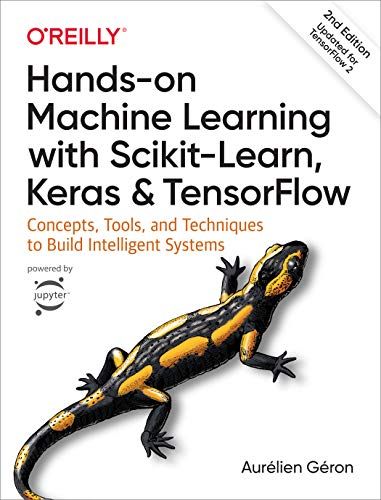
Nova: You absolutely can. And that’s precisely what we’re exploring today, drawing heavily from the insights in books like "Hands-On Machine Learning with Scikit-Learn, Keras, and TensorFlow" by Aurélien Géron, and "Deep Learning Illustrated" by Jon Krohn, Grant Beyleveld, and Aglaé Bassens. These aren't just textbooks; they're blueprints for aspiring creators.
Atlas: I like that – blueprints. Because for anyone who wants to build something, who wants to make a real-world impact, just understanding the isn't enough. You need to know how to actually lay the bricks.
Nova: Precisely. These authors have a knack for making incredibly complex topics not just accessible, but actionable. They bridge that crucial gap between the theoretical 'what if' and the practical 'how to.'
The 'Why' and 'What' of Core ML Algorithms: Unveiling the Intelligence
SECTION
Atlas: So, if we’re talking tools, where do we even begin? What these algorithms, really? What’s the fundamental intelligence we’re trying to demystify?
Nova: Great question, because that’s where the journey really starts. Imagine you’re teaching a very intelligent, but completely naive, chef how to bake a perfect chocolate cake. You give them hundreds of recipes, each with slight variations in ingredients and baking times, and then you tell them how delicious or terrible each resulting cake was.
Atlas: Okay, I'm picturing a very confused chef, covered in flour.
Nova: Right! Now, a machine learning algorithm is like that chef. It doesn’t know what a "perfect cake" is inherently. Instead, it systematically tries to find patterns in all those recipes and your feedback. It learns, for instance, that adding more sugar tends to make it sweeter, or baking for too long makes it dry. Over time, it starts to formulate its own internal "rules" for what makes a good cake.
Atlas: So it's not magic, it’s just really, really good, systematic pattern recognition? Like, if you show it enough happy faces, it figures out what features correlate with 'happy'?
Nova: Exactly! That’s the core of most machine learning: learning from data. We feed it vast amounts of examples, and the algorithm identifies relationships and rules within that data. This is often called "supervised learning," because we're "supervising" it with labeled examples—like our feedback on the cakes.
Atlas: Interesting. So, the "intelligence" isn't consciousness, it's the ability to derive incredibly complex, useful rules from experience, much faster and more accurately than a human could?
Nova: Precisely. And then, there’s an even more fascinating realm, particularly explored in "Deep Learning Illustrated," called neural networks. Think of them as inspired by the human brain, with layers of interconnected "neurons" that process information. Instead of just learning simple rules, they can learn incredibly intricate, hierarchical patterns.
Atlas: Like, going from recognizing a line, to recognizing an edge, to recognizing a nose, to recognizing a whole face?
Nova: You’ve got it! That’s a fantastic way to put it. The 'cause' is the input data—the cake recipes, the images of faces. The 'process' is the algorithm sifting through that data, adjusting its internal parameters based on feedback or inherent structure. And the 'outcome' is a model that can predict, classify, or generate new information based on what it has learned. It’s about building powerful statistical models that can generalize from past experiences to new, unseen data.
Atlas: That makes me wonder, what’s the biggest conceptual hurdle people hit when they first try to grasp this? Is it the math? Or just letting go of the "wizard" idea?
Nova: I think it’s often letting go of the wizard idea, and embracing the idea that it's fundamentally about data and statistics, not consciousness. It's about understanding that these systems are incredibly powerful for specific tasks, but they don't 'think' or 'feel' in the human sense. They're sophisticated mathematical functions. Once you accept that, the underlying logic becomes much clearer.
From Concept to Creation: Building Your First Intelligent System
SECTION
Nova: Once you grasp the 'how' these algorithms work, the natural next step for any builder, for anyone driven by creation, is to ask: "How do I them? How do I go from understanding the cake chef to actually baking my own intelligent cake?"
Atlas: That’s the million-dollar question for many of our listeners. They seek understanding, but they crave impact. They want to build. What’s the first, tiny step?
Nova: The absolute first, tiny, crucial step is to start small. Don't try to build the next ChatGPT. Instead, pick a personal, manageable project. The books we mentioned are full of examples, and the recommendation for a sentiment analyzer for your favorite reviews is perfect.
Atlas: A sentiment analyzer for reviews! I love that. So, I could feed it all my thoughts on, say, classic sci-fi novels, and it could tell me if I’m generally positive or negative about them?
Nova: Exactly! Or, if you’re a product manager, you could feed it customer feedback and have it tell you if the overall sentiment is positive, negative, or neutral. The process is surprisingly straightforward, thanks to the practical, code-heavy approach of books like Géron’s "Hands-On Machine Learning."
Atlas: So, it's not just theory; it’s literally step-by-step code examples you can follow? That’s empowering. What are the actual steps for that tiny project?
Nova: You start with data collection—gathering those reviews. Then you prepare that data, cleaning it up. Next, you choose an appropriate model. For sentiment analysis, a simple classifier, maybe a Logistic Regression or a Support Vector Machine, would be a great starting point. These books walk you through how to implement these in Python using libraries like Scikit-Learn.
Atlas: Okay, so I gather my data, clean it, pick a model… then what? Does it just magically work?
Nova: Not quite magic, but close! You then "train" your model using a portion of your labeled data—reviews you’ve manually marked as positive or negative. The algorithm learns from these examples. Finally, you evaluate your model’s performance on new, unseen reviews to see how well it generalizes. The key is that these books provide the foundational code and the explanations for you’re doing each step.
Atlas: What's the biggest hurdle people face when they first try to build something like this? Is it the coding, or getting the right data?
Nova: It’s often the expectation that it has to be perfect on the first try. The biggest hurdle is not embracing the iterative nature of it. Your first model won’t be perfect, and that’s okay. The point is to get it working, learn from its imperfections, and then improve it. These books encourage that mindset: get your hands dirty, experiment, and build. It's about seeing the process through, from concept to a tangible, albeit small, intelligent system.
Atlas: That resonates deeply with anyone who’s ever tried to build anything from scratch. Embrace the journey, and don’t let perfection be the enemy of good enough to start.
Synthesis & Takeaways
SECTION
Nova: So, what we’ve really explored today is this beautiful synergy: understanding the deep mechanics of machine learning algorithms gives you the power to build, and the act of building, of getting hands-on, profoundly deepens your understanding. It's a continuous feedback loop for the analytical architect, the practical innovator, the purposeful builder.
Atlas: It’s about moving past the idea of AI as an intimidating, impenetrable force, and instead seeing it as a powerful toolkit, available to anyone willing to learn and, crucially, to apply. The impact isn't just in the big tech companies; it's in the small, personal projects that solve a problem or illuminate an insight.
Nova: Exactly. The real value, the profound insight, isn't just in knowing a neural network is, but in being able to implement one to solve a problem you care about, even a small one. It’s recognizing that these complex theories are the foundation for creating tangible, intelligent systems that can genuinely make a difference.
Atlas: And that journey starts not with a giant leap, but with a tiny, personal project. Like that sentiment analyzer for your favorite reviews. What’s stopping you from trying to build just one small thing this week?
Nova: That’s the challenge. Pick a tiny problem, embrace the journey, and use these incredible resources to start building. Every challenge is a stepping stone. Your path is unique, and it begins with that first line of code, that first attempt to make a system smart.
Atlas: I love that. So, go build something. And congratulations on taking that first step.
Nova: This is Aibrary. Congratulations on your growth!