Optimizing Your Conversion Funnel: From Clicks to Customers
Golden Hook & Introduction
SECTION
Nova: Atlas, five words. "Optimizing Your Conversion Funnel: From Clicks to Customers." What immediately springs to mind?
Atlas: Clicks, customers, chaos, clarity, cash.
Nova: Ooh, I love "chaos, clarity, cash." Mine would be: "Users, friction, data, growth, triumph." And honestly, that last one, triumph, is what every product leader is chasing, isn’t it?
Atlas: Absolutely. That chase, that journey from a casual click to a loyal customer, it feels like the holy grail for so many. And often, it feels like we’re just guessing our way through it.
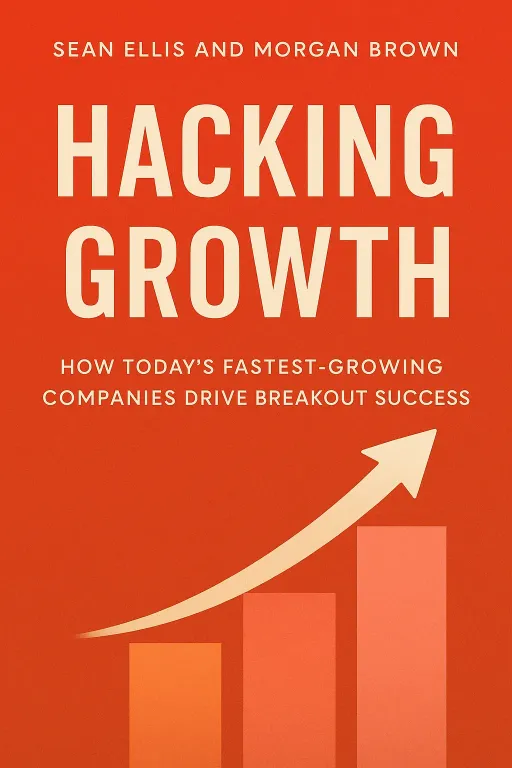
Nova: Exactly. Today we’re diving into that journey, and we’re going to draw heavily from a seminal work that truly revolutionized how companies approach growth: "Hacking Growth" by Sean Ellis and Morgan Brown. This book isn't just about marketing; it’s about a complete mindset shift towards rapid, data-driven experimentation.
Atlas: That book really demystified "growth hacking" for a lot of us, moving it from a buzzword to a concrete methodology. It gave a lot of pragmatic leaders a framework they could actually use.
Nova: Right. And the core of our podcast today is really an exploration of how to transform casual user interest into committed action, by dissecting the psychological barriers and then applying systematic, data-driven optimization strategies. Today we'll dive deep into this from two perspectives. First, we'll explore the often-hidden psychological maze that prevents users from converting, then we'll discuss a data-driven blueprint for systematically hacking that funnel for unparalleled growth.
The Psychological Maze: Why Users Don't Convert
SECTION
Nova: So, let’s start with the cold, hard fact: many product leaders struggle to move users from interest to action. And it’s not always about a broken button or a slow page load. It’s often because we’re missing the deep psychological undercurrents that dictate user behavior.
Atlas: Oh man, I imagine a lot of our listeners feel like they're just throwing darts in the dark when it comes to those drop-offs. What do you mean by 'friction points' beyond just a slow loading page?
Nova: That’s a fantastic question, because the obvious friction points are easy to spot. The subtle ones, the psychological ones, are the real killers. Think about an online subscription service. A user lands on the pricing page. On the surface, it looks fine. But internally, they’re battling cognitive load – too many options, unclear differences between tiers. They’re facing decision paralysis – which one is right for me? What if I choose wrong? There’s a lack of perceived value – they haven’t fully grasped why this service is worth their money, so the price feels high.
Atlas: So you're saying it's not just about the numbers on the page, but the mental gymnastics the user has to perform to understand those numbers and feel confident in their choice?
Nova: Precisely. Imagine Sarah, a potential customer for a new project management tool. She's looking at three different pricing tiers: Basic, Pro, Enterprise. Each has a list of 15 features, some with little checkmarks, some with asterisks. She's thinking, "Do I really need that 'advanced reporting' feature? What does 'unlimited projects' actually mean for team size? Is the Pro plan overkill, or will I regret not getting it later?" That internal monologue, that swirl of doubt and effort, that’s friction. It’s the mental energy required to make sense of something that should be simple.
Atlas: Wow, that’s a really vivid way to put it. It’s like the user is stuck in a maze, but the walls aren't visible. How do we even begin to identify these subtle psychological barriers? Because that sounds incredibly hard to measure.
Nova: Exactly. It requires empathy, qualitative research, and then clever quantitative testing. It might be user interviews where you literally watch them navigate your funnel and ask them to verbalize their thoughts. It might be heatmaps showing where their eyes linger in confusion, or session recordings revealing hesitant mouse movements. It’s about recognizing that every single step in your funnel carries a psychological cost, and if that cost outweighs the perceived benefit, they’re gone. It’s not about their interest; it’s about their effort.
Hacking the Funnel: A Data-Driven Blueprint for Growth
SECTION
Nova: Understanding the psychological maze is one thing, but how do we actually navigate it? How do we systematically remove those invisible walls? That's where the data-driven blueprint described in "Hacking Growth" truly shines. It shifts us from guessing to a scientific process.
Atlas: That makes sense. I mean, for our listeners who are builders and strategists, they want to optimize. They want efficiency. So you're saying it's not about doing more things faster, but doing the things faster, based on data?
Nova: Exactly. And a cornerstone of this approach is the North Star Metric. This isn’t just any metric; it’s the single metric that best captures the core value your product delivers to customers. For a social media app, it might be "daily active users sending at least one message." For a streaming service, "hours of content watched per week." It’s the ultimate indicator that your users are gaining value, and when they gain value, you grow.
Atlas: Okay, so a North Star Metric is like the true compass heading for your entire product. But how does a leader, who’s already overwhelmed, even begin to identify their North Star Metric without getting lost in a sea of data?
Nova: It requires deep thought about your product's core promise. What's the one thing, if users do it consistently, makes them successful? Once you have that, everything else aligns. Then, you move into rapid experimentation. This is where you identify "growth levers"—those actions that directly impact your North Star Metric. You generate hypotheses, run small, fast tests, and learn from the results, regardless of whether they "succeed" or "fail."
Atlas: Give me an example. Like, a real, tangible example. What's a growth lever, and what's a small test to pull it?
Nova: Let's take that mobile app for team collaboration. Their North Star Metric might be "number of projects completed per team per week." A growth lever could be "onboarding completion rate"—if more teams complete onboarding, more projects get completed. A small test could be as simple as an A/B test on a single screen in the onboarding flow. Perhaps one version highlights key features with a short video, and another uses interactive prompts. You run it for a week, analyze the data, and see which version leads to more teams completing onboarding.
Atlas: So it's not about a huge, months-long redesign. It's about tiny, iterative changes, constantly learning and refining. That's a pragmatic approach, that's what leaders need.
Nova: Precisely. It’s about turning the funnel into a series of mini-experiments, each designed to remove a specific friction point, whether it's psychological or technical. It’s a scientific method applied to growth, transforming guesswork into predictable, scalable improvements. It's the difference between hoping users convert and them convert by systematically understanding and serving their needs.
Synthesis & Takeaways
SECTION
Nova: So, what we’ve really unpacked today is that optimizing your conversion funnel isn't a one-time fix or a simple button tweak. It's a continuous, empathetic, and scientific process. It demands that we first understand the invisible psychological barriers users face, and then apply a systematic, data-driven framework, much like the one Sean Ellis and Morgan Brown lay out in "Hacking Growth," to remove those friction points.
Atlas: And what I’m hearing is that it’s about building empathy into your data strategy. It’s not just about the numbers, but about what those numbers reveal about human behavior and where users are getting stuck, even subconsciously.
Nova: Absolutely. It’s about recognizing that every single click, every scroll, every pause in your funnel tells a story about user intent and user struggle. Our job, as product leaders and strategists, is to listen to those stories, interpret them through data, and then respond with targeted, tested solutions. It's about turning that chaos you mentioned earlier into clarity, and ultimately, into cash.
Atlas: That’s a powerful synthesis. For our listeners who are looking to take a tiny step forward, what’s one thing they can do right now to start applying this thinking?
Nova: My advice is simple but powerful: map out your current user conversion funnel. Visually lay out every single step a user takes from initial interest to conversion. Then, identify one stage—just one—that has the biggest drop-off. And from there, brainstorm three small, testable ideas to improve it. Don't overthink it; just get those ideas down and prepare to experiment.
Atlas: That’s actionable. And it directly addresses that need for efficiency and impact that so many of us are chasing. Fantastic insights today, Nova.
Nova: Always a pleasure, Atlas.
Nova: This is Aibrary. Congratulations on your growth!