

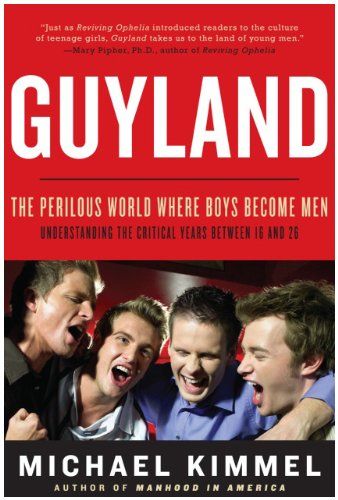
Guyland
The Perilous World Where Boys Become Men
Introduction: Welcome to the Liminal Zone
Introduction: Welcome to the Liminal Zone
Nova: Welcome back to the show! Today, we are diving deep into a sociological landscape that defines a generation—or perhaps, multiple generations—of young men. We're talking about Michael S. Kimmel’s seminal 2008 work, Guyland: The Perilous World Where Boys Become Men.
Nova: : Wait, Guyland? That sounds like a theme park designed by frat brothers. What exactly is this place, Nova?
Nova: That’s a perfect analogy! Kimmel defines Guyland not as a physical location, but as a social and psychological space—a prolonged, undefined period between adolescence and true adulthood, which he sometimes calls the adultescene. It’s the world where young men, primarily ages 16 to 26, reside when the traditional markers of manhood have vanished.
Nova: : Vanished? I thought turning 18 or graduating college was the marker. What’s missing that keeps them stuck in this 'Guyland'?
Nova: That’s the crux of the issue. Kimmel looked at historical data and found a massive shift. Back in 1960, 77 percent of women and 65 percent of men under 30 had achieved five key milestones to adulthood—things like finishing education, leaving home, getting a full-time job, getting married, and having kids. By the time Kimmel wrote the book, those numbers had plummeted. The road map was gone, and in the vacuum, Guyland formed.
Nova: : So, it’s not that young men are lazy; it’s that the societal structure that used to push them forward has dissolved. That’s a fascinating, and slightly sad, starting point. What does life look like inside this extended adolescence?
Nova: It looks like a culture of conformity, escapism, and often, casual misogyny. Kimmel argues that to survive in this ambiguous space, young men adhere strictly to a 'guy code'—a set of unspoken rules that keep them in the club, but keep them from growing up. It’s a perilous world because the culture they create to cope actively prevents mature development.
Nova: : Perilous how? Is it just about playing too many video games and avoiding responsibility?
Nova: It’s much deeper than that. It involves emotional stunting, the normalization of aggressive behavior, and a sense of aggrieved entitlement when their traditional privileges feel threatened. We’re going to break down the three main pillars of this culture today: the definition of the space, the rules that govern it, and the high cost of membership. Get ready to unpack the locker room talk, because this is essential listening for understanding modern masculinity.
Nova: : I’m ready. Let’s map this territory. Lead the way, Nova.
Key Insight 1: The 16-to-26 Age Cohort and the 'Guy Code'
The Architecture of Guyland: Age, Class, and Conformity
Nova: Let’s start with the demographics. Kimmel is very specific: Guyland primarily concerns middle-class white males between 16 and 26. Why that specific demographic, and why is class so important here?
Nova: : That specificity is interesting. Are we saying that working-class men or men of color don't experience this extended adolescence, or that their version looks completely different?
Nova: Kimmel acknowledges that the experience varies, but he zeroes in on this group because they are the ones whose traditional privileges—the ones tied to being the default American man—are feeling the most pressure. They are the ones who expected a smooth transition into unquestioned authority, and when that path became muddy, they retreated into Guyland for comfort and validation.
Nova: : So, Guyland is less about a lack of opportunity and more about a perceived loss of status. It’s a defensive posture against change.
Nova: Exactly. And the defense mechanism is the 'Guy Code.' This code demands conformity. If you step out of line—if you show too much emotion, if you question the misogyny, if you prioritize a relationship over the group—you risk being ostracized. Kimmel found that the fear of being seen as 'not a real man' is a massive social control mechanism within this space.
Nova: : I can see that playing out on a college campus. If a guy is seen as too sensitive or too focused on academics instead of partying, he gets labeled. It’s social policing.
Nova: Precisely. And the policing is often subtle but brutal. Think about the anecdotes Kimmel shares regarding hazing rituals or the casual dismissal of women’s concerns. These aren't just isolated incidents; they are the maintenance rituals of Guyland, ensuring everyone stays within the accepted boundaries of acceptable male behavior.
Nova: : You mentioned escapism earlier. What are the primary forms of escape that keep the inhabitants tethered to this world?
Nova: The research points to a trifecta: hyper-masculine sports culture, often divorced from actual athleticism; endless, often violent, video gaming; and the culture of the bar scene, which normalizes excessive drinking and objectification. These activities are time sinks that actively replace the hard work of building adult responsibilities like career planning or deep emotional intimacy.
Nova: : It sounds like a holding pattern. They are physically aging, but socially and emotionally, they are being kept in stasis by activities that mimic power without requiring accountability.
Nova: That’s a brilliant way to put it. And the language they use reinforces it. Kimmel notes the prevalence of shock jocks and aggressive humor. It’s a performance of toughness that masks deep insecurity about their actual place in the world. They are performing masculinity because they haven't yet it in a meaningful, adult sense.
Nova: : If the goal of manhood used to be about contribution and provision, what is the goal inside Guyland?
Nova: The goal inside Guyland is survival and status Guyland. It’s about being the 'coolest guy' among your peers, which usually means being the least emotionally available and the most aggressively conforming to the group’s norms. It’s a zero-sum game where vulnerability is the ultimate loss.
Nova: : So, the structure is built on exclusion—excluding women, excluding emotional depth, and excluding anyone who doesn't fit the narrow mold.
Nova: Absolutely. And this leads us directly into the second major theme: how this culture actively shapes their views on women and relationships. The conformity demands a clear 'other' to define themselves against, and historically, that 'other' has been femininity.
Key Insight 2: The Role of Misogyny and Aggrieved Entitlement
The Misogyny Engine: Objectification and Entitlement
Nova: Moving into the second pillar, we have to talk about misogyny. Kimmel argues that Guyland isn't just a place where men hang out; it’s a place where they learn to treat women as objects or obstacles. How does this manifest?
Nova: : I imagine it’s tied into the 'locker room talk' phenomenon we hear about so often. Is Kimmel saying this talk is the of the culture, not just a byproduct?
Nova: Precisely. It’s foundational. The casual objectification—the constant rating of women, the jokes about sexual conquest—serves two purposes within Guyland. First, it solidifies the bond between the men; shared contempt creates community. Second, it reinforces the idea that women are external to the serious business of manhood, which is happening inside Guyland.
Nova: : That’s chilling. It creates a bubble where dehumanizing language is not just tolerated but required for entry. But I recall Kimmel also discusses a sense of 'aggrieved entitlement.' How does that fit with the misogyny?
Nova: This is where the historical context we mentioned earlier becomes crucial. These young men, often from comfortable backgrounds, feel entitled to the status their fathers or grandfathers automatically received. When they see that status eroding—when women are excelling in college at higher rates, when workplace equality is demanded—they don't see it as societal evolution; they see it as a personal theft.
Nova: : Ah, so the misogyny isn't just about sex; it’s about power maintenance. If women are moving up, they must be pushed down to maintain the hierarchy that Guyland promises them.
Nova: Exactly. They feel aggrieved because the old rules—the ones that guaranteed them success based on gender—no longer apply universally. So, they lash out by enforcing the only hierarchy they still feel they control: the one over women and over any man who doesn't conform to their narrow definition of strength.
Nova: : Are there any concrete examples from the book that illustrate this entitlement leading to harmful action?
Nova: Kimmel details instances where young men felt they had 'earned' sexual access simply by being present or by adhering to the social script. When they didn't get what they felt entitled to, the reaction could range from aggressive verbal harassment to more serious boundary violations. The culture teaches them that their desires trump another person's consent, because the other person—the woman—is outside the circle of respect.
Nova: : That sounds like a direct pipeline to issues like campus sexual assault or severe street harassment. It’s not just about being crude; it’s about a worldview.
Nova: It is. And the criticism sometimes leveled at Kimmel is that he focuses too much on the middle-class white male experience. But his argument is that this specific group sets the standard. When they retreat into this toxic space, they set the cultural bar for what 'normal' masculinity looks like, dragging down expectations for everyone else.
Nova: : So, if we want to fix the broader problem of disrespect toward women, we have to address the cultural incubator where that disrespect is taught as a bonding ritual.
Nova: That’s the takeaway. Guyland is the training ground. The guys who leave Guyland successfully—those who transition into adulthood—are the ones who manage to shed that code. But for many, the code sticks, leading to the next major problem: the internal damage it causes to the men themselves.
Key Insight 3: Internal Damage and the Path Forward
The Cost of Conformity: Emotional Stunting and Backlash
Nova: We’ve established that Guyland is socially damaging to women and society at large. But let’s turn the lens inward. What is the cost of membership for the young men trapped inside?
Nova: : I suspect it’s isolation, even when they are surrounded by people. If you can’t express vulnerability, you can’t form deep, supportive friendships.
Nova: You hit the nail on the head. The primary internal cost is emotional stunting. The Guy Code forbids expressing fear, sadness, or genuine need. Kimmel notes that men in Guyland often report feeling intensely lonely, but they are structurally incapable of asking for help or admitting they are struggling because that would violate the core tenet of self-sufficiency.
Nova: : It’s a self-imposed prison of stoicism. They are trading authentic connection for perceived toughness. How does this manifest later in life, say, in their 30s and 40s?
Nova: It often leads to crises. When the external validation of college life or the 'guy' identity fades, they lack the emotional toolkit to navigate real adult challenges—divorce, career setbacks, parenting. They often revert to the only coping mechanism they were taught: aggression, withdrawal, or substance abuse. It’s a delayed emotional reckoning.
Nova: : And this emotional vacuum, this feeling of being adrift despite achieving the external markers of success, feeds directly into the political backlash we see today, right? This connects to Kimmel’s later work on 'Angry White Men.'
Nova: Absolutely. Guyland is the precursor to the anger. When the entitlement promised by the culture doesn't materialize in the real world, the anger has nowhere healthy to go. It festers, and it becomes political. The feeling of 'I did everything right according to the old rules, yet I’m not winning' turns into resentment directed at feminism, diversity initiatives, and perceived 'others.'
Nova: : So, the solution isn't just telling guys to 'be nicer.' It requires dismantling the very structure that rewards this emotional shutdown.
Nova: Exactly. And this is where Kimmel pivots in his later discussions. He emphasizes that engaging men in conversations about equality isn't about shaming them for being men; it’s about showing them that a masculinity is available—one that allows for connection, empathy, and true strength that isn't based on domination.
Nova: : What does that look like in practice? How do you get a guy out of the locker room and into a real conversation?
Nova: Kimmel suggests finding the 'allies'—the men who are already questioning the code—and empowering them. It involves creating spaces where vulnerability is rewarded, not punished. It means redefining strength not as the ability to suppress emotion, but the courage to express it honestly. It’s about showing them that true adulthood means taking responsibility, not just avoiding it.
Nova: : It sounds like the antidote to Guyland is community built on authenticity, not performance.
Nova: Precisely. It requires men to see that the 'perilous world' they inhabit is ultimately self-destructive, and that the real reward of manhood lies in connection, not conquest. It’s a tough sell when the culture screams the opposite, but it’s the only way out of the extended adolescence.
Conclusion: Beyond the Boundaries
Conclusion: Beyond the Boundaries
Nova: We’ve spent this episode mapping out the territory of Guyland—that dangerous, extended adolescence where young men retreat when the traditional path to adulthood disappears.
Nova: : It’s clear that Kimmel’s work is a powerful diagnosis. We covered the 16-to-26 age range, the suffocating conformity of the Guy Code, and the way misogyny serves as the glue holding that fragile structure together.
Nova: And perhaps the most crucial takeaway is the internal cost. The emotional isolation and the sense of aggrieved entitlement that brews in Guyland don't just disappear when a man turns 27. They become the fuel for later societal friction and personal unhappiness.
Nova: : So, what’s the actionable takeaway for our listeners? If someone recognizes this pattern in their son, their partner, or even themselves, what’s the first step to escaping?
Nova: The first step is recognizing the performance. Ask yourself: Am I doing this because I genuinely want to, or because I fear the social penalty for stopping? For parents and mentors, the takeaway is to actively celebrate vulnerability and responsibility, even when it looks messy or 'unmanly' by old standards. Reward the effort to connect, not the performance of toughness.
Nova: : It’s about creating new, healthier milestones for them to aim for—milestones based on character rather than conformity.
Nova: Exactly. Kimmel’s work, while focused on a specific demographic, serves as a vital warning: when society fails to provide clear, positive models for growing up, young men will build their own structures, and those structures, like Guyland, can become traps.
Nova: : It forces us to ask: What are we building for the next generation to replace the old, broken signposts?
Nova: A profound question to end on. The challenge is to build a world where manhood is defined by contribution and connection, not by exclusion and escape. Thank you for joining us on this deep dive into the perils of Guyland.
Nova: : A truly insightful journey, Nova. I feel like I have a much better map of this complex social terrain now.
Nova: This is Aibrary. Congratulations on your growth!