Uncovering the Hidden Threads: How Ancient Choices Still Shape Our World Today
9 minGolden Hook & Introduction
SECTION
Nova: Most people think history is just a dusty old textbook full of names and dates that have zero relevance to their daily lives or their shiny new AI projects. But what if I told you that the code running your cutting-edge tech, the very structure of your startup, even the global economy you operate in, was written centuries, even millennia, ago?
Atlas: Whoa, that's a bold claim! I'm an internet developer, and I'm pretty sure my code is fresh off the keyboard. You're saying ancient people influenced my JavaScript?
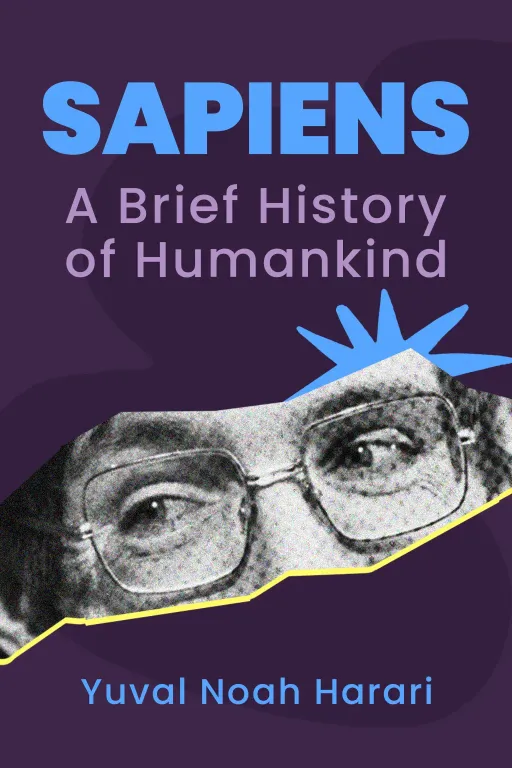
Nova: Well, not directly your JavaScript, but the underlying operating system of human cooperation that makes your JavaScript, and everything else, possible. Today, we're unraveling these hidden threads by diving into two monumental works: Yuval Noah Harari's and Jared Diamond's Pulitzer Prize-winning.
Atlas: Oh, those are heavy hitters! I've heard completely reframes how we think about human progress. And Diamond's question from that New Guinean politician is legendary.
Nova: Exactly. Harari, a historian with a background in medieval history and military history, wrote to challenge conventional narratives, arguing that our unique ability to create and believe in 'shared fictions' is the single most important factor in our species' rise. Diamond, on the other hand, meticulously debunks racial explanations for societal advancement, focusing instead on environmental determinism. And that brings us to our first core idea...
The Invisible Architecture of the Present: How Shared Fictions Shape Our Reality
SECTION
Nova: Our first stop is the invisible architecture of the present: how shared fictions shape our reality. Harari argues that what truly sets apart isn't just intelligence, but our unique ability to believe in collective myths. Think about it: a chimpanzee won't trade its banana for a piece of paper, but we trade our labor for little green rectangles every day, because we all agree it has value. That's a shared fiction.
Atlas: Oh, I see. So money isn't 'real' in the same way a banana is, but it's real because we all agree it is. Like a giant, global multiplayer game with made-up rules.
Nova: Precisely! And it's not just money. Nations, laws, human rights, corporations – these are all incredibly powerful shared fictions. They allow millions of strangers to cooperate effectively. Take the example of Peugeot, the car company. It's a legal fiction. It has no physical body, no emotions, yet it can own property, employ people, and pay taxes. It's an idea that exists only in our collective imagination, but it drives manufacturing plants and global supply chains.
Atlas: That's wild. So, the concept of a 'company' is basically just a very elaborate story we all tell each other? Like a blockchain, but instead of cryptography, it's collective belief?
Nova: A fantastic analogy! And this ability to create and believe in these fictions allowed us to scale cooperation far beyond what any other species could manage. Other animals can cooperate in small groups, but only humans can organize millions around a common goal based on a story about a nation or a deity. This is the foundation of our modern world – the ability to coordinate on a massive scale, which then enabled everything from ancient empires to the internet itself.
Atlas: That makes me wonder, if our modern problems, like say, the inequality gap, are rooted in these ancient fictions. Are some of these stories just... not working for everyone anymore?
Nova: Exactly! And that's the profound insight. These fictions, while enabling cooperation, also create hierarchies and power structures that persist for centuries. The idea of a 'nation' with borders, for instance, is a shared fiction that has led to countless wars and continues to shape global politics and migration patterns today. It's not a natural phenomenon, but a story we live by. These invisible narratives dictate everything from who gets a passport to how resources are distributed. They are the silent architects of our present.
Geography, Germs, and Global Destinies: The Unseen Hand of Environment on Civilization
SECTION
Nova: And that naturally leads us to our second key idea, which often acts as a powerful counterpoint to our shared fictions: the raw, undeniable forces of geography and biology. Jared Diamond, in, argues that it wasn't racial superiority that determined which societies developed advanced technologies, but environmental factors.
Atlas: Okay, so less about what stories we tell, and more about what the actual ground beneath our feet offered. Like, if you live in a desert, you probably won't invent a fishing net.
Nova: Precisely. Diamond highlights three main factors: first, the availability of domesticable plants and animals. Eurasia, for example, had a huge head start with wheat, barley, and animals like cattle, sheep, and pigs. These allowed for settled agriculture, food surpluses, and specialized labor, which are prerequisites for developing complex societies and technologies. Without the caloric density and protein of these specific plants and animals, the ability to feed a large, non-farming population is severely limited.
Atlas: So, if your ancestors just happened to live where the best crops and animals were naturally available, they got a massive leg up. That's almost unfair. It's like winning the genetic lottery, but for entire civilizations.
Nova: It's not about fairness; it's about opportunity. Second, the continental axes. Eurasia's east-west axis meant similar climates and ecosystems stretched across vast distances, allowing for easy spread of crops, animals, and innovations. Imagine trying to spread a crop from Mexico to Canada along the North-South axis of the Americas – you hit vastly different climates. But across Europe and Asia, you can move east or west and find similar conditions.
Atlas: Wow, so a simple geographical orientation dictated the pace of information and resource sharing across entire continents. That's a powerful and often overlooked point. It's like the internet's early infrastructure – some places just had better wiring from the start.
Nova: Absolutely. And the third factor: germs. When Europeans arrived in the Americas, they brought diseases like smallpox, measles, and influenza, to which Native Americans had no immunity. These diseases decimated indigenous populations, paving the way for European conquest. These weren't biological weapons; they were a consequence of living in dense, agricultural societies with domesticated animals for millennia, which created a 'disease pool' Europeans had adapted to.
Atlas: That's actually kind of heartbreaking. So, the very conditions that allowed for advancement also built up a biological weapon that had nothing to do with intent. It's like the environment itself was an unseen player in the game of global power, granting certain populations an accidental biological advantage.
Nova: Exactly. And these geographical and environmental legacies aren't just ancient history. They echo today in global economic disparities, access to resources, and even patterns of disease. The 'developed' world's head start, built on these environmental advantages, allowed them to create the shared fictions – like international laws, economic systems, and even colonial boundaries – that often continue to benefit them disproportionately, creating a feedback loop that has lasted for centuries.
Synthesis & Takeaways
SECTION
Nova: So, when we look at our modern world, with all its complexities – from geopolitical tensions to technological advancements – it's never just about the present. It's this incredible interplay between the stories we tell ourselves, those powerful shared fictions, and the fundamental, unyielding realities of our planet's geography and biology.
Atlas: That's a profound thought. It makes me see everything from the stock market to climate change not as isolated problems, but as deeply interconnected threads woven over millennia. It’s like we’re constantly building on top of an ancient operating system, with some very old bugs and features we didn't even know were there.
Nova: A perfect analogy. Understanding these deep currents allows us to navigate our own times with greater wisdom, to question the 'default settings' of our world, and perhaps even to rewrite some of those ancient lines of code. It's about recognizing that the 'modern problem' you're facing, whether it's a societal issue or a personal challenge, often has roots stretching back centuries, if not millennia.
Atlas: That's actually really inspiring. It means we're not just stuck with the present; we can understand its origins and hopefully, influence its future. It provides a deeper context for everything we do, even my daily coding challenges.
Nova: Absolutely. And we encourage all our listeners to look at a seemingly modern problem in their own lives or in the world around them, and just ask: 'What ancient decision, what geographical condition, what shared fiction might have laid the groundwork for this?' The answers might surprise you and give you a powerful new lens through which to view your world. This is Aibrary. Congratulations on your growth!