The Long View: How History's Echoes Shape Today's Strategic Landscape
9 minGolden Hook & Introduction
SECTION
Nova: You know, Atlas, it's funny how often we look at today's challenges—global conflicts, economic shifts, even the struggles within our own organizations—and we think, "Wow, this is unprecedented. We've never faced anything quite like this before."
Atlas: Oh, I know that feeling. It's easy to get caught in the daily churn, feeling like you're constantly putting out fires that are specific to this very moment. There's a certain urgency that makes everything feel brand new.
Nova: Exactly! But what if I told you that many of these 'unique' modern problems aren't unique at all? What if they're just echoes, sometimes incredibly faint, sometimes booming, from patterns that stretch back not just decades, but centuries, even millennia?
Atlas: Huh. That's a powerful thought. It almost feels like a blind spot we all share, doesn't it? Like we're constantly trying to solve a puzzle with half the pieces missing because we're not looking far enough back. So, how do we fix that? How do we overcome this historical myopia?
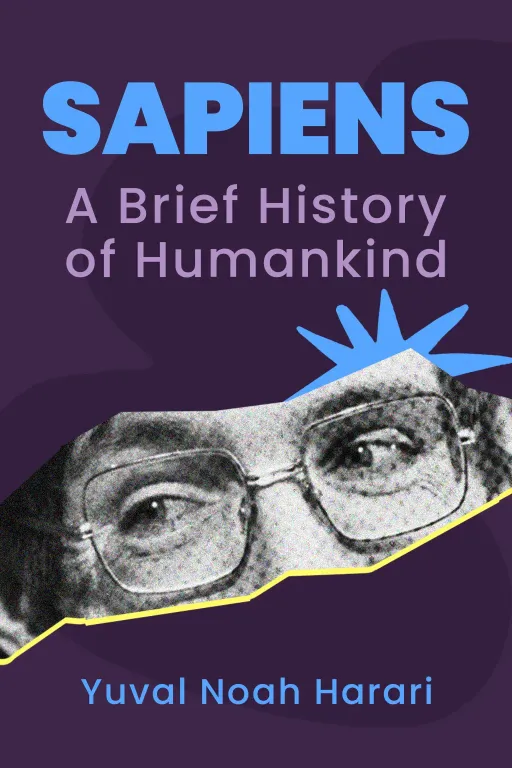
Nova: Well, that's precisely what we're diving into today. We're taking "The Long View," and to do that, we're going to lean on two absolute giants of historical thinking: Yuval Noah Harari with his groundbreaking book,, and Jared Diamond's equally monumental work,.
Atlas: Oh, I love those books. Harari, the historian who started in medieval warfare and somehow ended up predicting the future of humanity, is just fascinating. And Diamond, who dared to ask some societies developed faster. They both offer such a radical shift in perspective.
Nova: Absolutely. Harari, in particular, came from a very specific academic background but exploded onto the global stage by connecting ancient history to our current global dilemmas in a way no one else had. These aren't just history books; they're manuals for understanding the deep forces that shape our world.
Harari's Cognitive and Societal Revolutions: The Deep Roots of Human Organization
SECTION
Nova: So, let's start with Harari. When you think about human society, Atlas, what's the most fundamental, mind-blowing shift that allowed us to go from small bands of hunter-gatherers to these massive, complex civilizations we have today?
Atlas: That's a big question. I imagine a lot of our listeners, the strategic builders and culture architects, might point to things like technology, or maybe even sophisticated governance. But Harari, he goes deeper, doesn't he?
Nova: He goes deeper. He argues it's our unique ability to create and believe in shared fictions. Not lies, necessarily, but collective myths, stories, and abstract concepts that exist only in our shared imagination. Think about it: money, nations, corporations, human rights. These aren't physical things; they're powerful, shared fictions that allow millions of strangers to cooperate.
Atlas: Wow. So, Harari is essentially saying that our entire organizational culture, even our current market dynamics, are built on these ancient, invisible stories we tell ourselves? How does understanding these 'fictions' help a strategic builder today? It sounds almost like a philosophical exercise.
Nova: It's anything but! Consider the concept of a corporation. It's a "legal fiction" that allows thousands, even millions, of people to work together towards a common goal, own property, and operate across vast distances, even after its founders are long gone. This ability to collectively believe in something non-physical is what allowed us to build cities, empires, and global supply chains. It's the cognitive revolution that unlocked large-scale cooperation.
Atlas: But wait, isn't that just a historical curiosity? How does knowing that money is a 'shared fiction' or a corporation is a 'legal fiction' help me attract top talent or build an adaptable team now? It feels a bit too abstract for immediate strategic application. I mean, people still expect to get paid in actual money, right?
Nova: That's a fair challenge, and it's where the long view becomes incredibly practical. Recognizing that these are isn't to dismiss them; it's to understand their power and their fragility. If your corporate culture, for example, is built on a shared fiction of "innovation at all costs," but people are burning out, that fiction is starting to fray. Understanding its historical roots allows you to consciously reshape or reinforce the narratives that drive your team. It's about being a conscious architect of belief, rather than just a manager of operations. It’s about building a sustainable vision that resonates deeply, because you understand the fundamental human need for compelling shared stories.
Diamond's Environmental Determinism: Geography's Enduring Hand in Power Dynamics
SECTION
Nova: And that naturally leads us to the second key idea we need to talk about, which often acts as a powerful counterpoint to Harari's focus on the mind. While Harari looks at the mind-made structures that bind us, Diamond, in, shows us how the very ground beneath our feet shaped our destiny.
Atlas: Okay, so we're moving from the cognitive to the geographic. Diamond argues that environment dictated who got ahead. How does a strategist, looking for growth, reconcile that with the idea of agency? Doesn't it feel a bit deterministic, like some regions were just 'lucky' due to their climate or natural resources?
Nova: It's a valid concern, and it's often a point of contention with his work. But Diamond's argument isn't about luck in a superficial sense. He meticulously traces how the availability of domesticable plants and animals, combined with geographical factors like continental orientation, created immense advantages for certain societies, particularly in Eurasia. Imagine: if you have a wide array of calorie-rich crops and easily domesticable animals like wheat, barley, and sheep, you get food surpluses.
Atlas: Right, food surpluses mean not everyone has to be a farmer.
Nova: Exactly! That leads to specialized labor, the development of writing, metallurgy, complex political structures, and crucially, immunity to diseases that jump from animals to humans. Meanwhile, regions like the Americas, with fewer domesticable species and a north-south axis that made crop diffusion difficult, developed at a different pace. When Europeans arrived in the Americas, they didn't just bring guns; they brought germs their populations had built up immunity to over millennia, which decimated native populations.
Atlas: That's a powerful and, frankly, uncomfortable idea. So, are you saying that the strategic advantages some nations or even regions have today—in terms of resources, infrastructure, or even cultural resilience—can be traced back to ancient agricultural luck? How does a 'Growth Seeker' navigate a landscape where some players had a millennia-long head start due to geography? It almost feels like the game was rigged from the start.
Nova: It’s not about fatalism, Atlas, it’s about understanding the foundational 'ecosystem' of the world. Knowing these deep historical roots of resource distribution, technological head-starts, and even population densities allows for more informed and equitable strategic choices. For a growth seeker, this means understanding the underlying reasons for market dynamics, geopolitical stability, or even the availability of certain skill sets. It's about recognizing that the playing field isn't flat, and never has been, so your strategies need to account for those deep historical currents, rather than assuming a level playing field. It's about designing solutions that acknowledge these historical legacies, whether you're building a new product or expanding into new markets.
Synthesis & Takeaways
SECTION
Nova: So, whether it's Harari showing us the power of our shared fictions, or Diamond revealing the enduring hand of geography, both authors compel us to step back. They force us to see that our immediate challenges, while urgent, are often deeply intertwined with patterns and evolutions stretching back far beyond our lifetimes.
Atlas: I love that. For the strategic builder, the culture architect, the growth seeker, taking this long view means not just reacting to symptoms, but understanding the systemic, historical currents. It’s about building ecosystems that are resilient because they understand their roots, and adaptable because they recognize the deep-seated narratives that drive human behavior. It’s about not being blind to the echoes.
Nova: Precisely. It’s about gaining a profound clarity that allows us to make more intentional, more sustainable choices today. It's the difference between navigating a ship by looking only at the waves immediately in front of you, and understanding the deep ocean currents that are truly steering your course.
Atlas: That’s such a powerful analogy. It makes you realize how many 'unique' problems we face might just be old patterns replaying in new costumes. So, for our listeners, I’d challenge you to pick one current global trend or a challenge you're facing in your own strategic landscape. How might its roots extend far back into human history, as described by either Harari's shared fictions or Diamond's geographical influences?
Nova: What an excellent way to apply this lens. Understanding these echoes empowers us to build a future that's not just reactive, but truly visionary and impactful.
Atlas: Absolutely.
Nova: This is Aibrary. Congratulations on your growth!