The History Trap: Why You Need a Broader Lens for Leadership
8 minGolden Hook & Introduction
SECTION
Nova: What if I told you that the biggest threat to your leadership isn't disruption, or AI, or market shifts, but something far more insidious: a fundamental misunderstanding of the past?
Atlas: Whoa, Nova, that's a big claim. Most leaders are looking forward, not backward. Are you saying history is actually important than future trends?
Nova: Absolutely, Atlas. It's a colossal blind spot. We often look at our present challenges, whether in a company or society, and think, "This is unprecedented! We've never seen anything like it!" But the truth is, history is full of recurring patterns, dynamics, and lessons that, if ignored, leave us stumbling in the dark. A wider view isn't just academic; it offers better foresight, less biased decisions, and a deeper understanding of the invisible forces at play.
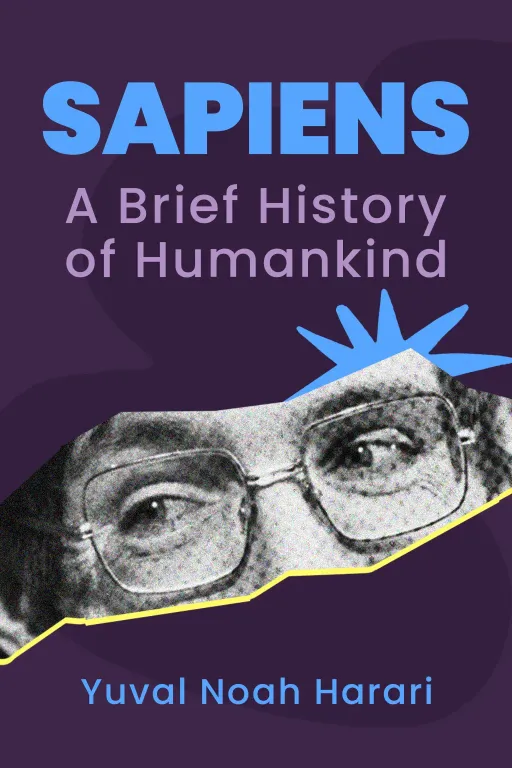
Atlas: Okay, so we're talking about. And today we're looking at two books that promise to give us that broader lens: by Yuval Noah Harari, and by Jared Diamond. But how do these massive historical works, usually seen as academic, directly impact a leader's daily decisions? I mean, I'm not running a country, I'm running a team.
Nova: That's the magic. These aren't just history books; they're frameworks for understanding human systems. Harari, for instance, a historian by trade, wrote based on a world history course he taught for non-history majors, aiming to provide this sweeping, accessible narrative of human existence. And Diamond, a polymath with expertise in everything from geography to evolutionary biology, famously wrote after a politician in New Guinea asked him, "Why is it that you white people developed so much cargo and we black people had so little?" That question became his life's work. Both authors bring these incredibly unique, interdisciplinary lenses to understanding things are the way they are.
The History Trap and Shared Fictions (Harari)
SECTION
Nova: So let's dive into that first crucial insight from Harari: the concept of "shared fictions." He argues that what truly allowed humans to dominate the planet and build complex societies wasn't our physical strength or individual intelligence, but our unique ability to believe in collective myths, in stories. These shared fictions, whether they're religions, nations, or even something as seemingly concrete as a corporation, are what enable large-scale human cooperation.
Atlas: Shared fictions? That sounds a bit… manipulative, or at least, like something I'd read in a philosophy class. Are you saying our entire organizational structure, our company values, our brand identity, are just stories we tell ourselves? How does understanding help a leader?
Nova: It's profound, Atlas. Think about a modern multi-national corporation. It exists only in our collective imagination. It has a legal identity, assets, liabilities, but you can't physically point to "Google" walking down the street. It's a story, a shared fiction, that allows millions of people – from engineers in California to marketing teams in Singapore – to coordinate their efforts, invest their time, and believe in a common goal. This fiction creates the rules, the hierarchy, the shared purpose.
Atlas: That's fascinating. So, for someone trying to build a strong team or unite an organization around a new vision, understanding these 'invisible forces' means they can be more intentional about the narratives they're crafting, the values they're promoting. It's not just about the numbers or the product; it's about the narrative that binds everyone together.
Nova: Precisely. If a leader understands that their company's culture, its mission, its very existence as a functioning entity, is built on a shared story, then they can consciously shape that narrative. They can identify the fictions that are working for them, the ones that are holding them back, and strategically introduce new ones. It shifts leadership from merely managing resources to actively curating and communicating the shared beliefs that drive collective action. It's about understanding the deep roots of human cooperation, and then using that knowledge to foster a more cohesive, purpose-driven organization.
Atlas: That's a powerful reframing. It means leadership isn't just about strategy, it's about anthropology. It's about understanding what makes us believe and cooperate on a grand scale.
Beyond Simple Narratives – Geography and Environment (Diamond)
SECTION
Nova: And that naturally leads us to a completely different, but equally profound, lens from Jared Diamond's. While Harari shows us the power of ideas and collective myths, Diamond pulls us back to the ground, literally, arguing that geography and environment, not inherent superiority or even just cultural innovation, shaped the destinies of societies.
Atlas: Okay, so we've gone from the power of stories to… dirt and climate? How does understanding ancient agricultural patterns or the spread of pathogens help a leader deal with, say, supply chain disruptions or global market competition today? That sounds a bit out there.
Nova: It's all about challenging simplistic cause-and-effect thinking. Diamond's core argument is about "geographic luck." He shows how Eurasia, with its vast east-west axis, allowed for the much easier spread of domesticated crops, animals, and technology. A crop developed in China could easily spread to Europe because they shared similar latitudes and climates. Contrast that with the Americas, which have a north-south axis. A crop developed in Mexico faced massive climatic and ecological barriers trying to spread to, say, Peru. This seemingly simple geographical fact led to different rates of agricultural development, population densities, technological advancements, and ultimately, different disease immunities.
Atlas: Wow, that's a really concrete example. So, it's like saying a company's success might not just be due to its brilliant CEO or innovative product, but also the underlying "geography" of its market, its access to resources, the historical development of its industry? That challenges a lot of our assumptions about 'innate superiority' or even just organizational 'best practices.'
Nova: Exactly. If a leader is looking at a struggling division, or a market where their product just isn't taking off, Diamond's perspective urges them not to just blame the people or the product strategy. Instead, it pushes them to look at the 'environmental' factors – the underlying structures, the historical context of that market, the fundamental resources available, the existing infrastructure. It fosters a systems-thinking approach, asking: what are the deep, often invisible, constraints or advantages that have historically shaped this situation? It fosters humility and a deeper search for root causes beyond immediate symptoms.
Atlas: That's a critical point for any strategic thinker. It makes you question the easy answers. Instead of saying, "They just aren't as innovative," you'd ask, "What are the historical and environmental factors that might have limited their ability to innovate, or that gave our competitors an inherent advantage?" It replaces judgment with curiosity.
Synthesis & Takeaways
SECTION
Nova: Precisely. Together, these books equip leaders to see the world not as a series of isolated events or simple cause-and-effect chains, but as a complex tapestry woven by both human-made narratives and deep environmental forces. It's about making informed, less biased decisions by understanding the fundamental drivers of human behavior and societal development.
Atlas: It's like they're giving us the ultimate cheat sheet to human reality. So, for our listeners, what current organizational challenge might be better understood by looking at human history's grandest patterns, and how can they start applying this broader lens?
Nova: Start by questioning your own assumptions about why things are the way they are. When you face a persistent problem, ask: "What's the 'shared fiction' driving this behavior, and what's the 'geographic luck' or historical constraint influencing this situation?" And then, pick up one of these books, or even just one chapter. Begin expanding your historical imagination. It's not about memorizing dates; it's about cultivating a deeper wisdom.
Atlas: A powerful call to action for anyone driven by growth and leadership. It's about seeing the unseen, understanding the deep currents shaping our world. You don't have to be a historian to be historically informed, and you definitely don't have to be a polymath like Diamond or Harari to benefit from their insights.
Nova: This is Aibrary. Congratulations on your growth!