The History Trap: Why You Need a Broader Lens for Leadership
9 minGolden Hook & Introduction
SECTION
Nova: Atlas, you and I talk a lot about the future, about innovation, about what's next. But today, I want to pull us back, way back. Because I think a lot of leaders, a lot of strategic thinkers, even you sometimes, fall into what I call "the history trap." What do you know about the history trap?
Atlas: Oh man, the history trap. Is that where you accidentally open Wikipedia to look up one thing, and three hours later you're an expert on medieval basket weaving techniques, completely forgetting what you started with? Because if so, I'm a frequent visitor.
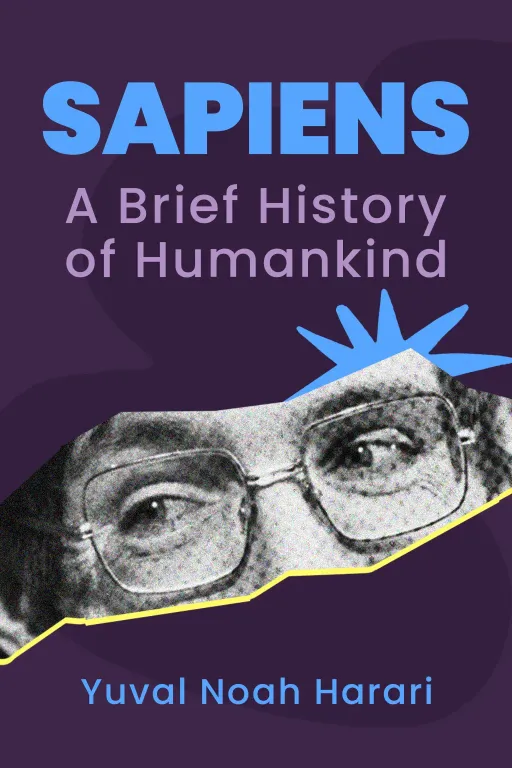
Nova: Exactly! But on a much grander, more impactful scale. It's about limiting your historical scope, only looking at the immediate past, and then wondering why the present feels so chaotic and unique. But history, deep history, offers powerful patterns and lessons. And two books, in particular, really pry open that narrow view: by Yuval Noah Harari, and by Jared Diamond.
Atlas: Wow, those are heavy hitters. I know became a global phenomenon, translated into dozens of languages, sparking conversations everywhere. And Diamond's work won a Pulitzer. What's fascinating is Harari's background as a medieval historian who just decided, "You know what? I'm going to write the history of humankind." And Diamond, a physiologist and ornithologist, came at history from this completely unexpected, interdisciplinary angle.
Nova: Precisely. They both brought this expansive, unconventional lens to some of humanity's biggest questions. And that broader view, Atlas, is what helps leaders today make more informed, less biased decisions. It’s about seeing the invisible forces shaping our world. Which naturally leads us to our first deep dive: the power of shared fictions.
The Power of Shared Fictions: Unpacking Sapiens for Leadership Insight
SECTION
Nova: Harari’s most profound insight, for me, is the concept of "shared fictions" or "collective myths." He argues that what truly sets humans apart, what allowed us to dominate the planet, isn't individual intelligence, but our unique ability to cooperate flexibly in large numbers. And we do this by believing in stories.
Atlas: Wait, are you saying our entire world, everything from nations to economies, is built on... made-up stories? That sounds a bit chaotic, and maybe even dangerous, to call them "fictions." Isn't that undermining their power?
Nova: That's the brilliance of it! They are fictions in the sense that they don't exist objectively in the physical world, like a tree or a rock. Money doesn't have inherent value; a corporation isn't a physical entity. But because we in them, they become incredibly powerful realities. These shared fictions, from ancient gods and religions to modern legal systems and corporate brands, enable millions of strangers to work together towards common goals.
Atlas: So it's like a company's mission statement, but on a global, historical scale? I’ve been there, trying to get everyone to believe in the "vision" of Q3 targets. But I guess that’s an example, right? How does that work historically?
Nova: Think about ancient empires. How did a king govern millions of people across vast territories? Not by knowing every single person, but by convincing them all to believe in a shared story: the divine right of the king, a common religion, or a shared ancestral narrative. These stories provided the framework for laws, taxes, and armies. The cause was the need for large-scale cooperation, the process was the creation and dissemination of these compelling narratives, and the outcome was unprecedented societal scale and complexity.
Atlas: That makes sense. These "invisible forces" you mentioned earlier, they’re the stories we tell ourselves and each other. So, for leaders today, what’s the big takeaway? How do they leverage this, or avoid being trapped by it?
Nova: Leaders today absolutely still rely on crafting compelling narratives. A compelling vision, strong company values, a powerful brand story – these are all modern shared fictions. They unite teams, inspire customers, and attract talent. The trap, however, is when leaders forget these are constructed narratives and start treating them as immutable, objective truths. When that happens, they become inflexible, unable to adapt their story, or their organization, when the underlying reality shifts.
Atlas: That's a huge insight. So, the point isn't that these are "fake," but that understanding their gives you power over them, rather than being controlled by them. It allows you to update the narrative. I can see how that would prevent leaders from being blindsided when an old story stops working.
Geography as Destiny: Lessons from Guns, Germs, and Steel for Strategic Thinking
SECTION
Nova: And speaking of invisible forces, let's shift from the stories in our heads to the very ground beneath our feet. Because Jared Diamond, in, argues that geography, not inherent superiority, has been the ultimate arbiter of human destiny.
Atlas: Geography as destiny? That sounds a bit deterministic. Like, if you were born in the wrong place, you were just out of luck? I mean, we're talking about human agency here, right?
Nova: It’s not about individual destiny, but about the broad sweep of societal development. Diamond’s core argument is that the availability of domesticable plants and animals, the orientation of continents, and other environmental factors gave some regions, particularly Eurasia, a massive head start. This led to earlier agriculture, denser populations, technological innovation, and crucial immunities to disease. Imagine a chessboard, but some players start with vastly more pieces just because of where their "home square" was.
Atlas: Okay, so it’s not about people being inherently smarter, but about the resources and conditions they had access to. Can you give an example? Like, how did a specific animal or crop change a whole society?
Nova: Absolutely. Think about the Fertile Crescent, modern-day Middle East. It was a goldmine of diverse wild grains like wheat and barley, and large mammals suitable for domestication like sheep, goats, cattle, and pigs. This allowed for early, highly productive agriculture. The cause was this unique environmental bounty, the process was the domestication of these species, leading to food surpluses. The outcome was population density, which in turn allowed for specialization—not everyone had to farm—leading to the development of writing, metallurgy, complex political structures, and eventually, the very "guns, germs, and steel" that gave them an advantage.
Atlas: That's incredible. So, the mere of certain wild plants and animals in one region, and their in others, fundamentally shaped the trajectory of entire civilizations. That’s a massive challenge to simplistic views of success and failure. So, what does this mean for a leader today? Are we supposed to move our headquarters to a more "geographically advantageous" location? What’s the takeaway for understanding success and failure without bias?
Nova: It means understanding that your organization operates within its own "geography." This isn't literal land, but the market conditions, the technological landscape, the regulatory environment, the talent pool. Leaders need to analyze these "environmental factors" with a clear, unbiased eye, rather than just attributing success to individual brilliance or failure to lack of effort. It challenges the idea that "meritocracy" is the sole driver of outcomes. It's about recognizing the deep currents, the structural advantages or disadvantages, that are at play.
Atlas: So it's not just about "grit" or "innovation," but also about the "geography" of your industry? That's a huge mindset shift. It means looking beyond immediate competitors to the fundamental conditions that enable or constrain everyone in that space.
Synthesis & Takeaways
SECTION
Nova: Exactly. Both Harari and Diamond, despite focusing on different aspects, offer this incredibly broad, almost cosmic, lens on human history. They reveal that our present problems, while they feel unique, often echo patterns that have played out for millennia.
Atlas: So, basically, history isn't just dates and names; it's a deep dive into the invisible rules of the game, whether they're stories we tell ourselves or the literal lay of the land. It’s about understanding the deep currents, not just the surface waves.
Nova: And that's exactly why leaders need this broader lens. It allows them to see beyond the immediate symptoms to the root causes, to understand the powerful, often unseen, forces that shape their organizations, their markets, and their people. It's about recognizing the profound systemic influences that are quietly shaping our outcomes, rather than being trapped by a narrow, present-focused view.
Atlas: That makes me wonder, what current organizational challenge in our listeners' worlds might be better understood if we applied Harari's shared fictions, or Diamond's geographical lens? What 'invisible forces' are quietly shaping their outcomes right now? It's a powerful question to reflect on.
Nova: Indeed. Understanding these patterns is not about predicting the future, but about making more informed, less biased decisions in a complex world.
Nova: This is Aibrary. Congratulations on your growth!