The Hidden Threads: How Ancient Choices Shape Today's World.
10 minGolden Hook & Introduction
SECTION
Nova: Most people think history is just a bunch of dusty dates and dead empires, something confined to textbooks, safely in the past. It's almost like a blind spot we collectively have.
Atlas: Hold on. Are you saying that what happened thousands of years ago is still actively messing with my morning commute, or even, dare I say, my bank account? Because that sounds… a little dramatic, Nova.
Nova: Dramatic, perhaps, but profoundly true, Atlas. The past isn't truly past; it forms the very ground we stand on. We often miss the incredibly long shadow that ancient decisions cast over our modern lives. It's a lens through which we can finally understand our world is the way it is right now.
Atlas: Okay, so this isn't just about memorizing names and dates. This is about understanding the DNA of our present. Where are you getting this mind-bending perspective from?
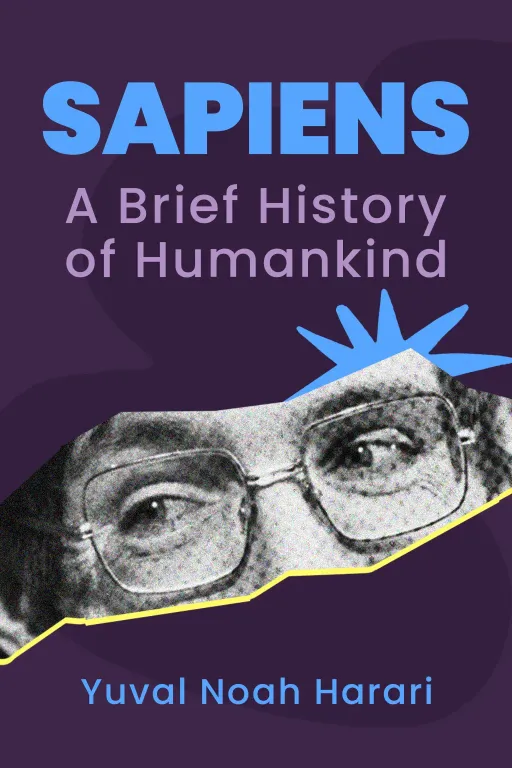
Nova: Well, a huge part of this insight comes from two monumental books: Yuval Noah Harari's and Jared Diamond's. Harari, for instance, isn't just a historian; he’s a philosopher who blends biology, anthropology, and economics to tell a truly epic story. Diamond, originally a physiologist, shifted his focus to environmental history, bringing a scientific rigor to understanding human societies. Both authors challenge us to look beyond surface explanations.
Atlas: That's a fascinating blend of disciplines. It sounds like they're trying to connect dots that most of us don't even realize exist. So, what's the first big thread they pull on from the ancient past that still impacts us today?
The Enduring Echoes of Ancient Revolutions
SECTION
Nova: Exactly. Let's start with Harari and what he calls the Cognitive Revolution. Imagine a time, roughly 70,000 years ago, when our ancestors, Homo sapiens, suddenly developed this incredible ability for complex language and, crucially, for creating and believing in shared fictions.
Atlas: Wait, so you're saying imaginary stories are as foundational to our existence as, say, inventing the wheel or discovering fire? That sounds… counterintuitive.
Nova: Absolutely. Think about it: a lion is real. Everyone agrees on a lion. But a nation-state, a corporation, or even money? These are all shared fictions. They don't exist physically, but because enough people believe in them, they become incredibly powerful. This ability to cooperate flexibly in large numbers, based on these collective myths, allowed us to organize beyond small, familial bands.
Atlas: I’m curious, how does that translate into something concrete that affects us today? Like, beyond just "we can cooperate."
Nova: Well, consider the Agricultural Revolution, which followed around 12,000 years ago. Before farming, humans were mostly nomadic hunter-gatherers, often living in more egalitarian groups. But once we started cultivating crops like wheat and rice, we settled down. This led to food surpluses, which in turn led to population growth, the need for storage, and eventually, specialized labor. You needed someone to guard the grain, someone to manage the water, someone to lead.
Atlas: So, the birth of hierarchy? And maybe even, dare I say, bureaucracy?
Nova: Precisely! And with settlement came property, inheritance, and the need for laws to govern it all. The very concept of "ownership" of land, for example, is a direct legacy of the Agricultural Revolution. It also led to the rise of diseases, as humans lived in closer proximity to livestock and each other. Our immune systems evolved, but at a huge cost.
Atlas: That’s amazing. It makes me wonder, if our foundational structures – our societies, our economies, our very concept of nationhood – are built on these ancient fictions and the consequences of settling down, how much of what we accept as 'natural' or 'just the way things are' is actually just a very, very old story that we've collectively agreed upon?
Nova: That's the profound insight. Harari argues that what we call "progress" often came at a cost, leading to greater inequality and less varied diets for the common person, even as it enabled the rise of empires. The shift from a nomadic existence to a settled, agricultural one created patterns of social stratification, gender roles, and even our relationship with the natural world that are still deeply embedded in our cultures and institutions today.
Atlas: So, the echoes of those ancient decisions about how we think and how we eat are literally in our collective consciousness and our physical cities. It really challenges the notion that history is just "old stories."
Geography as Destiny
SECTION
Nova: It absolutely does. And that naturally leads us to the second key idea we need to talk about, which often acts as a powerful amplifier or constraint on those ancient choices: geography. Were these revolutions universal, or did something else determine who prospered and who didn't?
Atlas: I guess most people would say it’s about human ingenuity, or perhaps cultural superiority, right? That some groups were just inherently better at building civilizations.
Nova: That's the common, often Eurocentric, narrative. But Jared Diamond, in, completely dismantles that. He argues, with compelling evidence, that geographical and environmental factors, not race or inherent intelligence, were the primary determinants of which civilizations thrived and which didn't.
Atlas: So you're saying it wasn't about who was smarter or worked harder, but literally about the shape of the land and what grew there? Can you give an example, because that sounds a bit out there.
Nova: Think about Eurasia versus the Americas or Africa. Eurasia is oriented along an East-West axis. This meant that domesticated crops and animals, like wheat, barley, cows, and horses, could spread relatively easily across similar latitudes, sharing similar climates and day lengths. Innovations in agriculture, technology, and writing could diffuse across the continent much faster.
Atlas: Ah, so a farmer in ancient China could potentially benefit from a new crop developed in the Middle East without having to completely re-engineer their farming practices for a totally different climate?
Nova: Exactly. Now, compare that to the Americas. They're oriented North-South. If you developed a crop in Mexico, like maize, it was much harder to spread it to the Andes or to what is now the United States, because the climate zones changed dramatically. The same goes for Africa. This drastically slowed the spread of vital innovations.
Atlas: Wow. So, a continent's shape literally dictated the pace of technological and agricultural development for millennia. That’s incredible. It means a lot of what we perceive as 'superiority' was just geographic luck. For someone passionate about exploring new knowledge, this really reframes the whole narrative of human progress.
Nova: It absolutely does. Diamond explains how the Fertile Crescent, for instance, had a unique abundance of domesticable plants and animals – 56 out of the 14 large mammalian species that have ever been domesticated globally originated there. This allowed for early, efficient agriculture, leading to dense populations, specialized labor, and eventually, the development of writing, complex political organization, and, yes, "guns, germs, and steel."
Atlas: And the "germs" part is also geographical, right? From living so close to those domesticated animals?
Nova: Precisely. Those dense populations living with animals developed immunities to a host of diseases that were devastating when Europeans later encountered populations in the Americas who had no such exposure. It wasn't biological superiority; it was historical exposure driven by the opportunities of their local environment.
Atlas: That's such a powerful reframe. It takes away the idea of inherent racial differences determining destiny and puts it squarely on environmental endowments. It really makes me wonder about the deep roots of global inequality today. It's not just a recent phenomenon, but a legacy stretching back thousands of years.
Synthesis & Takeaways
SECTION
Nova: It's a legacy indeed. So, when we combine Harari's insights into the cognitive and agricultural revolutions creating the foundational patterns, with Diamond's exposition on how geography amplified or constrained those patterns, we get a much clearer picture of this "long shadow." The decisions of our ancestors, shaped by the land they lived on, didn't just happen and disappear; they built the very systems and disparities we navigate today.
Atlas: Okay, so if we accept that our present is an echo of these ancient decisions and the geographic lottery, how might recognizing this long shadow actually change how we approach today's biggest problems, like climate change, global inequality, or even our political divisions?
Nova: That's the deep question, Atlas. Understanding these deep roots allows us to move beyond superficial solutions. It shifts the focus from blaming individuals or particular cultures for their current state to understanding the systemic, long-term historical forces at play. For instance, when addressing global poverty, we can see it not just as a failure of modern policy, but as the culmination of millennia of geographical advantages and disadvantages.
Atlas: That’s a great way to put it. It’s about understanding the deep currents, not just the surface waves. It fosters a kind of intellectual humility and, I think, greater empathy. It really challenges us to think more deeply about the 'why' behind things, rather than just reacting to the 'what.'
Nova: Absolutely. It empowers us to ask more profound questions and seek more holistic solutions. History isn't just a record of the past; it's the living blueprint of our present, offering crucial clues on how to build a better future. For anyone who craves unique insights and enjoys challenging conventional thinking, these books are truly essential.
Atlas: And they definitely provide lasting intellectual value and life insights.
Nova: This is Aibrary. Congratulations on your growth!