The Echo of Empires: Why Ancient Civilizations Still Shape Your World.
9 minGolden Hook & Introduction
SECTION
Nova: What if I told you the strongest foundations of our world—our nations, our laws, our money—aren't built on concrete facts, but on dazzling, collective imagination? Sounds like fantasy, right? But it's the profound truth that shapes everything.
Atlas: Whoa, collective imagination? That sounds like something out of a fantasy novel, not the bedrock of civilization. Are you saying our entire reality is just a really well-told story? My analytical mind is already buzzing with skepticism.
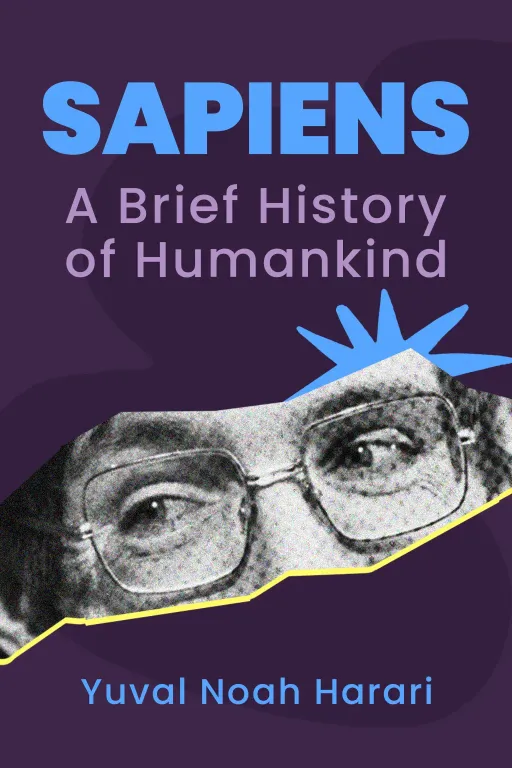
Nova: Exactly! And that's precisely the kind of deep question that Yuval Noah Harari, the author of, and Jared Diamond, who penned, force us to confront. What’s fascinating about Harari is he started as a medieval historian, which gives him this incredible sweep of human existence. And Diamond? He began as a physiologist, bringing a rigorous scientific lens to why some societies flourished and others didn't. These aren't your typical historians, and their unconventional backgrounds are key to the fresh, paradigm-shifting perspectives they offer.
Atlas: Oh, I like that. It's like they're looking at the big picture from completely different, unexpected angles. So, we're not just talking about old dates and dusty scrolls then, are we? We're talking about the deep forces that still ripple through our modern world?
Nova: Precisely. We often view history as isolated events, disconnected from our present. But today, we're going to dive into how understanding these ancient patterns unlocks entirely new ways of thinking about our current challenges and opportunities.
The Power of Shared Fictions: How Collective Narratives Shape Reality
SECTION
Nova: Let's start with Harari's groundbreaking idea of 'shared fictions.' He argues that unlike other animals, humans can cooperate flexibly in massive numbers because we believe in common myths, stories, and narratives. These aren't necessarily untrue in a moral sense, but they are constructs that exist only in our collective imagination.
Atlas: So, are you saying money is just a story? Or a nation's borders? That sounds a bit out there. For our listeners who are trying to build tangible, lasting value, like a sustainable business or a strong team culture, this concept might feel a bit… ethereal.
Nova: It absolutely is, at its core! Think about it: a dollar bill is just a piece of paper. Its value isn't inherent; it’s a shared belief that gives it power. The same goes for an entire legal system. Laws only work because the vast majority of people agree to abide by them, believing in the abstract concept of justice they represent. Or take a modern corporation, Atlas. It's a legal fiction, an entity with rights and responsibilities, but it doesn't physically exist beyond the stories and agreements we've all bought into.
Atlas: Wow. So, if I'm an architect trying to build a foundation, I need to design a really good story, not just a solid structure? That makes me wonder about strategic marketing. It's not just about selling a product, it's about selling a narrative that people want to be a part of.
Nova: Exactly! These shared fictions allow us to create complex social structures. Without them, we'd be limited to small tribes. The ability to create and believe in collective stories is the bedrock of all human societies, from ancient empires building pyramids to modern corporations launching global movements. These narratives provide purpose, define values, and inspire collective action on a scale no other species can manage.
Atlas: I can see how that would be critical for anyone driven by impact, trying to create something lasting. You need a compelling narrative that unites people, gives them a shared purpose beyond just the immediate task. It’s not just about the 'what,' it's about the 'why' everyone is showing up.
Nova: Precisely. And this leads us to our next crucial insight, because while these narratives are incredibly powerful, they don't operate in a vacuum. They are always shaped by the physical world around us.
Geography as Destiny: Unpacking the Environmental Roots of Civilization's Rise and Fall
SECTION
Atlas: That’s a great way to put it. So, we have these powerful stories, but what about the actual ground we're standing on? Does that also dictate our destiny, or is it just the backdrop?
Nova: This is where Jared Diamond's comes in, and it's a monumental work. Diamond argues that geographical and environmental factors, not race or inherent superiority, explain why some civilizations advanced faster than others and gained dominance. He reveals the deep, often invisible, forces that shaped the distribution of power and technology across the globe.
Atlas: Okay, but how did a mountain range or a river change history? Can you give an example that really brings this home? Because for a visionary trying to understand the 'why' behind global events, this sounds profoundly important.
Nova: Absolutely. Consider the Fertile Crescent, modern-day Middle East. It was a cradle of civilization not because its people were inherently smarter, but because its geography was uniquely blessed. It had a wealth of domesticable plants, like wheat and barley, and animals, like sheep and goats. These were easy to cultivate and provided abundant food, allowing people to settle down, develop surplus, and specialize.
Atlas: So, it wasn't about the people, but the resources they happened to stumble upon? That's incredible.
Nova: And it gets better. The Eurasian continent, where the Fertile Crescent is located, has a predominantly East-West axis. This meant that domesticated crops and animals, along with agricultural techniques, could spread easily across similar latitudes with similar climates. Think of how much harder it would be for a crop to spread from, say, Mexico to Patagonia, crossing wildly different climates along a North-South axis.
Atlas: Right! So, the East-West spread meant innovations could travel further, faster, creating larger, more connected societies. That’s a deep, long-term causal chain right there. It means those initial geographical advantages compounded over millennia.
Nova: Exactly. This allowed Eurasia to develop denser populations, more complex social structures, writing systems, and crucially, greater immunity to diseases from their domesticated animals. When Europeans eventually encountered populations in the Americas, who had been geographically isolated with fewer domesticable species and a North-South axis limiting agricultural spread, the outcome was devastatingly unequal.
Atlas: That’s a powerful insight. It completely reframes how we think about historical dominance. It’s not about some innate superiority, but simply the luck of the draw in terms of geography. It makes me wonder about current global events. Are we still seeing the echoes of these ancient geographical advantages in, say, trade relationships or resource distribution today? How does this influence our global understanding of strategic marketing or even leadership psychology, knowing these deep roots?
Nova: It absolutely does. The foundational advantages granted by geography thousands of years ago created a snowball effect. They led to early population density, technological innovation, and political organization, which then translated into colonial power and, ultimately, the distribution of wealth and influence we see today. Recognizing this helps us understand that many current global challenges—from economic disparities to geopolitical tensions—aren't just recent phenomena. They have deep, ancient geographical and historical roots.
Synthesis & Takeaways
SECTION
Nova: So, when we put these two ideas together—the astonishing power of our shared fictions and the silent, profound hand of geography—we start to see the world not as a series of isolated events, but as a tapestry woven over millennia. Our beliefs give us purpose, and our environment sets the stage.
Atlas: That's a profound synthesis. It really makes me think about that deep question from our reading: How might your understanding of a current global event change if you traced its origins back to deep historical or geographical roots? It's not just about the surface-level politics or economics, is it?
Nova: Not at all. It means that to truly understand something like a global trade dispute or a migration crisis, you can't just look at the last five years. You have to ask: what are the underlying narratives at play? What are the geographical constraints or advantages that shaped these regions centuries ago? History isn't just a collection of dates; it's a living echo, constantly shaping our present opportunities and challenges.
Atlas: That’s actually really inspiring. It suggests that to build something truly lasting and impactful—whether it's a product, a team, or a culture—we need to understand both the powerful narratives we create and the fundamental ground we're building upon. It’s about being holistic, seeing the entire causal chain.
Nova: Exactly. So, for all of you visionaries and architects out there, don't just solve the immediate problem. Look deeper. Trace the origins. Because understanding the echo of empires is the first step to truly shaping your world. We invite you to share a current global event that you now view differently after today's discussion. Let us know what insights you've uncovered!
Atlas: What a journey! This is Aibrary. Congratulations on your growth!