The Echo Chamber Effect: Why Your Past is Shaping Your Future (Unseen)
10 minGolden Hook & Introduction
SECTION
Nova: What if the biggest innovations of tomorrow aren't just about looking forward, but about finally understanding the ancient echoes that whisper from our past?
Atlas: Oh, I like that! "Ancient echoes"—it sounds like something out of a forgotten prophecy. But seriously, Nova, how do these "ancient whispers" actually connect to the cutting-edge innovations and challenges our listeners are grappling with today? It feels like we're always told to look ahead, not behind.
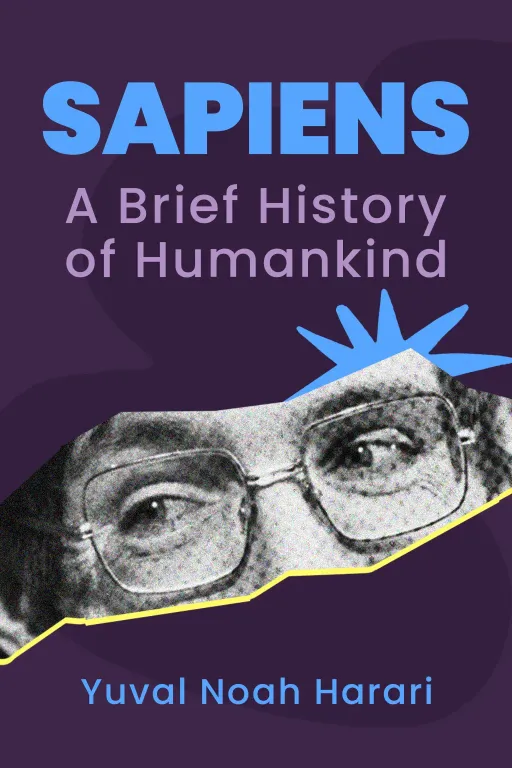
Nova: Exactly! And that's precisely the blind spot we're shining a light on today. We often view history as a series of isolated events, like disconnected snapshots. But it's actually a continuous, flowing river, and ignoring that river means missing the crucial currents that shape everything around us, including our brightest ideas and our toughest problems. We’re drawing today from two absolute titans of thought: by Yuval Noah Harari, and by Jared Diamond.
Atlas: Ah, Harari and Diamond! Heavy hitters. I imagine a lot of our listeners have encountered their work, or at least heard the buzz.
Nova: Absolutely. What's fascinating about Harari is that he was a medieval history scholar who unexpectedly became a global phenomenon by applying this incredibly broad, almost cosmic lens to the entire span of human existence. It’s a total reimagining of how we see our past. And Diamond, his won a Pulitzer Prize, precisely because it integrated such diverse fields—geography, biology, anthropology—to provide this groundbreaking, interdisciplinary explanation for societal inequalities. It was a radical departure from the eurocentric narratives that dominated history for so long.
Atlas: That’s a powerful combination! It sounds like they're both challenging us to look beyond the obvious.
Nova: Precisely. And the first echo we need to tune into, from Harari's, is what he calls the Cognitive Revolution. It’s all about shared fictions and mass cooperation.
The Cognitive Revolution: Shared Fictions and Mass Cooperation
SECTION
Nova: Harari argues that what truly sets apart, what allowed us to dominate the planet, isn't just our intelligence, but our unique ability to create and believe in. Think about it: a lion can't convince another lion that if they both give him their gazelles now, they'll get endless gazelles in lion heaven.
Atlas: That’s a great analogy! But wait, what exactly do you mean by "shared fictions"? Are we talking about myths, fairy tales, that kind of thing? Because I imagine our listeners, who are often focused on practical innovation and human behavior, might be thinking, "How is a fairy tale influencing my next project?"
Nova: Well, it’s much deeper than just fairy tales. We're talking about things like money, nations, laws, even corporations. These don't exist in the physical world; you can't touch a nation state or hug a dollar bill and feel its inherent value. Their power comes from our collective belief, our shared agreement that they are real and meaningful. It’s a story we all tell each other, and because we all believe it, it becomes incredibly real and powerful.
Atlas: Okay, so you’re saying the very structures we use to innovate – our companies, our educational systems, even the concept of intellectual property – are built on these ancient, agreed-upon stories? It's like the operating system we're running on was written millennia ago, and we just keep building apps on top of it without ever questioning the core code.
Nova: Exactly! Consider the example of a corporation. It’s a legal fiction. It has rights and responsibilities, it can own property, it can be sued, it can make billions of dollars. But where is it, physically? It's nowhere. It's a story, a concept, that we've all agreed to uphold. This ancient cognitive leap—the ability to imagine and collectively adhere to these fictions—is what allowed millions of people, who don't even know each other, to cooperate on massive scales.
Atlas: That’s incredible! So, this isn't just abstract philosophy; it's the very foundation of how we organize ourselves for innovation, for commerce, for education. It makes me wonder, how does this 'fiction' impact tangible dilemmas or opportunities that someone fostering growth might face?
Nova: Well, it profoundly influences resource allocation, collaboration, and even what we deem 'valuable' in innovation. For example, why do we value a digitally created NFT more than, say, a physical, hand-crafted artwork by a local artisan? Because a collective, shared fiction has assigned it a certain value. Or why do some innovations get massive funding while others, perhaps equally impactful, struggle? It often comes down to how well they align with the prevailing 'fictions' of the market, the nation-state, or the corporate structure. These fictions create unseen biases and opportunities, shaping the very landscape of what's possible.
Atlas: So, the 'rules of the game' for innovation, for building community, for nurturing potential, aren't just objective facts. They're deeply rooted in these shared stories we tell ourselves, often without even realizing it. That’s a powerful insight for anyone trying to create something new or challenge the status quo. It means understanding the invisible infrastructure.
Geography's Silent Hand: Environmental Determinism and Unequal Development
SECTION
Nova: And speaking of foundational operating systems, that naturally leads us to Jared Diamond and a very different kind of 'unseen hand' – geography. While Harari delves into our cognitive leaps, Diamond, in, looks at the physical world and argues that geographical and environmental factors, not inherent superiority, primarily shaped the divergent developmental paths of human societies.
Atlas: I’m curious, Nova. "Geography's silent hand"—that sounds a bit like environmental determinism. So, you're saying my environment dictates my destiny? That sounds a bit... limiting for someone trying to foster potential and innovation, doesn't it? It challenges the idea of individual agency.
Nova: It's a common initial reaction, but Diamond's argument is far more nuanced. He's not saying your personal destiny is sealed by your postcode. He's explaining certain societies developed agriculture, complex technologies, and resistance to diseases far earlier than others. Take the Fertile Crescent, for instance. It was a goldmine of domesticable plants like wheat and barley, and animals like goats and sheep. These were relatively easy to domesticate, provided high yields, and could be stored for long periods.
Atlas: Right, so early farmers in that region had a massive head start. I guess that makes sense. You plant wheat, you get a lot of food, you can feed more people.
Nova: Exactly. More food means denser populations. Denser populations mean specialized labor – not everyone has to farm. You get artisans, soldiers, priests, and eventually, inventors. And crucially, these dense populations living close to domesticated animals meant the rapid evolution and spread of diseases, leading to immunity for the people, but devastating for those who hadn't been exposed. Contrast this with areas like New Guinea, which had taro and bananas. These are harder to cultivate, don't store well, and offer fewer calories per acre. They also had very few domesticable large animals.
Atlas: Wow. So, ancient farming practices led to germs and steel. That really puts a different spin on things. But how does echo in a modern innovator's world, today? Are we still subtly competing based on ancient agricultural advantages?
Nova: Absolutely. Those initial geographical advantages compounded over millennia. Societies that developed agriculture earlier gained a massive head start in population, technology, political organization, and disease immunity. This led to a legacy of wealth, power, and technological advancement that continues to influence global economic disparities, access to resources, and even the "starting line" for innovation in different regions today. It's not about inherent superiority of any group, but inherited advantage from a geographical lottery millennia ago.
Atlas: That’s a profound thought. So, when we look at disparities in access to education or resources for innovation, or even the origins of technological hubs, it’s not just about current policy or recent history. It's about a deep, millennia-old geographical lottery that created foundational advantages. It really highlights the "unseen" part of the "Echo Chamber Effect."
Synthesis & Takeaways
SECTION
Nova: So, when we bring Harari's shared fictions together with Diamond's geographical lottery, we start to truly grasp the "echo chamber effect." Our innovations, our challenges, our very ways of interacting are not just products of today. They are direct, often unintended, consequences of ancient choices, cognitive leaps, and environmental realities.
Atlas: That’s a powerful synthesis, Nova. For our listeners, who are nurturing innovators, trying to build something new or foster growth, understanding these ancient echoes means we're not just dealing with present-day challenges, but with deep-seated, invisible currents. It makes you realize that innovation isn't just about creating something new; it's about understanding the old foundations it sits on. How can we, as innovators, even begin to navigate these unseen forces?
Nova: It starts with recognition. Recognizing that the 'rules' we operate under—whether they're economic, social, or political—are often shared fictions we've inherited. And acknowledging that the resources and opportunities available to us, or to those we aim to impact, are often shaped by geographical advantages that date back thousands of years. It allows us to innovate with a deeper, more informed perspective, to perhaps even design new 'fictions' that serve us better, or to address historical imbalances more effectively.
Atlas: That’s actually really inspiring. It’s not about being constrained by the past, but about understanding it to build a more intentional future. It makes you wonder, doesn't it? What ancient echo is influencing current challenge or innovation right now, without you even realizing it?
Nova: It's a deep question, one that Harari and Diamond compel us to ask. And it’s a question that can unlock entirely new pathways for understanding human behavior and fostering potential.
Atlas: Absolutely. For anyone looking to understand the profound, unseen connections between our deep past and our present actions, these books are essential. They truly offer a key to navigating the echoes that shape our world.
Nova: We'd love to hear what ancient echoes you've identified in your own work or life. Share your insights with us!
Atlas: This is Aibrary. Congratulations on your growth!