The Cradle of Civilization: How Ancient Choices Still Shape Our World
9 minGolden Hook & Introduction
SECTION
Nova: Atlas, if I asked you for five words, how would you describe history? Not as a school subject, but as a living, breathing force in our world?
Atlas: Hmm, five words for history as a force... "Unseen currents shaping everything now."
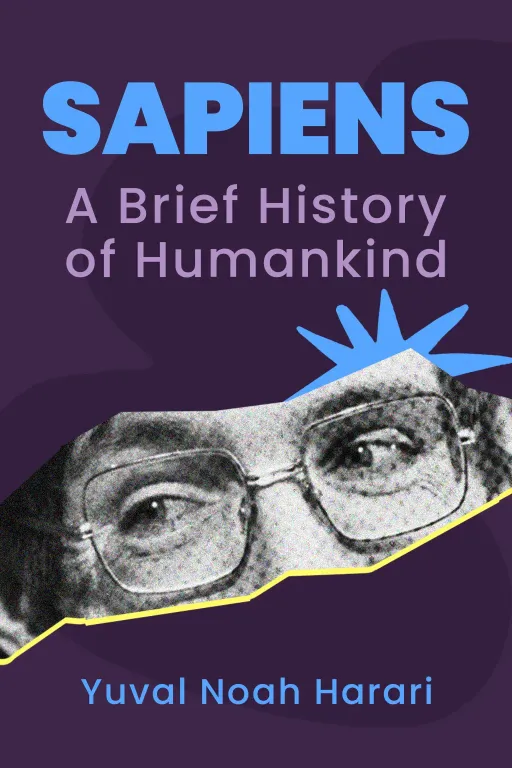
Nova: Oh, I love that! "Unseen currents shaping everything now." That's actually the perfect jump-off point for today's deep dive. We’re exploring a fascinating concept we're calling "The Cradle of Civilization: How Ancient Choices Still Shape Our World." And the ideas we're going to unpack are deeply informed by two widely acclaimed works that have truly reshaped how we think about human development: Yuval Noah Harari’s and Jared Diamond’s. These authors are celebrated for their interdisciplinary approaches, offering powerful, non-traditional explanations that have sparked global conversations.
Atlas: That makes me wonder, how do these grand, sweeping narratives from millennia ago actually connect to the daily decisions and global challenges we face today? It feels like such a huge leap.
The 'Operating System' of History: Beyond Isolated Events
SECTION
Nova: That’s exactly the "blind spot" we often have. We tend to view history as this collection of isolated events: big battles, famous leaders, specific inventions. Like a series of disconnected snapshots. But the truth is, Nova, it’s much more like an interconnected operating system running underneath everything. These aren't just isolated incidents; they're deep currents of human development, constantly influencing each other across vast stretches of time.
Atlas: Right, like... we see the app on our phone, but we don't necessarily see the complex code running it all. So, how do we even begin to see this historical "operating system" in action? Can you give an example?
Nova: Absolutely. Think about something as fundamental as ancient infrastructure. Take the Roman Empire's road network, for instance. On the surface, it was just roads, right? But the to invest in that massive, interconnected system – the cause – was driven by a need for military control, efficient trade, and rapid communication across a vast empire. The involved incredible engineering, standardized construction, and centuries of maintenance.
Atlas: And the outcome? Beyond just getting from point A to point B faster?
Nova: Exactly. The outcome cascades through history. Those roads facilitated the spread of Roman law, language, and culture far beyond their initial military purpose. They enabled economic integration, fostered the growth of towns, and even influenced the routes of later trade networks and migrations. Even today, if you look at a map of certain European regions, you can often trace modern transport routes that still follow, or are heavily influenced by, those ancient Roman lines. It’s a foundational decision from two millennia ago that still impacts economic geography and cultural exchange today.
Atlas: But wait, isn't that just hindsight? It’s easy to connect the dots looking backward. For someone who’s an architect, a navigator, trying to build resilient teams or design a strategy, how do you use this "operating system" view without getting lost in endless details? What's the practical insight for?
Nova: What emerges is that it's about pattern recognition. It's about understanding the, not just cataloging the individual events. The practical insight is that seemingly small decisions or innovations in the distant past can have disproportionately large, long-lasting impacts. This means when you're designing a system, or navigating a complex problem, you need to look beyond the immediate symptoms and ask: "What are the deep historical precedents here? What foundational 'code' is influencing this current behavior or structure?"
Atlas: I see. So it's about understanding the of human development, not just cataloging the buildings. That makes sense.
Ancient Seeds, Modern Harvest: How Geography and Early Choices Sculpted Our World
SECTION
Nova: And understanding those design principles leads us directly to the ancient seeds that shaped our modern harvest. This is where thinkers like Harari and Diamond really shine. Harari, for instance, talks about the cognitive revolution and, crucially, the agricultural revolution. This wasn't just a discovery; it was a series of profound that fundamentally altered humanity's trajectory.
Atlas: So you’re saying the decision to stop being nomadic hunter-gatherers and settle down to farm – that was a choice that reverberated through history?
Nova: Precisely. The was often a combination of factors: population pressure, climate changes, and the sheer abundance of certain wild grains in specific regions. The was the gradual domestication of plants and animals, leading to permanent settlements. But the was revolutionary. Agricultural societies could produce food surpluses, which led to population growth, specialization of labor, the emergence of hierarchies, and eventually, states. It also brought new diseases, as humans lived in closer proximity to animals and each other. These were the ancient seeds of complex societies, inequality, and even our susceptibility to pandemics.
Atlas: Wow, that’s kind of heartbreaking and fascinating at the same time. And where does Jared Diamond fit into this?
Nova: Diamond takes it a step further, arguing that played a massive, often overlooked, role in determining which societies developed faster. It wasn't about inherent racial superiority, but about environmental endowments. For example, Eurasia had a vast east-west axis, allowing for the easy spread of domesticable crops, animals, and technologies because climates were similar along that latitude. The Americas, with their north-south axis, faced greater climatic barriers for such spread.
Atlas: So basically you’re saying, if you lived in a region with easily domesticable crops and animals, and a geography that allowed those innovations to spread, you got a head start?
Nova: Exactly. This geographical luck, combined with those early agricultural choices, created asymmetric advantages that compounded over millennia. It's a powerful counter-narrative to traditional explanations for why some societies developed complex technologies and others didn't. It highlights that our current world, with all its disparities, is a direct product of these ancient choices and circumstances.
Atlas: That makes me wonder, if these ancient choices and geographical luck were so deterministic, does that leave any room for agency now? For someone trying to build resilient teams or resolve conflict, how do we break free from these deep historical patterns? It sounds a bit like we're just stuck.
Nova: That’s a crucial question, and it's where awareness becomes power. Understanding the "why" behind disparities – that they often have deep roots in geography and early human decisions, not just recent policy or individual character – allows for more informed strategies. It helps us avoid simplistic blame and instead focus on systemic solutions. For behavioral design, for conflict resolution, for building resilient teams, it's about navigating those currents, not denying them. It informs how we design interventions that truly address root causes, not just symptoms.
Atlas: So it's like a psychologist understanding childhood trauma – you can't change the past, but understanding it is absolutely crucial for healing and building a better future. That’s a perfect analogy.
Synthesis & Takeaways
SECTION
Nova: Absolutely. It reframes our global challenges not as random chaos or inherent flaws, but as complex problems with deep, understandable roots stemming from the cradle of civilization itself. This isn't fatalism; it’s a call to informed, strategic action.
Atlas: That’s actually really inspiring. It means these problems are, in theory, solvable if we understand their origins. So for our listeners, the architects, the navigators, the psychologists out there – what's one practical takeaway from understanding this 'cradle of civilization'?
Nova: It’s to cultivate "deep historical empathy." When you look at any global challenge – be it conflict, inequality, or even a persistent behavioral pattern in an organization – ask yourself: "What ancient choice, what geographical reality, what long-forgotten current might be at play here?" This perspective can transform your strategic approach, allowing you to design with intention, navigate complex systems more effectively, and foster more resilient human connections.
Atlas: That’s a powerful call for intentional design, right there. It’s about understanding the foundation before you build, and the currents before you set sail. I love that.
Nova: Absolutely. It’s about building a more resilient future, rooted in a clearer understanding of our past.
Atlas: Well, Nova, this has been an incredible journey through time and perspective. Thank you for illuminating these deep currents for us.
Nova: My pleasure, Atlas. And to all our listeners, keep navigating those currents with wisdom.
Atlas: This is Aibrary. Congratulations on your growth!