The Blind Spot of Certainty: Why History's Nuance is Your Strategic Edge
9 minGolden Hook & Introduction
SECTION
Nova: Atlas, if I asked you for a five-word review of 'history,' what would you give me? Quick, off the cuff.
Atlas: Oh, that's a good one. Hmm… "Comforting lies, strategic power, hidden."
Nova: "Comforting lies, strategic power, hidden." Wow, that's… provocative. And perfectly sets the stage for our conversation today! Because we often think of history as this dusty collection of irrefutable facts, right? Dates, names, events. But what if that 'fact-based' view is actually a blind spot, limiting our understanding of everything from current societal structures to future possibilities?
Atlas: That's a huge claim! I mean, history is history. It happened. But I like where you're going with the 'comforting lies' part. Are we talking about a narrative that's been constructed?
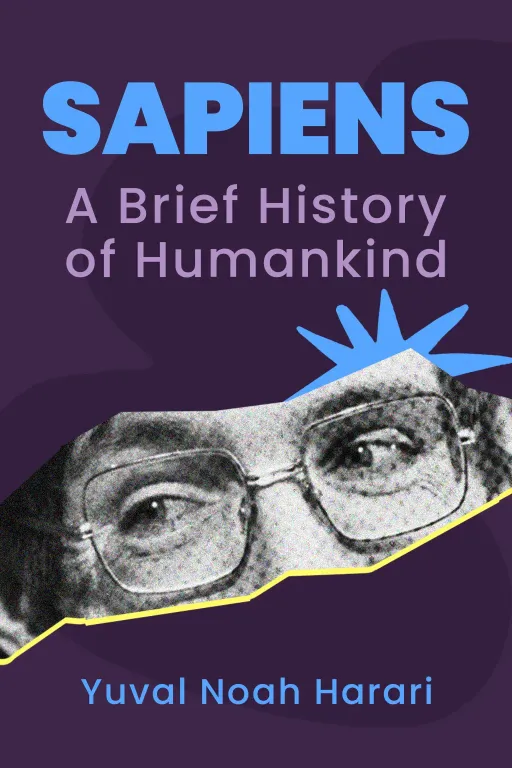
Nova: Precisely. And our guides today are two absolute titans who fundamentally shifted how we look at history: Yuval Noah Harari, with his groundbreaking book, and Jared Diamond, with the Pulitzer-winning. What's fascinating about both these authors is their unique, interdisciplinary lenses. Harari, a historian, synthesized vast stretches of human history into a narrative so compelling it transcended academia. Diamond, a physiologist and ornithologist, brought an ecological and biological perspective to human societies that was utterly revolutionary. They show us that to truly navigate complexity, you must grasp the deep currents of collective human experience.
Atlas: That's a powerful point. For anyone who's trying to build futures, whether it's in business or for their family, understanding these deep currents is essential. So, how do these books help us see beyond the 'facts' and into the dynamic narrative?
The Myth of Static History & Shared Fictions
SECTION
Nova: Well, let's start with Harari and what I call 'The Myth of Static History.' His core argument, especially in, is that our unique human ability to believe in shared myths—what he calls 'collective fictions'—is what allowed us to cooperate on a massive scale and ultimately dominate the planet. These aren't lies in a malicious sense, but stories we collectively agree upon.
Atlas: Collective fictions? That sounds a bit out there. So you're saying something like... money isn't 'real'? Or nations are just stories? For someone in a global leadership role, that could sound quite unsettling.
Nova: It can be, at first. But think about it. What a dollar bill? It's a piece of paper. Its value isn't inherent; it's a shared belief. We collectively agree that this piece of paper represents a certain amount of purchasing power. This shared fiction allows millions of strangers to cooperate economically without knowing or trusting each other personally. A farmer in Iowa can sell corn to a buyer in Tokyo, not because they trust each other, but because they both trust the fiction of the dollar.
Atlas: That makes perfect sense when you put it like that. It's like we've all agreed to play this incredibly complex game, and the rules of the game are these shared fictions. But it also sounds incredibly fragile. What happens when people stop believing?
Nova: Exactly! That's the power and the fragility. Harari illustrates how nations are also collective fictions. There's no biological or natural reason for the borders we draw on maps. They exist because enough people believe in them, believe in the stories of shared heritage, culture, and destiny that define that nation. This belief allows for immense cooperation—building cities, armies, legal systems—but also fuels conflict when those beliefs clash.
Atlas: I see how this connects to the idea of a 'strategic edge.' If so much of our reality is built on these shared fictions, then understanding them, questioning them, and even strategically them could be an incredible way to innovate or shift an industry. It's like seeing the code behind the operating system of society.
Nova: That's a brilliant analogy, Atlas. It's about seeing the malleability of systems. Once you recognize that many 'truths' are historical constructs, born from shared beliefs, you start to see where the leverage points for change truly lie. It moves you from passively accepting a system to actively understanding how it was built, and thus, how it could be rebuilt.
Unearthing the Roots of Systems & Malleability
SECTION
Nova: And that naturally leads us to our second core idea. If shared fictions give us the and the of human cooperation, then Jared Diamond's gives us the. It asks: what shaped these fictions? What underlying forces created the conditions for certain civilizations to flourish and others to lag behind?
Atlas: That's the classic question: why did some parts of the world develop so much faster than others? I know the book famously pushed back against any notion of inherent superiority. So, what was his game-changing explanation?
Nova: Diamond unpacks how geographical and environmental factors, not inherent racial or intellectual superiority, shaped the trajectories of different civilizations. He argues that factors like the availability of domesticable plants and animals, and even the continental axis, were monumental.
Atlas: Give me an example. How did, say, a specific type of plant change the course of human history?
Nova: Absolutely. Take the Fertile Crescent, for instance. It was a goldmine of domesticable plants like wheat and barley, and animals like goats, sheep, and pigs. These were easy to domesticate and incredibly productive. This gave the people there a massive head start in agriculture. With a reliable food surplus, not everyone had to farm. Some could specialize: artisans, soldiers, priests, scribes. This led to denser populations, the development of writing, complex political structures, and technology.
Atlas: So, the ability to plant a few seeds and raise a few animals effectively created the conditions for entire empires? That’s incredible. It's like the initial geographic lottery ticket determined so much.
Nova: Exactly. And because Eurasia has an east-west axis, these innovations—plants, animals, technologies—could spread relatively easily along similar latitudes, meaning similar climates and growing seasons. Contrast that with the Americas, which have a north-south axis. Innovations had to cross vastly different climates and ecological zones, making spread much harder. This isn't about intelligence; it's about environmental luck.
Atlas: Wow. I imagine a lot of our listeners, especially those leading global teams, are thinking, "But how does this apply to our modern, interconnected world, where we've supposedly overcome these geographical barriers?"
Nova: That's the critical connection. While we have global trade and digital economies, the foundational systems that emerged from these early geographical advantages still ripple through history. The diseases that early agricultural societies developed, for example, conferred immunity to their descendants, giving them a devastating advantage when encountering isolated populations. The early development of complex states led to more sophisticated political and economic systems that then spread globally. So, even today, the 'playing field' isn't truly level; it's deeply shaped by these historical currents. Understanding these deep roots isn't just academic; it's strategic. It allows you to see that current systems aren't inevitable, but rather the outcome of traceable, understandable forces.
Atlas: So, for the 'Global Architect' or 'Nurturing Innovator,' it's about seeing the deep code, not just the surface application. It means that to truly innovate or lead cross-culturally, you have to understand the historical constructs that underpin those cultures and systems.
Synthesis & Takeaways
SECTION
Nova: Precisely. Synthesizing Harari and Diamond, we get this profound insight: history isn't just a collection of facts; it's a dynamic narrative shaped by shared fictions, which themselves were heavily influenced by deep historical forces like geography and environment. Recognizing this reveals the fundamental malleability of systems. It's your strategic edge because it shifts your perspective from seeing 'what is' as fixed, to understanding 'why it is' and, crucially, 'what it.'
Atlas: That's a powerful way to frame it. And it brings us back to the deep question posed in the original thought piece: What widely accepted 'truth' in your industry might actually be a historical construct, and how would challenging it change your strategy? For leaders navigating complexity, building futures, this isn't just intellectual curiosity; it's a roadmap for innovation.
Nova: It absolutely is. It's about moving beyond surface-level analysis and truly understanding the invisible forces at play. Whether it's questioning a long-held business model, challenging a cultural norm in a global team, or re-evaluating a societal structure, this historical lens empowers you to see the potential for new futures. It's about being a strategic balancer, not just reacting to the present, but understanding its deep past to shape a better future.
Atlas: That's such a hopeful and empowering thought. I encourage all our listeners to really sit with that question this week. Think about one 'truth' in your world, and trace its origins. You might find it's a construct waiting to be reimagined. Share your thoughts with the Aibrary community; we'd love to hear what you uncover.
Nova: Absolutely. It's a journey of continuous discovery.
Atlas: This is Aibrary. Congratulations on your growth!