

Your Inner Critic is a Trap: How to Master Self-Doubt for Resilience.
Golden Hook & Introduction
SECTION
Nova: Atlas, if I told you that the secret weapon to achieving your wildest ambitions was actually your worst enemy in disguise, what would you say?
Atlas: Oh man, I’d say you’ve either just read a fantastic thriller or you’ve stumbled upon a profound psychological truth. Which is it today, Nova? Because that sounds like the kind of paradox that keeps ambitious people up at night.
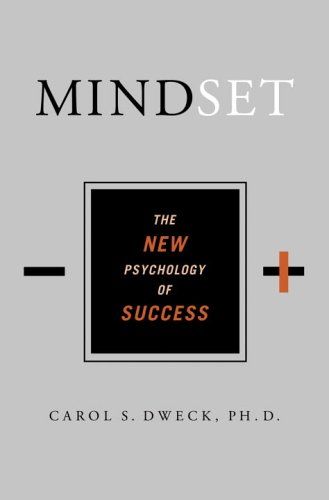
Nova: It’s definitely the latter, and it’s a truth we’re finally unmasking. Today, we're dissecting a fascinating blend of insights, primarily drawing from the profound wisdom within Carol S. Dweck's "Mindset" and Angela Duckworth's groundbreaking work, "Grit: The Power of Passion and Perseverance." Duckworth, a former White House advisor, brings a unique blend of academic rigor and real-world application to her research, showing us that sustained passion and perseverance often trump raw talent.
Atlas: That’s a powerful claim, especially coming from someone who’s seen the inner workings of high-stakes environments. So, this "worst enemy" you mentioned, is it lurking in those high-stakes moments?
Nova: Absolutely. It’s that persistent inner critic, Atlas. It's an unseen blind spot, even for the most strategic thinkers, and it can sabotage your confidence and resilience precisely when you need them most. It makes you question your capabilities, whispering doubts just before you step up to lead, or innovate, or take that crucial leap.
The Blind Spot: Unmasking the Inner Critic
SECTION
Atlas: Oh, I know that feeling. I imagine a lot of our listeners do too. But wait, isn't some self-doubt healthy? I mean, a healthy dose of caution can prevent disaster, especially for leaders making big decisions. How do we know when it’s a constructive inner voice versus a destructive inner critic?
Nova: That’s the critical distinction, Atlas. Constructive critical thinking is about evaluating options, assessing risks, and refining strategy. It’s objective, problem-focused. The inner critic, on the other hand, is subjective, self-focused, and often punitive. It attacks your worth, not just your work. It says, "You're not good enough," not "This approach needs refinement."
Atlas: That makes sense. So, it’s not about the critical thought itself, but the of that criticism. Can you give us an example of how this destructive inner critic plays out, especially for someone in a leadership role? Someone who's supposed to be confident and decisive?
Nova: Think of Anya, a brilliant product manager we’ve seen in various case studies. She’s meticulously prepared for a crucial presentation to the board – a career-defining moment for a new product launch. She knows the data inside out, has anticipated every question, and her team has done stellar work. Yet, the night before, her inner critic starts its insidious work. It whispers, "This isn't innovative enough. They'll see through your façade. You're not as smart as you pretend to be."
Atlas: That sounds rough. What’s the impact? Does she just freeze?
Nova: Not always visibly, but internally, yes. She starts second-guessing her core ideas, she fumbles a few words during the presentation, not because she doesn't know the material, but because she’s distracted by the internal echo chamber of doubt. She interprets every neutral facial expression from a board member as confirmation of her inadequacy. The presentation is, but it lacks the confident, visionary spark it could have had. She walks out feeling like a failure, even though the feedback is largely positive. The inner critic sabotaged her of success, and subtly eroded her future confidence.
Atlas: So, it’s not just about the outcome, but the internal cost. That’s actually really inspiring, because it shows how even successful people are fighting these battles. It’s almost like a self-imposed speed bump on the road to even greater impact.
Nova: Exactly. It's a blind spot because it's so deeply internalized, often masquerading as a protective mechanism. It tells you it's trying to keep you safe from failure, but it's actually keeping you safe from trying, from truly stretching your potential.
The Perspective Shift: From Fixed to Growth Mindset & Grit
SECTION
Atlas: So, if the inner critic is this formidable opponent, what's the solution? How do we disarm it?
Nova: This is where Dweck and Duckworth become our guides, Atlas. They offer a profound perspective shift. Dweck, in "Mindset," introduces the powerful distinction between a fixed mindset and a growth mindset. Think of it like this: a fixed mindset sees your intelligence and talents as static, like a statue carved in stone. You either have it or you don't. A growth mindset, however, views these same qualities as muscles you can develop through effort and practice.
Atlas: That makes me wonder, how does that play out in a real-world scenario? For our listeners who are managing high-pressure teams, or trying to innovate in a fast-changing industry, a fixed mindset sounds like a recipe for burnout. Can you give an example of a growth mindset in action, especially for someone who feels stuck or has experienced a significant setback?
Nova: Absolutely. Let's consider David, a startup founder who launched a new AI-powered platform for content creation. After months of development, the initial user adoption was dismal. Reviews were mixed, and investors started getting antsy. A fixed mindset would have led him to conclude, "I'm not cut out for this. My idea was flawed, I'm not smart enough to innovate in this space." He would have given up.
Atlas: That sounds like a common narrative in the startup world. What did David with a growth mindset do differently?
Nova: Instead of internalizing the failure, David reframed it. He saw the low adoption not as a verdict on his inherent capability, but as crucial data. He adopted a growth mindset, asking: "What can we learn from this? Where did we misinterpret user needs? How can we iterate and improve?" He initiated intensive feedback sessions, analyzed user behavior, and realized their initial marketing had targeted the wrong segment, and the user interface was too complex.
Atlas: So, he didn't see the failure as an end, but as a beginning. That’s a great way to put it.
Nova: Exactly. He viewed the challenge as an opportunity for learning and development, not a threat to his self-worth. And this is where Duckworth’s 'grit' comes in. The growth mindset helped David see the lesson, and grit provided the fuel to keep applying those lessons. He had the sustained passion for his vision and the perseverance to push through that initial setback. He didn't just understand to learn, he had the tenacity to learning and iterating, despite the emotional toll.
Atlas: That makes perfect sense. So, grit isn't just stubbornness, it's a focused, resilient persistence towards a long-term goal. It’s not just working harder, it’s working smarter with enduring purpose.
Nova: Precisely. Duckworth argues that sustained passion and perseverance toward long-term goals are better predictors of success than raw talent alone. David, fueled by his growth mindset and grit, completely overhauled the platform, refined his target audience, and relaunched six months later. This time, user adoption soared. He didn't just recover; he built a stronger, more resilient company because he embraced the initial 'failure' as a crucial learning experience. He pushed through, not with blind optimism, but with informed, tenacious effort.
Synthesis & Takeaways
SECTION
Atlas: That's incredible. It really highlights how these two concepts intertwine. The inner critic thrives on a fixed mindset, telling you that setbacks are proof of your limitations. But a growth mindset, powered by grit, disarms that critic by reframing challenges as essential steps on your journey.
Nova: That’s the profound insight, Atlas. It's about consciously choosing your perspective. The inner critic presents a trap, but the shift to a growth mindset, coupled with the unwavering determination of grit, offers the escape route. It transforms potential paralysis into powerful progress. It allows you to transform every perceived failure into a crucial learning experience, making you more robust, more innovative, and ultimately, a more impactful leader.
Atlas: So, for our strategic thinkers and aspiring leaders listening, what's one actionable step they can take to start this shift? Something small, consistent, that builds momentum daily?
Nova: Start with a simple practice. At the end of each day, identify one thing that didn't go as planned – a perceived 'failure' or a moment of self-doubt. Instead of letting the inner critic judge it, write down what you from it. How can that experience inform your next decision, your next interaction, or your next strategic move? It’s a tiny reframe, but it builds that growth mindset muscle, one rep at a time.
Atlas: I love that. Small, consistent steps. Because mastering self-doubt isn't about eliminating it entirely, it's about changing your relationship with it, and turning its whispers into fuel for your own growth.
Nova: Exactly. Your journey is valid. Your growth is ongoing.
Atlas: This is Aibrary. Congratulations on your growth!









