

Unlocking Your Potential: The Mindset for Growth and Resilience
Golden Hook & Introduction
SECTION
Nova: You know, Atlas, I was reading this wild statistic the other day. It said something like, a huge percentage of people, when faced with a challenge they perceive as 'too hard,' will just... give up. Not because they can't do it, but because they they can't.
Atlas: Wow. That's actually kind of heartbreaking. For our listeners who are constantly pushing boundaries, or trying to, that sounds like a massive invisible wall, doesn’t it?
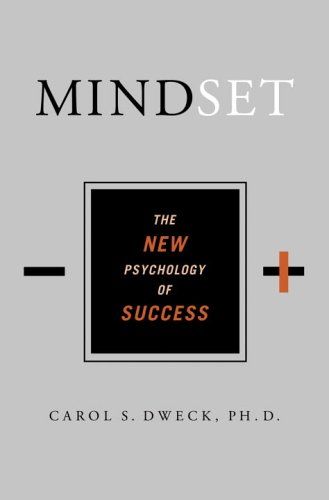
Nova: Exactly! And it brings us perfectly to two incredibly influential books we're tackling today that dismantle that wall: Carol Dweck's "Mindset" and Angela Duckworth's "Grit."
Atlas: Ah, the dynamic duo of personal potential. Dweck, a Stanford professor, essentially gave us the language to understand how our beliefs about our own abilities profoundly shape our outcomes. And Duckworth, a celebrated psychologist and MacArthur 'Genius' fellow, then goes on to show us that sheer talent often takes a backseat to sustained passion and perseverance.
Nova: Exactly. These aren't just feel-good self-help books; they're rooted in decades of psychological research. Dweck's work, for instance, really exploded onto the scene because it offered such a clear, actionable framework for understanding human behavior. It's wildly acclaimed, but also sparked a lot of conversation about how we define intelligence itself.
Atlas: And Duckworth’s "Grit" has had a similar impact, really challenging the long-held notions of what makes someone successful. It's been widely praised for its practical insights, but also had some interesting debates around the 'nature vs. nurture' aspect of grit itself.
Nova: Which makes them perfect for our deep dive today. We're going to unravel how our internal frameworks—our beliefs and our sustained effort—are the true architects of our potential, far more than any inherited gifts.
Atlas: I'm curious to see how these two ideas intertwine, because on the surface, they sound like different sides of the same coin.
The Power of Mindset: Fixed vs. Growth
SECTION
Nova: They absolutely do, and that's where the real magic happens. Let's start with Dweck's "Mindset." She introduces us to two fundamental belief systems: the fixed mindset and the growth mindset.
Atlas: So, you're saying it's literally how we about our intelligence and abilities?
Nova: Precisely. Someone with a fixed mindset believes their intelligence, their talents, their personality traits, are all static. You're born with a certain amount, and that's it. You either have it or you don't.
Atlas: Okay, so if I believe I'm not good at math, that's just a fact, end of story.
Nova: Exactly! And what happens when you believe that? You avoid challenges that might expose your 'limitations.' You get defensive about mistakes. You see effort as a sign of weakness, because if you had the talent, you wouldn't need to try so hard.
Atlas: That sounds rough, but I can definitely relate to that feeling sometimes. Like, if I'm not naturally brilliant at something, why bother? It almost sounds like a self-fulfilling prophecy.
Nova: It absolutely is! Dweck illustrates this beautifully with studies on children. In one classic experiment, kids were given puzzles. Some were praised for their intelligence. Others were praised for their effort.
Atlas: Let me guess: the 'smart' kids then avoided harder puzzles, while the 'effort' kids wanted more challenging ones?
Nova: You got it! The kids praised for intelligence developed a fixed mindset. They chose easier puzzles to protect their 'smart' label. The kids praised for effort developed a growth mindset. They saw harder puzzles as opportunities to learn and grow, not as threats to their intelligence. They understood that their abilities could be developed through dedication and hard work.
Atlas: That’s a really powerful distinction. So, the growth mindset sees intelligence not as a fixed quantity, but as a muscle you can strengthen?
Nova: Exactly! It's the belief that your basic qualities can be cultivated through effort. Challenges become opportunities, mistakes are learning experiences, and effort is the path to mastery. It's a fundamental shift from 'I can't do it' to 'I can't do it.'
Atlas: Okay, so a growth mindset isn't just about being optimistic; it's about understanding the mechanics of learning and development. But how does someone, say, in a high-stakes tech environment, shift from a fixed mindset when the pressure to perform is so intense?
Nova: That's where the real work comes in. It starts with awareness. Recognizing when you're slipping into fixed mindset thinking—the internal critic saying, "I'm not good enough," or "This is too hard." Then, consciously reframing it. Instead of "I failed," it becomes "What can I learn from this?" Or "How can I approach this differently next time?"
Atlas: It's like changing the narrative in your head from a judgment to an inquiry.
Nova: Precisely. And it's not just about individual performance. Companies with a growth mindset culture foster innovation, collaboration, and continuous improvement. They encourage experimentation and see setbacks as crucial data points, not failures.
Atlas: So, it really impacts everything from personal resilience to organizational success. That makes sense. It’s a foundational belief that colors all your subsequent actions.
Grit: The Unsung Hero of Achievement
SECTION
Nova: And this foundation of belief leads us perfectly into Angela Duckworth's work on "Grit." Because once you believe you grow, the next question is, how do you that growth?
Atlas: Ah, the 'how' part. Because believing you can grow is one thing, but actually the hard, often unglamorous work over a long period? That’s another challenge entirely.
Nova: Indeed. Duckworth, through her research, particularly with cadets at West Point and participants in the National Spelling Bee, discovered that the most successful individuals weren't necessarily the ones with the highest IQ or the most natural talent.
Atlas: Wait, so you're saying talent isn't the main driver of success? That sounds a bit out there, given how much we celebrate prodigies.
Nova: It's a common misconception, isn't it? But Duckworth argues that two qualities consistently predict outstanding achievement: passion and perseverance. She bundles these together as 'grit.' It's having a long-term goal you're deeply passionate about, and then having the tenacity to stick with it, even through setbacks and failures, for years, sometimes decades.
Atlas: So, it's not just about working hard, but working hard? That makes a huge difference. I imagine a lot of our listeners struggle with staying focused on one thing when there are so many shiny new opportunities.
Nova: That's a critical point. Grit isn't about aimless hard work, or just bouncing from one interest to the next. It’s about having a compass. For example, she talks about how many highly talented individuals often drop out of challenging programs because they lack the perseverance when things get tough, or their passion isn't deep enough to weather the storms.
Atlas: So, it's not just about the belief that you improve, as Dweck would say, but the sustained to actually it, even when it's boring, even when it's frustrating.
Nova: Exactly. Think of it like this: a growth mindset opens the door to possibility, and grit is the engine that drives you through that door, mile after mile, through all kinds of terrain. Duckworth gives us a powerful equation: Talent x Effort = Skill. And then, Skill x Effort = Achievement. Notice anything interesting there?
Atlas: Whoa. Effort appears twice. So, talent is important for skill, but effort is crucial for both skill development for turning that skill into actual achievement. It's like effort is the multiplier.
Nova: The ultimate multiplier! It means someone with average talent but extraordinary effort can far surpass someone with immense talent but inconsistent effort. It’s a powerful message for anyone who feels they’re not 'naturally gifted' in a particular area.
Atlas: That’s actually really inspiring. So how do you cultivate this 'grit'? Is it something you're born with, or can it be learned?
Nova: Duckworth argues it absolutely can be cultivated. It involves identifying your passions, practicing deliberately—not just mindlessly repeating tasks, but pushing yourself to improve—having a sense of purpose beyond yourself, and cultivating hope, which is the belief that your efforts matter and you can overcome obstacles.
Atlas: So, it sounds like a growth mindset would be a prerequisite for developing grit. If you don't believe you can improve, why would you bother with sustained effort?
Nova: They're two sides of the same coin, perfectly reinforcing each other. A growth mindset gives you the belief in potential, and grit provides the fuel and persistence to realize that potential. Without the growth mindset, grit might feel pointless. Without grit, a growth mindset might just lead to a lot of fleeting enthusiasms.
Synthesis & Takeaways
SECTION
Nova: So, when we bring Dweck and Duckworth together, we get this incredibly potent message: your beliefs about your abilities and your capacity for sustained effort are far more influential than innate talent. Cultivate these, and you cultivate success.
Atlas: It really shifts the focus from 'what gifts do I have?' to 'how can I develop what I have, and for how long?' For our listeners who are passionate about exploring new knowledge, this isn't just theory; it's a blueprint for lifelong learning and achievement.
Nova: Absolutely. It encourages us to look at our challenges not as stop signs, but as growth opportunities. And to remember that the hard work, the perseverance, the getting back up after falling—that's not just for the 'gifted.' That's for anyone with a deep passion and the willingness to keep pushing.
Atlas: It also makes me wonder, Nova, where in my own life I might be operating with a fixed mindset without even realizing it. That’s a really profound question for self-reflection.
Nova: It’s a lifelong practice, Atlas. And recognizing that, and choosing to shift, is the first step towards unlocking that potential. The ultimate insight here is that true success isn’t about being the smartest or the most talented. It’s about a relentless belief in your capacity to learn and grow, combined with the sheer, unyielding will to keep going. It's that simple, and that incredibly difficult.
Atlas: That’s a powerful distillation. It really puts the ball back in our court, doesn't it? It's less about waiting for inspiration, and more about showing up, consistently.
Nova: Exactly. What if we all stopped waiting for permission to be brilliant and just started putting in the effort? The world would look very different.
Atlas: That’s actually really inspiring. This is Aibrary. Congratulations on your growth!









