

Unlocking Your Potential: How to Build Resilience and Thrive Under Pressure.
Golden Hook & Introduction
SECTION
Nova: Atlas, quick game. I'll throw out a word, you hit me with the first thing that comes to mind. Ready?
Atlas: Oh, I like this. Hit me.
Nova: Challenge.
Atlas: Uh… mountain. Or maybe… spreadsheet.
Nova: Good, good. Failure.
Atlas: Definitely… "Oops." Or, you know, "learning experience" if I'm feeling optimistic.
Nova: Ha! Okay, last one: Talent.
Atlas: Ooh, talent. That's… that's tricky. My first thought is "born with it." But then I immediately think of all the people who prove that wrong.
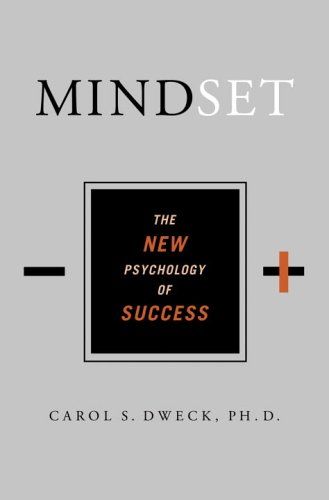
Nova: And that, my friend, is precisely where we're headed today. We're diving into two groundbreaking books that fundamentally challenge that idea of 'born with it' – by Carol S. Dweck, and by Angela Duckworth.
Atlas: Ah, Dweck and Duckworth. These names pop up everywhere. I’m curious, what's their secret sauce? Is it just another dose of "you can do anything you set your mind to" or is there something deeper here?
Nova: Much deeper. What's fascinating about both Dweck and Duckworth is their backgrounds. Dweck, a Stanford psychologist, spent decades researching human motivation, observing how beliefs shape our entire approach to learning and challenges. And Duckworth? She was a high school math teacher and a management consultant before she became a leading psychologist. She saw firsthand in diverse environments, from classrooms to corporate offices, what truly predicted success. Their work isn't just theory; it’s rooted in years of observing real people, facing real problems.
Atlas: That makes sense. It’s always more compelling when the insights come from the trenches, not just the ivory tower.
Nova: Absolutely. And what they both reveal is this profound blind spot we often have: we tend to view our abilities as fixed, as if they're a static resource. That belief, while incredibly common, unknowingly puts a hard cap on our growth, especially when things get tough.
The Fixed vs. Growth Mindset Paradox
SECTION
Nova: So, let's unpack that first, with Dweck's work on mindsets. She identifies two core beliefs: the fixed mindset and the growth mindset. Someone with a fixed mindset believes their intelligence, their talents, their personality – they're all set in stone. You're either good at something or you're not.
Atlas: Okay, but isn't that just… reality? Some people are naturally better at, say, coding, than others.
Nova: That's the common perception, isn't it? But here’s the kicker: the growth mindset, on the other hand, says that these qualities can be developed through effort, good strategies, and help from others. It’s not about denying that people have different starting points or natural inclinations. It's about believing that can grow and improve their abilities, sometimes dramatically, with dedication.
Atlas: So you're saying it's less about raw horsepower and more about the engine's capacity to upgrade? Can you give me a real-world scenario where someone's mindset fundamentally changes their outcome, especially for someone trying to upskill in a competitive field, like a new marketing grad?
Nova: Exactly like that. Imagine two marketing grads, both eager to master new analytics software. Let's call them Sarah and Tom. Sarah, with a fixed mindset, tries the software, hits a few snags, and thinks, "Ugh, I'm just not good with numbers. This isn't for me." She gets frustrated, gives up quickly, and avoids future opportunities involving analytics.
Atlas: I can totally picture that. The internal monologue is brutal.
Nova: Right? Now, Tom, with a growth mindset, encounters the same snags. Instead of thinking "I'm not good," he thinks, "This is challenging, which means I'm learning something new. What resources can I use? Who can I ask for help? What specific part am I not understanding?" He sees the struggle as part of the process, not a sign of his inadequacy. His belief—his mindset—directly shapes his response to difficulty, and ultimately, his skill acquisition. Sarah's potential stagnates, while Tom's expands.
Atlas: Wow. That's a powerful shift. It’s not just about trying harder, it's about the difficulty. But wait, isn't some talent just innate? Are we saying anyone can be an expert at anything with enough effort? That feels a bit… too optimistic, maybe even a little naive.
Nova: That's a crucial point, and it's a common misunderstanding of Dweck's work. She's not saying everyone can become the next Einstein or a world-class athlete. What she saying is that our potential for growth in any area is far greater than we often realize. It's about maximizing potential, not someone else's. The growth mindset reframes failure not as a verdict on your ability, but as incredibly valuable feedback. It's information that tells you where to adjust your strategies, where to put in more effort. It's the belief that your capacities are not predetermined, but rather, a dynamic resource you can continuously cultivate.
Grit: The Engine of Sustained Potential
SECTION
Nova: And that leads perfectly to Angela Duckworth's work on "grit," because believing you can grow is one thing, but actually the hard work, day in and day out, is another.
Atlas: Grit. It always sounds like just 'working harder.' Is there more to it than just sheer stubbornness? How does it connect to mindset? Because I can believe I can learn something, but if it's utterly boring, my 'grit' quickly evaporates.
Nova: That's a great point. And yes, it’s far more nuanced than just stubbornness. Duckworth defines grit as having sustained passion and perseverance toward very long-term goals. It's not just about effort; it’s about effort. She found that grit, not just talent, was a significant predictor of success in incredibly diverse and demanding fields – from West Point cadets to National Spelling Bee champions.
Atlas: Okay, so it’s not just grinding it out. There’s a passion component. For someone trying to master new marketing analytics, how does grit manifest differently than just staying up late and forcing themselves through tutorials?
Nova: Think of it this way: someone with sheer stubbornness might stay up late, but they're doing it out of obligation, maybe even resentment. They might eventually get through it, but they're not necessarily growing, and they're likely to burn out. A gritty person, on the other hand, sees that analytics skill as a crucial step towards a higher, more passionate goal—maybe they want to become a data-driven marketing director, or launch their own incredibly successful, optimized product.
Atlas: So it’s about aligning the difficult, immediate task with a deeper, more meaningful purpose. It's not just about pushing through when things are tough, but having a deep, underlying commitment.
Nova: Precisely. Duckworth talks about a hierarchy of goals. The daily grind of learning a new software might be a low-level goal, but it serves a mid-level goal of becoming proficient in data analysis, which in turn serves a high-level goal of becoming an influential marketing leader. When you connect those dots, when you see how the painstaking effort contributes to something you're truly passionate about, the perseverance becomes sustainable. It's not just willpower; it's willpower. It's the growth mindset providing the 'I can learn this,' and grit providing the 'I learn this, no matter how long it takes, because it matters deeply to me.'
Synthesis & Takeaways
SECTION
Nova: Ultimately, these two ideas from Dweck and Duckworth are two sides of the same coin: a growth mindset provides the belief that you improve, and grit provides the sustained action that it happen. You need both to truly unlock and cultivate your potential, especially when you’re navigating intense pressure or trying to upskill in a competitive landscape.
Atlas: It makes me think about that initial 'blind spot' you mentioned. Where in our lives or careers might we be unconsciously limiting ourselves with a fixed mindset, and how can we start to develop that grit? Because it feels like the kind of thing you either have or you don't.
Nova: That's a common feeling, but it's a misconception. Both mindset and grit are cultivatable. A great starting point is simply becoming aware. Observe your reactions to challenges. When you face a setback, do you immediately think, "I'm not smart enough" or "I'm not good at this"? Or do you think, "What can I learn from this? How can I approach this differently next time?" Just noticing that internal dialogue is powerful.
Atlas: So it's about catching yourself in the act of a fixed mindset.
Nova: Exactly. And then, to build grit, identify one small area where you feel a spark of passion, even a tiny one. Commit to consistent, passionate effort in that area, not just for the outcome, but for the joy of the learning process itself. It could be learning a new feature in a software, or reading one article a day about a new marketing trend. Small, consistent steps fueled by a larger purpose.
Atlas: That’s a powerful shift. It’s about building a better relationship with challenges, isn't it? Seeing them as opportunities rather than roadblocks.
Nova: Absolutely. It's about recognizing that your potential truly isn't fixed; it's a dynamic resource, waiting to be cultivated. It’s about building the internal architecture to not just survive, but truly thrive, under any kind of pressure.
Atlas: And that applies whether you're learning a new skill or navigating a career change. This is about building a foundation for continuous growth. This has been incredibly insightful.
Nova: This is Aibrary. Congratulations on your growth!









