

Unlocking Your Potential: A Journey of Self-Discovery
Golden Hook & Introduction
SECTION
Nova: Atlas, I was today years old when I realized how much I used to blame external circumstances for my setbacks, instead of looking inward. It's a bit embarrassing, actually.
Atlas: Oh man, I totally know that feeling. It’s like, you hit a wall, and your first instinct is to point fingers, right? “The traffic was terrible,” “My boss is impossible,” “The universe is conspiring against me.” But then what? You’re just stuck.
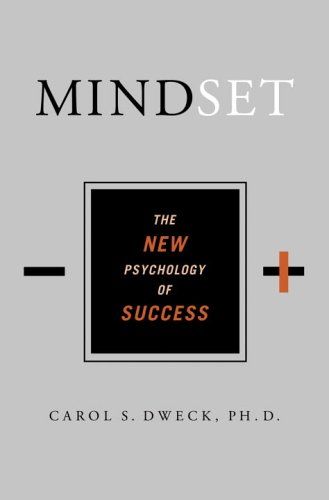
Nova: Exactly! And that’s why we have to talk about three incredible books today that collectively unlock this profound insight: that our potential isn't just out there, waiting to be found, but is actively built from within. We’re diving into "Mindset" by psychologist Carol S. Dweck, "Grit" by Angela Duckworth, and "The Obstacle Is the Way" by author and modern Stoic philosopher, Ryan Holiday.
Atlas: That’s a powerful trio. I mean, Carol Dweck’s work on mindsets, especially, has been incredibly influential, shaping how educators and business leaders think about potential for decades. Her research didn’t just confirm what many suspected; it gave us a framework to actually how we approach learning and challenges. It’s not just a theory; it's a practical guide for transformation.
Nova: Absolutely. And what’s fascinating about Dweck is how her early research focused on why some children thrived after failure while others crumbled. It wasn't just about IQ; it was about their fundamental beliefs about intelligence itself. That observation sparked a whole new field of study.
The Power of Belief and Perseverance
SECTION
Nova: So, let’s kick things off with Dweck’s groundbreaking concept: the fixed versus growth mindset. In a nutshell, a fixed mindset believes your intelligence and talents are static, unchangeable traits. You're either good at something, or you're not.
Atlas: Okay, so, if I believe I’m just "not a math person," that’s a fixed mindset? Like, I'm inherently bad at it and there’s nothing I can do?
Nova: Precisely. And the danger there is, when you face a challenge, a fixed mindset sees it as proof of your limitations. You avoid difficult tasks because failure would confirm your inadequacy. You might even give up easily.
Atlas: That makes perfect sense. I can definitely relate to that feeling of wanting to avoid anything that might expose a perceived weakness. But then what's the growth mindset?
Nova: The growth mindset, on the other hand, believes that your abilities can be developed through dedication and hard work. Challenges aren't roadblocks; they're opportunities to learn and grow. It’s about effort, strategy, and continuous improvement.
Atlas: Wow, that’s actually really inspiring. So, if I have a growth mindset, my "not a math person" thought becomes, "I haven't mastered math, but I can if I put in the effort and find the right strategies"?
Nova: Exactly! It shifts the focus from proving yourself to improving yourself. This concept isn't just for kids in school, either. It applies to every aspect of life, from career development to personal relationships. Dweck argues that cultivating a growth mindset is crucial for continuous learning and resilience, regardless of age.
Atlas: I guess that makes sense. It sounds like something that requires a lot of, well,. Which brings us perfectly to Angela Duckworth’s book.
Nova: It does! Duckworth’s "Grit" picks up where Dweck leaves off, arguing that the secret to outstanding achievement isn't just raw talent, but a special blend of passion and persistence. That’s grit. It’s about sticking with your long-term goals, even when the going gets tough.
Atlas: So, it's not just about believing you improve, but actually the hard work, consistently, over a long period? That sounds like the practical application of a growth mindset.
Nova: It absolutely is. Duckworth’s research, which she conducted across diverse fields from West Point cadets to National Spelling Bee champions, consistently showed that grit and self-control were better predictors of success than IQ or talent. She found that many highly talented individuals often fall short because they lack the sustained passion and perseverance to see things through.
Atlas: That’s kind of heartbreaking, but also incredibly empowering. It means success isn't just handed to you; it's something you build, day by day, with consistent effort. Like, how does that play out in real life? Can you give an example?
Nova: Think about someone like Elon Musk, for instance. Whether you love him or not, his ventures like SpaceX and Tesla faced monumental failures and skepticism. Traditional wisdom would say cut your losses. But his relentless pursuit of those long-term goals, despite repeated setbacks, epitomizes grit. He didn't just believe he could; he.
Atlas: Right, like, it’s not just about having a big vision, but the sheer stubbornness to stay on course when everyone else is telling you to quit. That’s a powerful connection between Dweck’s mindset and Duckworth’s grit.
Your Inner Architect & Reframing Obstacles
SECTION
Nova: And that brings us seamlessly to Ryan Holiday’s "The Obstacle Is the Way." This book draws heavily on Stoic philosophy, teaching us how perceived obstacles can actually be reframed into opportunities for growth and success. It’s the ultimate growth mindset in action.
Atlas: But wait, isn't that a bit idealistic? I mean, sometimes an obstacle is just... an obstacle. A giant, frustrating wall that stops you dead in your tracks.
Nova: That’s a fair point, and it’s where Holiday’s Stoic perspective offers a profound shift. He argues that we often can't control what happens to us, but we control how we respond. The Stoics believed that adversity isn't a barrier but a path. Every challenge contains a hidden opportunity.
Atlas: So basically you’re saying, instead of getting angry or defeated by a problem, you look for what you can learn from it, or how it can force you to adapt and become stronger?
Nova: Exactly. Holiday provides countless historical examples, from John D. Rockefeller turning a national panic into an oil empire to Amelia Earhart transforming mechanical failures into lessons for future flights. These individuals didn't just endure hardship; they actively used it to their advantage. They saw the obstacle the way forward.
Atlas: That makes me wonder, how does this connect with the growth mindset and grit? It almost feels like the third leg of the stool.
Nova: It absolutely is. A growth mindset gives you the belief that you overcome. Grit provides the sustained to do so. And "The Obstacle Is the Way" gives you the for how to interpret and utilize those very challenges. It’s about seeing the raw material for your growth present in every difficulty.
Atlas: So, if you’re stuck in a fixed mindset, an obstacle confirms your limits. With a growth mindset, you see the obstacle as a chance to learn, and with grit, you keep working through it. And then Holiday’s book gives you the mental tools to actively that obstacle. It’s like a complete operating system for resilience.
Nova: That’s a perfect analogy, Atlas. It's not just about passively enduring; it's about active, intentional reframing. It’s about becoming your own inner architect, designing your response to life’s inevitable curveballs.
Atlas: That’s actually really inspiring. I can see how someone with a curious mind, who enjoys deep thinking, would find these concepts incredibly valuable. It’s not just self-help; it’s a philosophy for life.
Synthesis & Takeaways
SECTION
Nova: What we've explored today is really an exploration of how we build our potential, rather than simply discovering it. It's about recognizing that our beliefs about ourselves, our capacity for sustained effort, and our interpretation of challenges are the true levers of growth.
Atlas: That’s a great way to put it. It’s not just about wishful thinking. It's about understanding that talent isn't the sole determinant of success, but that habits cultivated daily, like fostering grit and a growth mindset, are what truly propel us forward.
Nova: Absolutely. And the beauty of these ideas is that they’re not reserved for a select few. They are actionable frameworks that anyone can adopt. It’s about building a mental fortress of resilience.
Atlas: So, if you’re listening and finding yourself facing a challenge right now, perhaps take a moment to reflect. Are you approaching it with a fixed mindset, seeing it as a dead end? Or can you reframe it as an opportunity, an invitation to learn and apply some grit?
Nova: That’s the deep question we hope to leave our listeners with. How can you become your own inner architect, transforming perceived obstacles into stepping stones? It all starts with that internal shift.
Atlas: Think about how you internalize setbacks. Are they proof of your limits, or prompts for a new strategy? The answer dictates your path forward.
Nova: This is Aibrary. Congratulations on your growth!









