

The Learning Curve: Why Embracing Failure Leads to Mastery
Golden Hook & Introduction
SECTION
Nova: Atlas, rapid fire association: 'Failure'. What comes to mind?
Atlas: Ugh. 'Deadline missed.' 'Awkward silence.' 'That one time I tried to bake sourdough.'
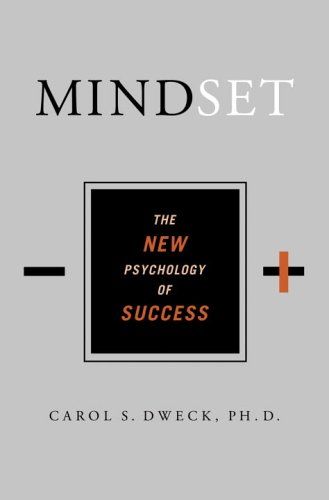
Nova: Exactly! Today, we're flipping that script entirely. We're diving into 'The Learning Curve,' exploring how embracing failure actually leads to mastery. Our insights today are heavily influenced by Carol Dweck's seminal work 'Mindset' and Angela Duckworth's groundbreaking book 'Grit.' Dweck's research, which has profoundly shaped how educators approach learning, stemmed from her deep observations of how children responded to challenges. And Duckworth's insights into non-cognitive skills like perseverance were so impactful they earned her a prestigious MacArthur 'Genius' Grant.
Atlas: A MacArthur 'Genius' Grant for? That’s pretty incredible. So, we're talking about not just accepting failure, but actually it as a core part of achieving something great?
Nova: Precisely. And that leads us straight into our first core idea: The Blind Spot.
The Blind Spot: Redefining Failure as Fuel for Growth
SECTION
Nova: Most of us, Atlas, see learning as a straight line. You start here, you put in the effort, you get to the goal. And any deviation, any mistake, any 'failure,' is a setback. It's a moment to feel bad, to question your abilities, maybe even to quit. That's the blind spot. We miss the crucial fact that true mastery, real innovation, often comes countless perceived failures. They're not roadblocks; they're the very fuel for growth.
Atlas: That sounds rough, but I can see how that would be true. For someone trying to ship a creative project, the idea of failing multiple times before success… it feels paralyzing. My internal dialogue would be screaming, "You're not good enough!"
Nova: Well, let's take James Dyson, for example. Before he created the bagless vacuum cleaner, a device now ubiquitous in homes worldwide, he went through 5,126 prototypes. Picture that: five thousand, one hundred and twenty-six attempts that didn't quite work. Imagine the messy workshops, the constant tweaking, the relentless pursuit despite repeated non-functional designs. Each one was a 'failure' in the traditional sense.
Atlas: Five thousand prototypes? That sounds less like innovation and more like self-inflicted torture! How do you even keep going after, say, the hundredth one? Or the thousandth? My motivation would have evaporated.
Nova: And that's exactly the blind spot we're talking about. We look at that number—5,126—and see 5,126 reasons to quit. But Dyson didn't see failures; he saw 5,126 lessons. Each prototype that didn't work eliminated a wrong path, bringing him incrementally closer to the right one. He wasn't failing; he was iterating. He was gathering data. He was reframing each 'setback' as a 'step forward in disguise.'
Atlas: So it's about seeing the in the failure, rather than just the. Like, 'this didn't work X, Y, or Z,' instead of just 'this didn't work.'
Nova: Exactly! It's the difference between a 'this didn't work' and a 'this didn't work... and now I know something new.' It's about moving from a judgment of self, to an analysis of the process. It's a profound shift in perspective that allows you to extract value from experiences that others would simply discard as negative.
The Mindset & Grit Connection: Cultivating Resilience for Mastery
SECTION
Nova: And that distinction, Atlas, between judging yourself and analyzing the process, is where Carol Dweck's profound work on 'Mindset' becomes absolutely foundational, and where Angela Duckworth's 'Grit' builds upon it so beautifully.
Atlas: Ah, the famous fixed versus growth mindset. So, if I believe my abilities are set in stone—a fixed mindset—those 5,000 Dyson 'failures' would just confirm I'm not good enough, right? That I lack the inherent talent?
Nova: Precisely. A fixed mindset sees effort as futile if you're not 'naturally' talented. It creates a fear of failure because every mistake is seen as proof of inadequacy. But a growth mindset, as Dweck so brilliantly shows, believes abilities can be developed through dedication and hard work. It's the belief that your brain is like a muscle that grows stronger with exercise and challenge.
Atlas: That makes sense. It’s like the difference between saying 'I'm not good at math' and 'I haven't mastered this math concept yet, but I can.' It totally changes your approach.
Nova: It changes. And this is where Angela Duckworth's concept of 'Grit' perfectly complements Dweck's mindset. Grit, as Duckworth defines it, is sustained passion and perseverance toward long-term goals. It's not just about working hard; it's about working hard towards something you deeply care about, even when you face obstacles and setbacks.
Atlas: So, Dweck gives us the 'belief system' that failure is information, and Duckworth gives us the 'staying power' to keep gathering that information, to keep pushing through those 5,000 prototypes. I’m thinking about people in creative fields, where rejection is almost a daily occurrence. How do you maintain that level of grit when the world keeps telling you 'no'?
Nova: Think about Michael Jordan. Famously, he was cut from his high school varsity basketball team. Many would see that as a devastating failure, a clear sign he wasn't 'talented' enough. But Jordan didn't have a fixed mindset; he had a growth mindset and an immense amount of grit. He didn't just accept that rejection; he used it as fuel. He spent hours practicing, honing specific skills, meticulously studying opponents, even after he became a superstar. His 'talent' was less about natural ability and more about that sustained passion and perseverance.
Atlas: Wow. That's a perfect example. So, it's not just about being stubborn or blindly optimistic, it’s about having a North Star, a larger purpose, that makes the struggle meaningful and keeps you coming back for more.
Nova: Exactly. It’s about having that deep, long-term commitment that transcends immediate setbacks. Jordan didn't just love basketball; he was obsessed with it. That sustained passion fuels the perseverance, transforming 'no' into 'not yet,' and 'failure' into 'feedback.'
Synthesis & Takeaways
SECTION
Nova: So, when you combine Dweck's growth mindset—seeing challenges as opportunities to learn—with Duckworth's grit—that sustained passion and perseverance toward long-term goals—you create a powerful engine for mastery. It means the perceived 'failures' aren't just tolerated; they become the very fuel for your journey, essential data points pushing you forward.
Atlas: I really like that idea of 'failure as fuel.' It makes me think about that deep question from the book: 'Where in your creative work can you actively reframe a past 'failure' as a valuable learning experience?' It’s not just about accepting it, but actively mining it for gold, for lessons.
Nova: Absolutely. It's about consciously shifting your perspective. Instead of saying 'I failed at X,' try 'I learned Y from my attempt at X.' That simple reframe can unlock so much potential. It’s a fundamental shift, and it’s why these insights are so widely acclaimed and discussed among thinkers and doers alike, because they offer a tangible path to not just coping with, but thriving through, challenges.
Atlas: That's a powerful thought to leave with. For anyone listening, I'd say take a moment this week to identify one past 'failure'—big or small—and genuinely reframe it as a learning experience. What did it teach you? What new path did it illuminate?
Nova: A perfect challenge. Because true mastery isn't about avoiding mistakes; it's about making them count.
Nova: This is Aibrary. Congratulations on your growth!









