The Language Learner's Mindset: Embracing Mistakes for Faster Growth
Golden Hook & Introduction
SECTION
Nova: What if everything you thought about making mistakes was actually holding you back from truly mastering something?
Atlas: Oh, I like that. Because, honestly, Nova, for so many of us, mistakes feel like... a giant flashing neon sign saying "Wrong! Failure! Turn back now!" Especially in something as vulnerable as learning a new language. You open your mouth, you mess up a verb conjugation, and suddenly you want to melt into the floor.
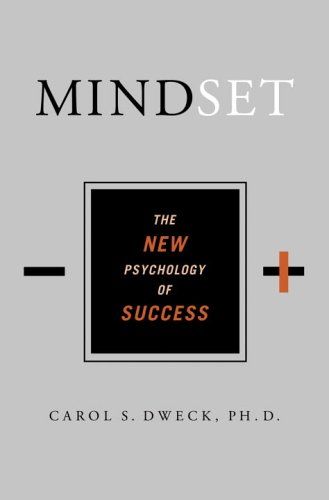
Nova: Exactly! That visceral reaction, that urge to retreat, that's what we're challenging today. We're diving into the revolutionary insights from two titans of psychology: Carol Dweck, author of "Mindset," and Angela Duckworth, who brought us "Grit." Their combined wisdom offers a profound shift in how we approach learning, particularly in something as demanding and often humbling as acquiring a new language.
Atlas: Right. And I imagine for anyone out there trying to connect with people in a new culture, or really level up their career by speaking another language, that feeling of embarrassment from a mistake can be a huge barrier. So, how do we even begin to unlearn that ingrained fear?
The Blind Spot: Reframing Mistakes as Data, Not Defeat
SECTION
Nova: It’s a fantastic question, Atlas, because it hits on what I call "the blind spot." We're conditioned from childhood, through schooling, to see mistakes as inherently bad. Red marks on papers, reprimands, low scores. This creates a deep-seated belief that making errors is a sign of incompetence. But for a language learner, that belief is a poison. It paralyzes you.
Atlas: That makes sense. I mean, I think about the times I've hesitated to speak in a new language, even when I knew most of the words, because I was terrified of sounding foolish. It’s like, you want to connect, you want to understand, but that fear just slams the door shut.
Nova: Precisely. Let's imagine Elena, an aspiring communicator driven to build a career where she can bridge cultures. She's in a new country, trying to order coffee, and she accidentally uses the past tense instead of the present, or mixes up a masculine and feminine noun. The barista looks confused, maybe even chuckles slightly. In that moment, Elena's internal monologue isn't "Ah, good, I've identified a grammar point to work on!" It's "Oh no, I sound stupid. I'll never get this. I should just stick to English." That single interaction, perceived as a failure, can derail her entire day, or worse, make her avoid speaking for a week.
Atlas: That sounds rough. And it's so relatable. For our listeners who are trying to navigate a new professional environment or just make new friends, that kind of moment can feel like a huge setback to their personal growth, not just a language hiccup. How do you genuinely shift that deeply ingrained perception from "I'm stupid" to "I'm learning"?
Nova: It’s about a radical reframe. We need to stop viewing mistakes as a judgment on our intelligence or worth, and instead see them as pure, unadulterated data. Think of it like this: your brain is a super sophisticated GPS. When you make a mistake, it's not the GPS yelling "You're lost, you're a terrible driver!" It's simply saying, "Recalculating... new route found. Adjust speed, turn left here." Each error is simply a piece of feedback, a pinpoint on the map showing you exactly where your linguistic understanding needs a slight correction. It’s not a failing; it’s a signpost to improvement.
Atlas: But wait, when your brain is screaming "embarrassment" or "frustration," how do you actually that way? How do you quiet that internal critic enough to hear the GPS? Because that's the hard part, isn't it? The emotional weight of it.
Mindset & Grit in Action: The Engine of Language Mastery
SECTION
Nova: That’s where Carol Dweck's work on "Mindset" becomes absolutely foundational. She introduced the world to the idea of a 'growth mindset,' which is the belief that your abilities and intelligence can be developed through dedication and hard work. This is in stark contrast to a 'fixed mindset,' which assumes your qualities are unchangeable. For language learning, a fixed mindset sounds like, "I'm just not good at languages," or "I don't have the language gene." A growth mindset says, "I haven't mastered that conjugation, but with practice, I will."
Atlas: I can see how that would make a huge difference. If you think your ability is fixed, every mistake just confirms your inadequacy. But if you believe you can grow, then every mistake becomes... a challenge to overcome.
Nova: Exactly. Let's take two hypothetical learners tackling a notoriously complex grammar point – say, the subjunctive mood in Spanish. Learner A has a fixed mindset. They struggle through a few exercises, get some wrong, and proclaim, "See? I told you I'm not a grammar person. This is too hard for me." They give up, reinforcing their belief that they're inherently bad at languages. Learner B, with a growth mindset, struggles just as much, makes just as many mistakes. But their internal dialogue is different: "Okay, this is tricky. My brain isn't quite grasping this yet. What resources can I use? How can I practice this differently? Maybe I'll try speaking it out loud, even if it's wrong, to get a feel for it." Learner B sees the struggle as part of the process, an indicator that their brain is literally building new neural pathways.
Atlas: That's a perfect example. And that leads me directly to Angela Duckworth's work on "Grit." It feels like the growth mindset gives you the belief, but grit gives you the fuel to keep going. How does that "passion and perseverance" apply when a language feels overwhelmingly difficult and progress seems painfully slow? Because that’s where many aspiring communicators hit a wall.
Nova: You're absolutely right to connect them, Atlas. Growth mindset provides the framework, and grit provides the sustained action. Duckworth defines grit not just as perseverance, but as "passion and sustained persistence toward achieving a long-term goal." For language learning, that long-term goal isn't just "speaking French." It's often deeper: "connecting with my partner's family," "unlocking new career opportunities," "understanding a different culture on its own terms." When you have that deep, meaningful passion, it fuels your perseverance through the inevitable plateaus and frustrations.
Atlas: So it's not just about grinding it out, but about connecting the daily struggle to that deeper, empathetic explorer's desire for understanding? But what are some tangible ways to cultivate that grit, especially when you're busy and language practice can feel like another chore?
Nova: It's about micro-strategies that reinforce your long-term vision. One powerful way is to regularly remind yourself you started learning that language. Is it for the joy of understanding a foreign film without subtitles? Is it to truly listen to and engage with people from another background? Reconnecting with that 'why' reignites the passion. Another is to celebrate wins and, crucially, to celebrate your. When you mispronounce a word and someone corrects you, instead of feeling shame, consciously think, "Fantastic! I just learned something new that I wouldn't have known otherwise." That's building grit by reframing the experience.
Atlas: I love that. Celebrating mistakes. It’s almost counter-intuitive, but it makes so much sense. It shifts the focus from the act of being wrong to the act of learning. So, basically, you're saying that for someone who wants to genuinely connect and grow, a mistake isn't a dead-end, it's a detour sign to a better, faster route.
Synthesis & Takeaways
SECTION
Nova: Exactly, Atlas. Dweck gives us the lens to see that detour sign, and Duckworth gives us the sustained energy to take it. The profound insight here is that the biggest barrier to language mastery isn't a lack of talent or intelligence; it's often a fixed mindset combined with a fear of making mistakes. Once you embrace that every "error" is simply valuable data, a piece of feedback from the universe telling you where to adjust, you unlock a completely different learning trajectory.
Atlas: That’s actually really inspiring. Because it means the power to accelerate your growth is entirely within your control. It's not about being "naturally gifted" but about embracing the process. So, for our listeners, the aspiring communicators and career builders out there, what's one concrete, actionable step they can take to start applying these principles in their language learning journey?
Nova: My recommendation is simple, yet incredibly powerful: speak out loud daily. Even to yourself. Practice those tricky pronunciations, try to articulate your thoughts, make sentences, no matter how broken they feel. And here's the crucial part: consciously celebrate every single mistake you catch or that someone corrects. Treat it like finding a hidden treasure, a specific area for growth. That daily, deliberate practice, coupled with the celebration of errors, will rewire your brain faster than you can imagine.
Atlas: I love that. Speak out loud daily, and treat every mistake like a win. That’s going to resonate with anyone who struggles with the vulnerability of putting themselves out there. It’s about building resilience through connection, which is really what language learning is all about.
Nova: Absolutely. It takes immense bravery to step into a new language, to make yourself vulnerable. And every single mistake you make is a testament to that bravery, and a stepping stone to deeper understanding and connection.
Nova: This is Aibrary. Congratulations on your growth!