

The 'Growth Plateau' Trap: Why Continuous Learning Fuels Strategic Advantage.
Golden Hook & Introduction
SECTION
Nova: Here's a thought: What if your greatest successes are actually setting you up for your biggest failures?
Atlas: Whoa, that's a bold claim, Nova. Most people would say success breeds more success, right? You hit a goal, you build momentum, you just keep going.
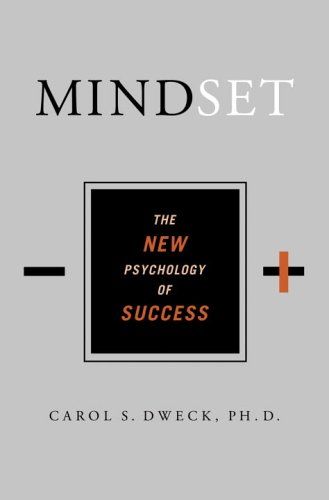
Nova: Well, today we're diving into two foundational texts that challenge that very notion: Carol Dweck's "Mindset" and Angela Duckworth's "Grit." Both authors, coming from distinct backgrounds—Dweck, a pioneering psychologist, and Duckworth, a former teacher turned researcher—uncovered profound truths about what truly drives sustained achievement. Their work, which has been widely celebrated for its profound insights, gives us the framework to understand success beyond just achievement.
Atlas: So, we're talking about how success can be a blind spot, potentially leading to something you've called a "growth plateau," then?
Nova: Exactly. It's that insidious moment when you're at the top, you've achieved so much, and you subtly start to believe that your current success is the endpoint. That's "The Growth Plateau Trap," and it's where a fixed mindset takes root. Let's unpack that first.
The 'Growth Plateau' Trap and the Fixed Mindset
SECTION
Nova: Imagine a champion runner. They've trained for years, won the gold, and now they're celebrated. If they fall into the fixed mindset trap, they might think, "I've proven myself. I don't need to train as hard anymore. My talent got me here." They start resting on their laurels, mistaking current success for an endpoint.
Atlas: I imagine for our listeners who are constantly strategizing, optimizing, and pushing boundaries in their own fields, the idea of a "plateau" might feel almost insulting. Like, "I'm a high-achiever, I don't plateau!"
Nova: That's precisely the danger. It’s not about suddenly failing. It's about a subtle, often unconscious, shift. Dweck's research highlights how a fixed mindset manifests. You start avoiding challenges because you fear failure might expose a lack of innate ability. You see effort as a sign you're not naturally gifted, rather than a path to mastery. You might even feel threatened by the success of others, because it makes you question your own standing.
Atlas: That's fascinating. Can you give an example of how this fixed mindset actually plays out in, say, a strategic project? Like, where does it trip someone up who's otherwise very competent?
Nova: Absolutely. Think of a seasoned team leader, incredibly competent in their domain. A new software solution is introduced that promises to streamline their workflow, but it requires learning a new system, adapting old processes. A leader with a fixed mindset might dismiss it, saying, "My method has always worked. We don't need to fix what isn't broken." They might even subtly undermine its adoption because learning something new feels like admitting their current knowledge isn't sufficient. They prioritize looking smart over actually evolving.
Atlas: So, they miss out on potential efficiencies or strategic advantages because they're unwilling to step outside their comfort zone, even if that comfort zone is built on past successes. It's like clinging to an old map when the landscape has changed.
Nova: Exactly. This fixed mindset prevents adaptation to new challenges. It limits potential, not because of a lack of ability, but because of a belief system that says abilities are static. It's a strategic disadvantage in a rapidly changing world.
Atlas: So, success can actually make us rigid, preventing us from seeing new pathways and adapting. That's a powerful and slightly terrifying thought. But if that's the trap, how do we climb out of it?
Cultivating Growth: Mindset and Grit as Strategic Tools
SECTION
Nova: And that naturally leads us to the antidote: the deliberate cultivation of a growth mindset and grit. Carol Dweck's work, which has been widely celebrated for its profound insights, gives us the framework for the growth mindset. It’s the belief that your abilities and intelligence can be developed through dedication and hard work. It's about seeing challenges as opportunities to learn, embracing effort as the path to mastery, and drawing inspiration from the success of others.
Atlas: Okay, so growth mindset is about believing you improve. But then where does Angela Duckworth's "Grit" fit in? Is it just a different word for the same thing, or is there a crucial distinction there for someone trying to strategically improve and optimize?
Nova: That's a brilliant question, and there's a vital distinction. Dweck gives us the belief system: "I get better." Duckworth's "Grit" is the that follows. It's about having passion and perseverance for long-term goals. Duckworth, a former teacher who left consulting to pursue psychology, was driven by the question of why some students succeeded while others, equally talented, did not. Her research uncovered that grit—that unwavering stick-to-itiveness—was a better predictor of success than talent alone. It’s about sticking with your future, day in and day out, even when it's hard, even when you're not seeing immediate results.
Atlas: So, if I'm a strategic operator looking to structure my ambition and guide my team effectively, how do I actually grit? It sounds like something you either have or you don't. How do you cultivate that?
Nova: It’s absolutely something you cultivate! It starts with finding purpose—connecting your efforts to something larger than yourself. Then it involves deliberate practice, consistently pushing yourself slightly beyond your current capabilities. It’s also about framing challenges not as roadblocks, but as puzzles to solve. And crucially, it’s about having a supportive community around you, people who believe in your capacity to grow and who encourage that perseverance. These aren't just personal virtues; they are strategic tools. When you view obstacles as opportunities to learn and grow, you're not just improving yourself; you're building a resilient, adaptable, and innovative system around you.
Atlas: So it's not just about "trying harder," it's about a fundamental belief in your capacity to learn, that growth mindset, and then the sheer tenacity and passion to see it through, which is grit. That sounds like the ultimate competitive advantage, especially for those driven by improvement.
Synthesis & Takeaways
SECTION
Nova: Exactly. The growth mindset gives you the belief that you can solve the problem, and grit gives you the fuel to keep trying until you do. Together, they transform obstacles into stepping stones, not just for personal development but for organizational evolution.
Atlas: So, for everyone listening, where in your current projects, in those areas you feel stuck, could shifting from a fixed to a growth mindset, and then applying that unwavering grit, unlock entirely new solutions or a deeper understanding? It's about identifying those hidden blind spots.
Nova: It's about embracing the journey of leadership, seeing your technical depth as a foundation, not a limit. It's the ultimate strategic advantage in a world that demands continuous learning.
Atlas: We'd love to hear your thoughts on this. Share your insights on how you've overcome a "growth plateau" using mindset or grit. How have these ideas resonated with you?
Nova: This is Aibrary. Congratulations on your growth!









