

The Growth Mindset Myth: Why Fixed Thinking Kills Innovation.
Golden Hook & Introduction
SECTION
Nova: What if I told you the single biggest predictor of your success, your resilience, and your capacity for innovation... isn't your talent, your IQ, or even your raw potential? It's something far more fundamental, something you might not even realize you possess.
Atlas: Oh, I like that! You've got my attention. Because honestly, in the fast-paced world of building a new venture, it often feels like talent is the only currency that truly matters. So, what is this elusive, fundamental thing you're talking about?
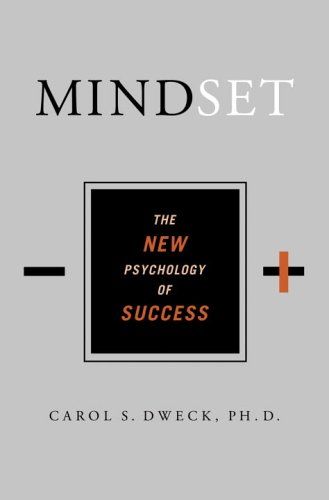
Nova: It’s your mindset, Atlas. That's the secret weapon. And today, we're diving deep into the groundbreaking work of two phenomenal thinkers: Carol S. Dweck, a Stanford psychologist whose book "Mindset: The New Psychology of Success" redefined how we see potential, and Angela Duckworth, a MacArthur "genius" grant recipient, who, in "Grit: The Power of Passion and Perseverance," showed us how passion and perseverance often trump raw talent. Their combined insights fundamentally shift how we approach challenges, turning potential setbacks into powerful stepping stones for continuous improvement and innovation.
Atlas: That makes me wonder about all those times I've heard someone say, "I'm just not good at that." It sounds like they might be operating with a bit of a blind spot then.
Unmasking the 'Blind Spot': Fixed vs. Growth Mindsets
SECTION
Nova: Absolutely. That phrase, "I'm just not good at that," is the hallmark of what Dweck calls a "fixed mindset." It's the belief that our basic abilities—our intelligence, our talents—are static traits. We have a certain amount, and that's it. When you hold this belief, every challenge becomes a test of your inherent ability.
Atlas: So, if you fail, or even struggle, it feels like a personal indictment, like you're fundamentally flawed? That sounds rough, especially for someone in a role where experimentation and iteration are constant.
Nova: Exactly. Imagine a child who loves drawing but, after one critical comment, decides they're "not an artist" and stops trying. That's the fixed mindset at play. It limits our willingness to take risks, to learn from mistakes, or even to embrace new challenges, because the potential for failure feels too threatening to our self-perception. It stops growth before it even starts.
Atlas: But wait, isn't it just realistic to know your limits? For someone building a 0-1 strategy, you have to know what you're good at and what you're not, right? Otherwise, you're just flailing.
Nova: That’s a great question, and it highlights a common misconception. A growth mindset isn't about ignoring your current skill level; it's about believing that your abilities – your intelligence, your talents – can be developed through dedication and hard work. It's about seeing your brain like a muscle that gets stronger with exercise.
Atlas: Oh, I like that analogy. So it's like, instead of saying, "I'm not good at coding," you say, "I'm not good at coding." That small word changes everything.
Nova: It truly does. Think of that same child who loves drawing, but this time, they have a growth mindset. After that critical comment, instead of quitting, they might ask for feedback, take a class, or practice more, believing their drawing skills can improve. They see the challenge not as a judgment of their innate talent, but as an opportunity to learn and grow. That fundamentally transforms how you approach setbacks.
Atlas: So, it's not about being naive; it's about seeing effort as fuel, not a sign of lacking talent. That's a huge mental shift for anyone in a high-pressure, innovative role where failure is often part of the process. It flips failure from an end-point into a learning point.
From Mindset to Momentum: Fueling Grit and Innovation
SECTION
Nova: And this shift in perspective directly fuels what Angela Duckworth calls "grit." It's not just about positive thinking; it's about sustained action and perseverance towards long-term goals. Duckworth argues that this sustained passion and perseverance are better predictors of success than talent. She shows how a growth mindset fuels this essential grit over the long term.
Atlas: That's going to resonate with anyone trying to get a new venture off the ground, or even just through a tough week with a newborn. The early days of a startup are a minefield of perceived 'failures.' So, a growth mindset isn't just about personal development; it's an innovation strategy.
Nova: Exactly! Consider an entrepreneur launching a new AI-powered educational tool. With a fixed mindset, initial user feedback—especially negative—might lead them to believe their product simply isn't good enough, prompting them to abandon it. But an entrepreneur with a growth mindset views that same feedback as invaluable data. They analyze what went wrong, iterate rapidly, and pivot if necessary. They see early failures not as reasons to quit, but as crucial steps in the learning process toward building something truly innovative.
Atlas: That makes perfect sense. For our listeners building 0-1 growth strategies, this is critical. It's about creating a culture where "failure" isn't a dirty word, but a necessary component of discovery. But how does this play out when the stakes are really high, and you're making critical decisions for a team? How do you instill that growth mindset in others?
Nova: It starts with leadership modeling. A leader with a growth mindset encourages experimentation, celebrates effort, and frames challenges as opportunities for collective learning. Instead of asking "Who's responsible for this mistake?", they ask "What did we learn from this, and how can we improve?" This fosters psychological safety, which is absolutely vital for innovation, especially in an AI native environment where the landscape is constantly shifting. Teams then feel empowered to take calculated risks, knowing that even if something doesn't work, the experience will contribute to their collective growth and future success.
Atlas: That's a powerful distinction. It moves mindset from an individual trait to a team's core operating system. It's about seeing every challenge not as a dead end, but as a puzzle to be solved, and every 'failure' as a valuable piece of data. It's about cultivating a collective resilience that propels innovation forward.
Synthesis & Takeaways
SECTION
Nova: Precisely. Embracing a growth mindset isn't just about personal well-being; it's a strategic imperative for individuals and organizations aiming for continuous improvement and groundbreaking innovation. It’s about consciously choosing to view every challenge, every setback, and every learning curve as an opportunity to expand your capabilities. It transforms the very definition of potential.
Atlas: It's truly transformative. The idea that your potential isn't a fixed ceiling, but an ever-expanding horizon, fundamentally changes how you approach everything—from building a startup in a complex tech landscape to navigating the daily challenges of life. It’s about cultivating that resilience and hunger for learning.
Nova: And it’s not always easy, but the rewards are immense. The profound difference Dweck talks about isn't just theoretical; it's a practical framework for greater performance and resilience, fueled by Duckworth’s grit.
Atlas: For our ambitious listeners, especially those in high-growth, high-pressure environments, what's one immediate mental shift they can make starting today? Something tangible they can hold onto.
Nova: Start by noticing your inner monologue when you face a challenge. If it's saying, "I can't do this," try reframing it to, "I can't do this." That tiny word, "yet," is the seed of a growth mindset. It opens the door to learning, effort, and eventual mastery.
Atlas: I love that. "I can't yet." That's actionable, subtle, and incredibly powerful. It’s an invitation to keep learning, to keep pushing, to keep evolving.
Nova: Exactly. It’s a reminder that every mistake is a lesson, and every challenge is an opportunity to expand your capabilities. This is Aibrary. Congratulations on your growth!









