

The 'Comfort Zone' is a Trap: Why You Need 'Mindset' Cultivation.
Golden Hook & Introduction
SECTION
Nova: You know, Atlas, we often hear people talk about their "comfort zone" like it's this cozy, safe haven. A place we retreat to, a reward for our hard work. But what if I told you that very comfort zone might actually be the most dangerous place you could ever be? That it's not a sanctuary, but a skillfully disguised trap?
Atlas: Oh man, that's a bold claim, Nova. A trap? I mean, who doesn't love a bit of comfort? After a long week, that cozy feeling is exactly what a lot of our listeners are probably craving. Are you saying we should actively avoid it? Because that sounds… uncomfortable.
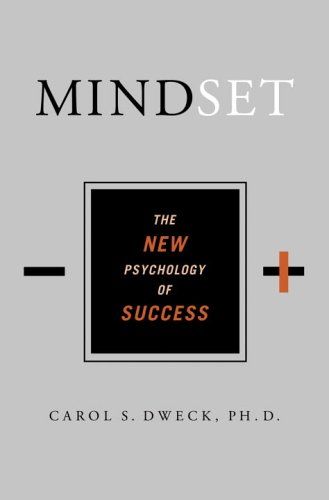
Nova: Precisely! Because while comfort feels good in the short term, it often becomes a blind spot, preventing us from seeing the powerful inner game that truly drives growth. We seek external strategies, new tools, different environments, but we overlook the most potent engine of all: our mindset. And today, we're diving headfirst into that very concept, illuminated by two groundbreaking thinkers. We'll explore the revolutionary insights of Carol Dweck, the Stanford psychologist whose work on 'Mindset' literally reshaped how we understand human potential.
Atlas: Carol Dweck, right. Her ideas are everywhere now, from boardrooms to classrooms. I feel like everyone talks about 'growth mindset' but what's really at the heart of it? What made her work so impactful that it became this global phenomenon?
Nova: What’s fascinating is that Dweck's work didn’t just pop up overnight; it was the culmination of decades of research into why some people thrive on challenges while others collapse. Her insights revolutionized educational psychology and spilled over into every aspect of life – business, parenting, sports. It's been cited endlessly because it gives us a clear, actionable framework for understanding ourselves. It’s not just a nice idea; it’s a fundamental shift in perspective.
Atlas: So, it's more than just positive thinking, then? It sounds like it goes much deeper than that.
Nova: Absolutely. It’s about the fundamental beliefs we hold about our own abilities and intelligence. Do we see them as fixed traits, etched in stone from birth? Or as malleable qualities that can be developed through dedication and hard work? That seemingly small distinction, Atlas, makes all the difference.
The Mindset Shift: Fixed vs. Growth
SECTION
Nova: Let's illustrate this with a story. Imagine Sarah, a brilliant young professional, a true star in her field. She’s always excelled, always gotten top marks, always been the 'smartest person in the room.' She loves being praised for her intelligence and talent.
Atlas: I know a few Sarahs. They’re usually the ones who make everything look easy.
Nova: Exactly. Now, Sarah gets promoted to lead a complex, innovative project. It’s a huge step up, requiring her to learn entirely new skills, collaborate with difficult personalities, and navigate uncharted territory. Suddenly, she's not the 'smartest person in the room' anymore. She makes mistakes, struggles to grasp new concepts, and faces criticism.
Atlas: Oof. That's a gut punch for anyone who's used to acing everything. How does she react?
Nova: Well, because Sarah has what Dweck calls a 'fixed mindset,' this experience is devastating. She believes her intelligence is a static quantity. If she's struggling, it must mean she's smart enough. She starts to avoid challenges, fearing they'll expose her perceived inadequacy. She gets defensive, dismisses feedback, and eventually, she pulls back, choosing safer, less demanding tasks. Her potential, ironically, is capped by her belief in her own innate talent.
Atlas: Wow. So, her past successes, the very things that built her confidence, become the chains that hold her back. That’s a bit heartbreaking, actually. It’s like the fear of failing outweighs the desire to grow. But how does someone even get into that fixed mindset in the first place? Is it upbringing, or something else?
Nova: It often starts with the kind of praise we receive as children: "You're so smart!" or "You're a natural!" While well-intentioned, this can inadvertently foster a fixed mindset by linking self-worth to innate ability rather than effort. When challenges arise, a fixed mindset person thinks, "If I have to work hard, I must not be smart."
Atlas: So, if Sarah had a growth mindset, how would her story play out differently in that same scenario?
Nova: A Sarah with a growth mindset would see the difficult project not as a threat to her intelligence, but as an exciting opportunity to expand it. When she struggles, she thinks, "Okay, this is tough, which means I'm learning." She actively seeks feedback, views mistakes as valuable data points, and understands that effort is what makes her smarter, not just a sign of lacking talent. She might still feel frustrated, but that frustration fuels her to try new strategies, ask for help, and ultimately, she evolves. She embraces the messiness of growth.
Atlas: So it's not about being immune to failure, but about how you interpret it and respond to it. That sounds incredibly empowering, especially for anyone in a leadership role, where new challenges are constantly emerging. But I imagine it’s easier said than done. How do you actually make that shift? You can't just flip a switch and decide, "Okay, I have a growth mindset now."
Nova: You're right, it's not a magic switch. It's a continuous cultivation. It starts with awareness: recognizing when your fixed mindset voice crops up. Then, it's about reframing. Instead of "I failed," think "What can I learn from this?" Instead of "This is too hard," think "This is an opportunity to stretch." It’s about celebrating effort and process, not just outcomes. It's a daily practice of challenging your internal narratives.
The Power of Grit: Passion and Perseverance
SECTION
Nova: And this idea of sustained effort, that daily practice, leads us directly to our second powerful concept, one that complements mindset perfectly: 'Grit' by Angela Duckworth. Duckworth, a former math teacher who became a MacArthur 'Genius' Fellow, argued that sustained passion and perseverance towards long-term goals is a better predictor of success than talent.
Atlas: A former math teacher winning a 'Genius' grant for studying perseverance? That’s fantastic. It instantly makes her insights feel grounded in real-world observation. What did she discover about 'grit' that makes it so crucial?
Nova: Duckworth’s research showed that across diverse fields – West Point cadets, National Spelling Bee champions, even rookie teachers in tough schools – the single most significant predictor of success wasn't IQ, or even raw talent. It was grit: the tendency to stick with your passions and work really, really hard to achieve them, even when faced with setbacks. It’s endurance. It’s stamina.
Atlas: So, it’s not just stubbornness? Because I can be pretty stubborn, but I don't know if I'd call it 'grit' in the positive sense. How do you distinguish between just being hard-headed and having true grit?
Nova: That’s a crucial distinction, Atlas. Stubbornness can be rigid and blind. Grit, however, is guided by a deep, enduring passion and a clear, long-term goal. It’s not about doing the same thing over and over expecting a different result; it’s about having a compass for your passion and then showing up, day after day, year after year, to make progress, even if that progress involves adapting your approach.
Nova: Think of David, an aspiring entrepreneur. He has a brilliant idea for a new tech product, but he's not a coding prodigy. He's not a natural public speaker for pitches. He faces rejection after rejection from investors, his first prototype is buggy, and his team loses morale.
Atlas: This sounds like a typical startup story. Most people would probably throw in the towel after the first few failures. It's easy to get discouraged when the 'talent' isn't immediately obvious.
Nova: Precisely. But David has grit. He believes in his vision, his passion for solving this problem is unwavering. So, when the first prototype fails, he doesn't see it as a sign he's not cut out for it. He sees it as feedback. He spends late nights learning to code, he practices his pitches relentlessly, he actively seeks out mentors to guide him, and he finds creative ways to re-inspire his team. He doesn’t quit, not because he’s stubborn, but because his purpose is bigger than the immediate discomfort or perceived lack of talent.
Atlas: That's powerful. It suggests that success isn't just about innate ability, but about cultivating a deep sense of purpose and then relentlessly pursuing it. For our listeners who are aiming to be leaders, who want to make a real contribution, this is huge. It implies that their drive, their resilience, can be built, not just discovered. How does one cultivate that kind of sustained passion and perseverance?
Nova: Duckworth suggests four key components. First, developing interests – you have to genuinely enjoy what you do. Second, deliberate practice – continuously seeking out challenges and feedback to improve skills. Third, cultivating a sense of purpose – understanding how your work contributes to something larger than yourself. And finally, hope – maintaining optimism and resilience in the face of adversity. It's an active, intentional process.
Atlas: It sounds like grit is the consistent fuel, and a growth mindset is the engine that allows you to keep driving, even when the road gets rough.
Synthesis & Takeaways
SECTION
Nova: You've hit on the perfect analogy, Atlas. A growth mindset provides the fertile ground. It's the belief system that says, "I can learn, I can grow, my abilities are not fixed." And grit is the unwavering commitment to keep planting seeds and tending to the garden, even when it's raining, even when the soil is tough, because you deeply believe in the harvest.
Atlas: So, the 'comfort zone' truly is a trap because it lulls us into complacency, preventing us from engaging that growth mindset and activating our grit. It stops us from seeing challenges as opportunities.
Nova: Exactly. The comfort zone isn't just a place of ease; it's a limitation of imagination. True freedom, true evolution, lies in the willingness to step into that uncomfortable space, to embrace the struggle, because that's where learning happens, where resilience is forged, and where our potential truly expands. It’s not about avoiding struggle; it’s about welcoming it as a pathway to significant personal and professional evolution.
Atlas: That’s such a hopeful way to look at it. It means that everyone, regardless of their starting point or perceived talent, has the capacity for incredible growth. It’s all about the inner game. So, for all our listeners out there, the aspiring leaders, the resilient seekers, the growth architects...
Nova: Ask yourself this: Where in your life are you holding onto a fixed belief about your abilities that might be holding you back? What challenge are you avoiding because it feels too uncomfortable, when it might actually be your greatest opportunity for growth?
Atlas: And what small, gritty step can you take today to lean into that discomfort and cultivate that powerful inner game?
Nova: This is Aibrary. Congratulations on your growth!









