

The Grit Gauntlet: Forging Success in Academia and Beyond
Golden Hook & Introduction
SECTION
Socrates: Daniel, have you ever stared at a mountain of research for a thesis, or a semester plan that feels impossibly long, and had that sinking feeling... 'Do I actually have what it takes to finish this?' It’s a question that haunts the most talented people in the most demanding fields. We're often told that talent is the key, that you're either born with it or you're not.
Daniel Darko: Absolutely, Socrates. That feeling is almost a rite of passage in grad school. You look at the syllabus, you look at the scope of your thesis project, and it feels less like a marathon and more like an impossible trek up Everest. And you look around at your cohort, and everyone seems so brilliant, so capable. That question, 'Do I belong here? Do I have the raw talent?'... it's constant.
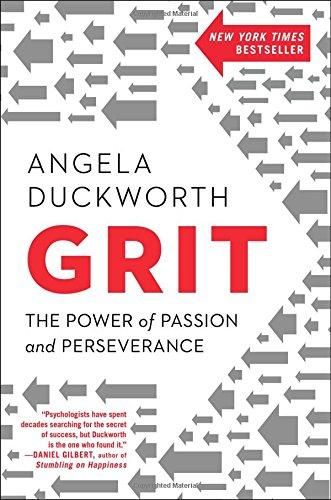
Socrates: It's a universal fear, isn't it? But what if that's the wrong question entirely? In her book 'Grit,' psychologist Angela Duckworth argues we're obsessed with the wrong thing. She suggests that our cultural fascination with innate talent is actively holding us back.
Daniel Darko: That’s a provocative idea. Because everything, from school admissions to job applications, seems to be a search for that spark of natural genius.
Socrates: Exactly. So today, we're going to explore her work from two angles. First, we'll challenge that myth of talent by unpacking why she believes effort is exponentially more important for achievement. Then, we'll dive into the psychological anatomy of grit, and discover how finding a deep sense of purpose is the ultimate fuel for the long haul.
Daniel Darko: I'm ready. This feels like a conversation every student, and frankly, every educator, needs to have.
Deep Dive into Core Topic 1: The Effort Multiplier
SECTION
Socrates: So let's get right to the heart of it. Duckworth gives us a powerful new way to think about achievement with two simple, but profound, equations. Daniel, this is something I think will really click with your analytical side. The first is: Talent times Effort equals Skill.
Daniel Darko: Okay, that makes sense. Your natural aptitude combined with the work you put in determines how skilled you become at something. If you have a knack for music and you practice, you get better.
Socrates: Precisely. But here's where it gets interesting. The second equation is: Skill times Effort equals Achievement. Notice what appears in both equations?
Daniel Darko: Effort. It's in there twice.
Socrates: It's in there twice. That's the core of her entire thesis. Effort builds skill, and then effort is what makes you that skill to produce something, to achieve a result. As she puts it, effort counts twice. This is a fundamental shift from how we usually think. We see a great violinist and we say, "What a gift!" We don't say, "Think of the thousands of hours of grueling practice that went into that."
Daniel Darko: And that creates a huge psychological trap. It's what we now call imposter syndrome. In graduate school, you're surrounded by people who have been selected for their high 'talent' scores—their GPAs, their GREs. When you inevitably struggle with a complex theory or a difficult research problem, your first thought isn't, 'I need to apply more effort.' It's, 'Oh no, I've hit the ceiling of my talent. I'm the one they made a mistake on.'
Socrates: You've just perfectly described the danger of the talent myth. It provides an easy excuse for giving up. To really bring this to life, Duckworth shares a powerful story from one of the most demanding environments imaginable: the United States Military Academy at West Point.
Daniel Darko: I can only imagine.
Socrates: So, picture this. Every summer, a new class of over a thousand cadets arrives at West Point. They are the best of the best—top of their class, star athletes, community leaders. They have sky-high SAT scores, they've passed a rigorous physical fitness test. By any measure, they are dripping with 'talent.' But before they can even begin their first academic year, they must survive a seven-week initiation program known as 'Beast Barracks.'
Daniel Darko: It sounds as brutal as the name suggests.
Socrates: It is. It's designed to be. It's seven weeks of waking up at 5 a. m., running for miles, endless drills in the summer heat, complex military instruction, all while being sleep-deprived and under constant psychological pressure. It's a crucible designed to weed people out. And every year, about one in twenty cadets drops out during Beast. The question for the admissions office was, why? What predicted who would quit?
Daniel Darko: You'd assume it would be the ones who weren't as physically fit, or maybe the ones with slightly lower academic scores. The ones with less 'talent' for the job.
Socrates: That's what everyone thought. But when Duckworth and her team studied this, they found that wasn't the case at all. The cadets' SAT scores, their high school rank, their leadership experience, their physical aptitude scores—none of these things were reliable predictors of who would make it through Beast. The cadet who was a star quarterback was just as likely to quit as the bookworm.
Daniel Darko: So what was the predictor?
Socrates: Before they started, Duckworth had the cadets fill out a short questionnaire she developed called the Grit Scale. It had simple questions like "I have overcome setbacks to conquer an important challenge" and "I finish whatever I begin." It was a simple measure of their passion and perseverance. And the results were stunning. That Grit Score was the single most reliable predictor of who would survive Beast Barracks. It was more powerful than every other metric they had.
Daniel Darko: Wow. So it wasn't about how strong or smart they were when they arrived. It was about their mindset, their willingness to just not quit when things got incredibly hard. That resonates so deeply with the academic world. I've seen students who were, by all accounts, 'geniuses' in their coursework, but they couldn't handle the long, slow, often frustrating process of original research. They dropped out. And I've seen others who maybe struggled more in classes, but they just kept showing up, kept revising, kept pushing. And they're the ones who are finishing their dissertations now. They had the grit.
Socrates: They were willing to apply effort twice. They used it to build their research skills, and then they used it again to actually write the paper, chapter by chapter, draft after draft. They understood, maybe intuitively, that talent was just the starting point.
Deep Dive into Core Topic 2: The Anatomy of Perseverance
SECTION
Socrates: Exactly. So if we agree that effort is the critical variable, and grit is the engine, the next logical question is... where does the energy for all that effort come from? It's not infinite. You can't just 'try harder' forever without a fuel source.
Daniel Darko: Right. That's the burnout question. You can white-knuckle it for a while, but not for the years it takes to get a Ph. D., or to become a master teacher.
Socrates: Precisely. And this is where Duckworth's work moves from diagnosis to prescription. She argues that grit isn't just grim, joyless perseverance. It's grown from the inside out, through four key psychological assets that gritty people share. They are: Interest, Practice, Purpose, and Hope.
Daniel Darko: Can you break those down a bit?
Socrates: Of course. 'Interest' is the beginning—you have to have some genuine fascination with what you're doing. 'Practice' refers to a specific kind of effort: the deliberate, focused work of trying to improve, what's often called 'deliberate practice.' 'Hope' is the belief that your efforts can improve your future, a resilience against despair. But the one I really want to focus on with you, Daniel, given your background in education, is the third one: Purpose.
Daniel Darko: Purpose. That feels like the biggest one.
Socrates: I think it is. Duckworth defines purpose as the intention to contribute to the well-being of others. It's the idea that your work matters to people beyond just yourself. For the grittiest people, their personal interest and passion eventually connect to a broader, other-centered purpose. And that, she argues, is the most powerful motivator of all.
Daniel Darko: This is everything. This is why people go into fields like education, or healthcare, or social work, even though they aren't the most lucrative or glamorous. It's the difference between seeing a master's degree as a personal hurdle to overcome versus seeing it as a tool you're forging to better serve students.
Socrates: Tell me more about that distinction. It feels critical.
Daniel Darko: It is. When you're up at 2 a. m. reading a dense academic paper on pedagogy, if your goal is just 'get an A' or 'finish the degree,' your energy is finite. It feels like a chore. It's draining. But if you're reading that paper and thinking, 'This idea could help that one student in my future class who struggles with reading comprehension'... the work transforms. It's no longer just about you. It's about them. The effort feels generative, not depleting. That's purpose.
Socrates: So purpose reframes the struggle. It gives it meaning.
Daniel Darko: It gives it meaning, exactly. As an INFJ personality type, that search for meaning and impact is a core driver. A job is just a job, but a calling is a source of endless energy. Duckworth's framework gives a name to what so many of us in helping professions feel. The grit to get through the hard parts—the bureaucracy, the low pay, the difficult days—it doesn't come from a place of grim determination. It comes from a deep-seated belief that the work matters, that you are making a small, positive difference in someone else's life.
Socrates: And this suggests that to cultivate grit in ourselves, and especially as educators, in our students, we can't just say "try harder." We have to help them connect what they're learning to a purpose.
Daniel Darko: Yes! We have to ask them, 'How could you use this math to build something that helps your community? How could this history lesson help you understand the world and make it better? How can your story inspire someone else?' When a student sees that connection, school stops being a series of tasks to be completed and starts becoming a journey with a destination they care about. You're not just teaching them content; you're helping them build the 'why' that will fuel their effort for years to come.
Synthesis & Takeaways
SECTION
Socrates: That's a beautiful and powerful way to frame it. So, as we bring this together, it really feels like a two-part story. First, we have to do the intellectual work of dethroning talent. We have to fundamentally believe, and teach others to believe, that our effort is what matters most. That it counts twice.
Daniel Darko: And in doing so, we free ourselves from the paralysis of imposter syndrome and the myth that our abilities are fixed. It gives us agency.
Socrates: Exactly. And second, once we've embraced effort, we have to fuel that effort for the long haul by connecting it to a purpose bigger than ourselves. We find our interest, we engage in deliberate practice, and we anchor it all in a mission to serve others.
Daniel Darko: It's the combination of those two things that creates true, sustainable grit. It’s not just about being tough; it's about being tough for a reason you deeply care about.
Socrates: So, as a final thought for our listeners, especially those like you who are in the middle of a long, demanding journey, what's the one piece of advice you'd take from this?
Daniel Darko: I think it's about changing the question we ask ourselves on the hardest days. When you feel overwhelmed by the work and your motivation is gone, maybe the question isn't 'Can I do this?' or 'Am I smart enough?'. Maybe the question to ask is, 'Why am I doing this?' Take a moment. Step back from the spreadsheet or the half-written chapter. And reconnect with that one student you want to help, that one idea you believe can make a difference, that one small piece of the world you want to improve. Find your purpose again. Because that's where you'll find the grit to keep going.