

Mastering Your Inner Landscape: Practical Psychology for the Thoughtful Analyst
Golden Hook & Introduction
SECTION
Nova: Atlas, I was talking to a friend the other day, a really sharp financial analyst, and they were telling me about a massive decision they had to make. They spent weeks crunching numbers, building models, running scenarios… and then, at the last minute, they just went with their gut. And it paid off! But it made me wonder, how much of our success is truly logical analysis, and how much is just… a feeling?
Atlas: Oh, I love that, Nova. Because I imagine a lot of our listeners, especially those deeply analytical, wrestle with that exact tension. We’re taught to be rational, to follow the data, but then there's this undeniable pull of intuition. It’s like we’re all walking around with two different brains in one skull, constantly battling it out.
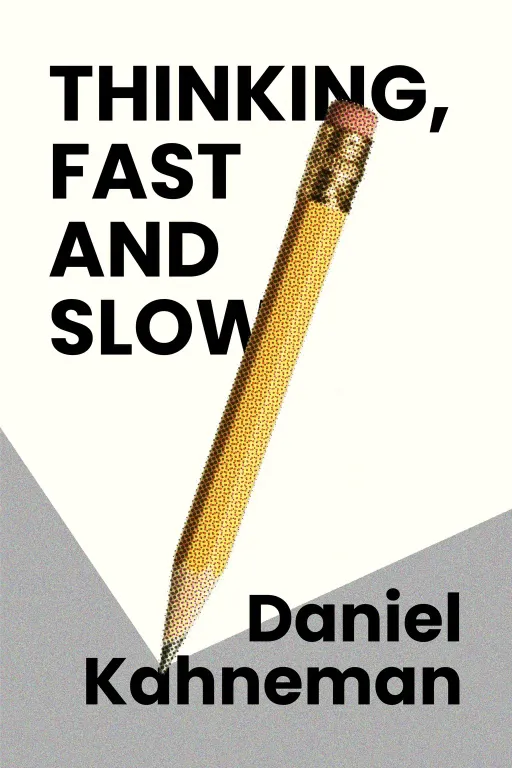
Nova: Exactly! And that internal battle is precisely what Daniel Kahneman unpacks in his seismic book, "Thinking, Fast and Slow." Kahneman, a Nobel laureate in Economic Sciences, completely redefined our understanding of how we make choices, and his work has influenced fields far beyond economics. He’s the guy who put cognitive biases on the map for millions.
Atlas: So basically you’re saying we're not as rational as we think we are? That’s going to resonate with anyone who’s ever made a 'logical' decision they later regretted, or conversely, made an 'illogical' one that turned out brilliantly. It really makes you wonder, then, how much control we actually have over our own judgment.
The Dual Systems of Thought: System 1 vs. System 2
SECTION
Nova: That’s the million-dollar question, isn't it? Kahneman introduces us to two characters living in our minds: System 1 and System 2. Think of System 1 as the Usain Bolt of your brain—fast, intuitive, emotional, always ready with a snap judgment. It operates automatically, effortlessly, and without much conscious control. It’s why you can recognize a friend’s face instantly or slam on the brakes without thinking.
Atlas: Oh, I see. So System 1 is like our brain’s autopilot. It’s incredibly efficient for everyday survival, but I can already imagine how that efficiency might lead us astray in more complex situations. Like, if you're a curious analyst, you want to dive deep, but your System 1 is already shouting the answer.
Nova: Precisely. And then there's System 2. This is the thoughtful, deliberative, logical side. It’s slower, requires effort, and is responsible for complex computations, focusing attention, and making conscious choices. When you’re solving a complex math problem, parking in a tight spot, or consciously comparing two investment strategies, that’s System 2 at work. It's the inner voice that can override System 1, but it's also incredibly lazy.
Atlas: It’s kind of like the vigilant, but easily distracted, editor in our heads. It catch System 1's mistakes, but only if it's paying attention and isn't too tired. That’s fascinating, because for our listeners who strive for excellence and deep analysis, the temptation to rely on that 'fast' intuition, especially under pressure, must be immense.
Nova: Absolutely. And here's where it gets tricky for our thoughtful analysts and ethical stewards. System 1 is a master of creating coherent stories from limited information. It loves consistency, even if it has to invent facts to get there. This leads to things like the 'halo effect'—if someone is good at one thing, System 1 assumes they're good at everything. Or confirmation bias, where we seek out information that confirms our existing beliefs.
Atlas: Wow, that’s kind of heartbreaking. So, we're not just making decisions; we’re also constantly crafting narratives to justify those decisions, often without even realizing it. For someone who’s grounded and wants to make a meaningful impact, recognizing these built-in narrative biases is crucial. How often do we think we’re being objective when System 1 is actually just telling us a really good story?
Nova: More often than we’d like to admit. Kahneman provides countless examples, like the famous "Linda problem." Linda is described as a sharp, outspoken philosophy major concerned with social justice. Then people are asked: is Linda more likely to be a bank teller, or a bank teller an active feminist? Most people intuitively choose the latter, because it fits the System 1 narrative, even though it's statistically impossible for a subset to be more probable than the larger set.
Atlas: That’s a perfect example. It makes me wonder how many 'obvious' truths or 'gut feelings' in personal finance or leadership are just our System 1 telling us a compelling, but flawed, story. What can regular people do about this? How do we even begin to challenge that fast, intuitive system?
Nova: It starts with self-awareness. When facing a complex decision, consciously pause. Ask yourself: is this initial reaction coming from System 1, that quick, emotional response? Or have I engaged System 2, the slower, more deliberate thought process? Then, and this is key, actively seek out data or alternative perspectives that might challenge your intuition. Don't just confirm what you already believe. It's about building a habit of reflection.
Atlas: That’s a great way to put it. It’s not about eliminating System 1—we need it—but about learning when to engage System 2 as the discerning, critical voice. For those who want to empower themselves and others in finance, understanding this dual system is foundational to making sound, ethical decisions.
Grit: The Power of Passion and Perseverance
SECTION
Nova: And that naturally leads us to the second key idea we need to talk about, which often acts as a powerful counterpoint to the intellectual humility System 1 demands. We're talking about 'grit,' as championed by Angela Duckworth in her phenomenal book, "Grit: The Power of Passion and Perseverance." Duckworth, a psychologist and MacArthur 'Genius' Fellow, spent years studying what truly predicts success, and her findings are incredibly compelling.
Atlas: Oh boy, I love this. Because if Kahneman shows us the pitfalls of our internal wiring, Duckworth seems to offer us a path to overcome them. For anyone driven by a desire for growth, the idea that passion and persistence can outperform raw talent is incredibly empowering. We’re often told talent is everything.
Nova: Exactly! Duckworth argues that talent is certainly important, but it's not the be-all and end-all. Her research, spanning diverse groups from West Point cadets to National Spelling Bee champions and even successful salespeople, consistently shows that the secret to outstanding achievement is not 'genius' but a special blend of passion and persistence. That’s grit.
Atlas: So, it’s like, talent might get you to the starting line, but grit is what actually gets you across the finish line, especially when that finish line is miles away and uphill. That sounds incredibly relevant for people navigating the long game of personal finance or the marathon of building an effective team.
Nova: It absolutely is. She illustrates this with incredible stories. Take, for instance, the cadets at West Point. They undergo an extremely rigorous selection process, so everyone there is incredibly talented. Yet, a significant number drop out. Duckworth found that it wasn't the most physically gifted or intellectually brilliant who made it through 'Beast Barracks'—the grueling initiation—it was the ones with the highest grit scores. They had an unwavering, long-term commitment to their goal, even when everything in them screamed to quit.
Atlas: That’s a powerful example. It shows that when things get tough, and they always do, it's not just about how smart you are, but how much you it and how long you’re willing to keep pushing. That gives me chills, because it essentially democratizes success. It says, 'you don't have to be born a genius; you can cultivate the qualities that make you successful.'
Nova: Precisely. And it's not just about brute force. Grit involves both passion—a deep, sustained interest in something—and perseverance—the tendency to stick with it despite setbacks, boredom, or frustration. It’s about having a compass and a motor. Without passion, perseverance can feel like drudgery. Without perseverance, passion is just a fleeting interest.
Atlas: That's a great way to put it. It’s not just stubbornness; it’s stubbornness towards something you genuinely care about. For our engaged leaders, this fundamentally changes how you might mentor or inspire a team. It’s not just about finding talented people, but helping them discover their passion and then fostering that relentless drive.
Nova: And Duckworth offers practical insights into cultivating grit. One key concept is 'deliberate practice,' which is about pushing yourself just beyond your current abilities, getting immediate feedback, and then refining your approach. It’s not just mindlessly repeating tasks; it's focused, intentional effort aimed at improvement. This aligns perfectly with the idea of challenging your System 1 biases—it’s a form of deliberate practice for your mind.
Atlas: That makes me wonder, how can you apply the principles of 'deliberate practice' to cultivate grit in areas where you feel less naturally inclined? Like, if you're a financial analyst who dreads public speaking, how do you get gritty about that?
Nova: Well, it means breaking down the skill into manageable parts, getting specific feedback, and consistently practicing those weak areas. It might feel uncomfortable, even painful, but that’s where growth happens. It's about embracing the unknown and seeing challenges as opportunities for deeper insight, just like we discussed earlier. Acknowledging that even the most analytical minds are prone to biases, and that building grit is a journey, is the first step towards better judgment and sustained achievement.
Synthesis & Takeaways
SECTION
Nova: So, what we've really explored today is this incredible dance between our intuitive self and our persistent self. On one hand, Kahneman warns us about the sneaky shortcuts our brains take, urging us to engage our slower, more deliberate System 2 to counteract biases. On the other, Duckworth reminds us that sustained passion and perseverance—grit—are often the true engines of extraordinary accomplishment.
Atlas: It’s a powerful combination, really. It’s saying, be humble about your initial judgments, question your assumptions, but then, once you’ve done that hard, clear thinking, unleash your unwavering commitment. It’s not enough to be smart; you also have to be stubborn in the right way, for the right reasons. For anyone wanting to empower themselves and others, this is the blueprint for true mastery: thoughtful analysis relentless dedication.
Nova: Absolutely. It’s about understanding your inner landscape—the mountains of intuition and the valleys of doubt—and then cultivating the resolve to navigate it with purpose. It’s a reminder that self-awareness is the first step towards better judgment, and unwavering dedication is the fuel for long-term impact. If you're going to commit to a goal, whether it's personal finance or leading a team, make sure your System 2 has vetted it, and then bring all your grit to bear.
Atlas: That’s actually really inspiring. It means we all have the capacity for greatness, not just the naturally gifted. It's a call to action to consciously develop our minds and our will.
Nova: Indeed. This is Aibrary. Congratulations on your growth!