

Unlocking Funding & Influence for Social Good
Golden Hook & Introduction
SECTION
Nova: Atlas, if I told you that the secret to unlocking millions for social good wasn't just about spreadsheets and impact reports, but about your deepest personal story, what would you say?
Atlas: My first thought, Nova, would be, "Tell me more, because that sounds like a game-changer!" Especially for so many of our listeners who are out there doing incredible work, but constantly battling the funding beast. It feels like they're often told to strip out the emotion, to be purely data-driven.
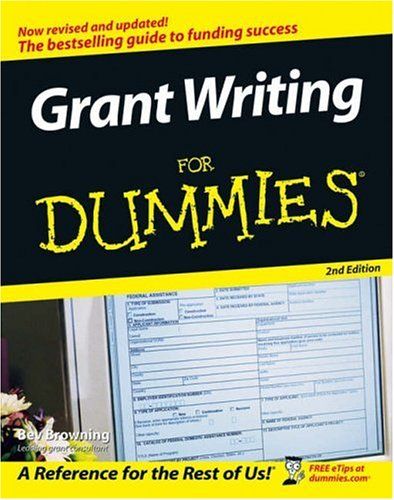
Nova: Exactly! And that's where today's episode takes a fascinating turn. We're diving into the critical art of securing funding for social impact, inspired by two powerful books: "Grant Writing For Dummies" by Beverly A. Browning, and "The Art of Social Enterprise: Business as a Force for Good" by Carl Schramm.
Atlas: Browning's book, despite its 'Dummies' title, is actually a highly rated, comprehensive guide in the grant-writing world, often praised for making a complex process incredibly accessible. And Schramm, a renowned economist and entrepreneur, brings this really insightful perspective on how social ventures can innovate and thrive financially.
Nova: Absolutely. And what's particularly compelling about Browning's approach is how she subtly encourages weaving in that human element, making your proposals not just technically sound, but emotionally resonant. It’s about transforming a dry application into a compelling narrative that actually moves people to invest.
Atlas: So you're saying that the 'dummies' part isn't about simplifying the intelligence required, but simplifying the to allow for deeper, more human connection in the application itself? That’s a powerful distinction.
Nova: Precisely. And that leads us perfectly into our first deep dive: the art of grant writing, but with a twist. We're not just talking about filling out forms; we're talking about how to infuse your unique personal story and clinical experience into a grant proposal to create an emotionally resonant narrative that truly captures the attention of funders.
The Art of Grant Writing: Weaving Personal Narrative into Funding Proposals
SECTION
Nova: Think about it, Atlas. When you're a clinician with seventeen years in primary care, working across many specialties, you have a wealth of hands-on experience. That's not just a resume; it's a tapestry of real-world problems solved, lives touched, and community needs understood.
Atlas: I can see that. For someone with deep clinical knowledge, like many of our listeners, their experience is their superpower. But how do you translate that into the often-stiff language of a grant application? How do you avoid sounding like you’re just listing credentials?
Nova: That's the magic. Browning's book, while practical, implicitly guides you to understand that funders aren't just looking for good projects; they're looking for passionate people who understand the problem at a visceral level. Imagine a grant proposal for a community health initiative. You could list the statistics on diabetes in the community, the lack of access to care, the projected health outcomes. It's all factual, all important.
Atlas: Right, very professional. But also, potentially, very dry. It's a risk assessment, not a story.
Nova: Exactly. Now, imagine starting that proposal not with statistics, but with a brief, powerful anecdote. Picture a clinician, let's call her Dr. Anya, who in her 17 years in primary care, has seen countless patients struggle, not just with the disease, but with the systemic barriers to managing it. She recalls Mrs. Henderson, a diabetic patient who constantly missed appointments due to unreliable public transport, or young David, whose parents couldn't afford the healthy food options necessary for his pre-diabetic condition.
Atlas: Oh, I see. So instead of just "poor health outcomes," you're giving me Mrs. Henderson and young David. That makes it real. That makes it personal. It’s not just data points; it’s actual human beings.
Nova: It’s the difference between saying "there's a need for better health education" and saying, "I watched Mrs. Henderson's health decline because she didn't understand her medication, and the existing educational materials were culturally irrelevant." That personal insight, that direct observation from years on the front lines, immediately establishes credibility and empathy.
Atlas: That’s actually really inspiring. It frames the clinician's background not as a limitation—like, "Oh, I'm just a doctor, I don't know about grants"—but as their most potent asset. Their past is their power.
Nova: Precisely. And Browning, in her practical advice, shows how to structure these narratives. You don't write a novel, of course. It’s about concise, impactful storytelling. A hook that draws the funder in, a brief articulation of the problem, and then how your proposed solution directly addresses those lived observations.
Atlas: So it's about translating that 'deep clinical knowledge' into a 'compelling case.' It's about showing, not just telling, the problem, and then presenting your solution as the natural, almost inevitable, outcome of your unique understanding.
Nova: Think of it as painting a vivid picture. You're not just presenting a blueprint for a building; you're showing them the families who will live there, the challenges they face, and how your building will transform their lives. The 'deep question' here is: How do you weave your personal story and clinical experience into a grant proposal to create a more compelling and emotionally resonant narrative?
Atlas: And the answer seems to be: with intention and strategic placement. Don't just list your qualifications; connect them to the problem you're solving and the people you're serving. It’s a bridge from your empathy to their investment.
Nova: Exactly. It's about making the funder feel, even for a moment, what it's like to be on the ground, witnessing the need firsthand. That emotional connection is a powerful motivator, often more so than raw statistics alone.
Social Enterprise as a Force for Good: Innovating Beyond Traditional Grants
SECTION
Nova: Now, while grant writing is crucial, it’s not the only game in town. The world of social impact is evolving, and that brings us to Carl Schramm’s "The Art of Social Enterprise." This book really challenges the traditional mindset that social good needs to rely solely on grants or donations.
Atlas: That’s going to resonate with anyone who struggles with the constant treadmill of grant applications. It’s an amazing source of funding, but it can also be incredibly competitive and, let's be honest, sometimes restrictive. So, how does social enterprise offer a different path?
Nova: Schramm, who was a president of the Kauffman Foundation, a major force in entrepreneurship, essentially argues that social enterprises can innovate and attract investment by adopting business principles, but with a core mission of social good. It's about 'business as a force for good,' as the subtitle says.
Atlas: So it’s not just about getting a grant your good work, it’s about making your good work and even profitable in a way that fuels itself? That sounds almost too good to be true for some struggling non-profits.
Nova: It's about changing the paradigm. Instead of constantly seeking external funding to keep the lights on, a social enterprise generates its own revenue through its activities. Think of a health clinic that offers services on a sliding scale, but also develops and sells a unique, affordable medical device, or a community garden that sells its produce to local restaurants, reinvesting profits back into community nutrition programs.
Atlas: That’s a great way to put it. So, a key element here is moving from a mindset of 'asking for money' to 'generating value that funds the mission.' How does someone with a clinical background, who's used to a service-oriented model, shift into this entrepreneurial space?
Nova: Schramm emphasizes the importance of pitching your vision not just as a charity, but as a viable, impactful venture. You're not just asking for a handout; you're offering an investment opportunity—an investment in social returns, yes, but also potentially financial returns or at least self-sufficiency.
Atlas: That makes me wonder, what kind of 'investment' are we talking about here? Is it purely venture capital, or are there other models for social enterprise?
Nova: He explores a range, Atlas. It can be traditional impact investors looking for a blend of social and financial returns, but it can also be things like patient capital, crowdfunding, or even developing products or services that generate income. The core idea is that the social mission is embedded in the business model, not just an afterthought.
Atlas: So, for our clinician, let’s say Dr. Anya, she wants to address health disparities in her community. Instead of just writing grants for a mobile clinic, she might also develop a telehealth platform that charges a nominal fee, or a culturally competent health education curriculum that she can license to other organizations.
Nova: Exactly! That platform or curriculum then generates revenue, which can be reinvested into the free mobile clinic services or expanding reach. It’s about diversifying your funding streams and building resilience. Schramm's insights are particularly valuable for anyone looking to build a robust financial model beyond traditional grants, encouraging them to think like innovators and entrepreneurs.
Atlas: It’s almost like the difference between fishing with a single reel versus setting up a sustainable fish farm. Both get you fish, but one is far more resilient and scalable in the long run.
Nova: That’s a perfect analogy. And for someone who has that deep clinical knowledge, that hands-on experience, they are uniquely positioned to identify market gaps and create solutions that truly meet community needs, which is the cornerstone of successful social enterprise. They don't just see the problem; they often have a strong sense of potential solutions, rooted in their practical experience.
Synthesis & Takeaways
SECTION
Nova: So, what we've discovered today, Atlas, is that unlocking funding and influence for social good isn't about choosing between passion and practicality, but about fusing them. It’s about leveraging your unique path—your clinical background, your community focus—as an undeniable strength.
Atlas: Right, like that clinician with 17 years of primary care experience. Her past isn't a limitation to be overcome; it's a wellspring of powerful narratives for grant applications. And it's a deep understanding of market needs for social enterprise.
Nova: Exactly. Beverly Browning shows us how to craft compelling grant proposals by weaving those personal, emotionally resonant narratives into the fabric of our applications. It’s about making funders the impact, not just read about it.
Atlas: And then Carl Schramm swoops in to remind us that we don't have to be perpetually dependent on grants. That we can innovate, build robust financial models, and pitch our vision as a force for good that can attract investment and sustain itself.
Nova: It’s about building bridges, Atlas. Translating medical wisdom into actionable, funded initiatives. Whether it's through a powerfully written grant that tells a human story, or a social enterprise that creatively generates its own fuel for impact, the goal is the same: to bring your vision for community good to life.
Atlas: And for anyone listening who feels that pull to make a real impact, who wants to serve their community, the message is clear: trust your unique journey. Your experience is your most valuable asset, whether you’re writing a grant or building an enterprise.
Nova: It's about recognizing that the heart of good work often lies in the hands-on experience, and then strategically articulating that value in ways that resonate with those who can help fund and scale it. This is Aibrary. Congratulations on your growth!