

The Unseen Architects: How Institutions Shape Our Political Reality
Golden Hook & Introduction
SECTION
Nova: What if the biggest political problems we face aren't because of bad leaders, but because of bad rules? We're often told to vote for the 'right' person, to support the 'best' ideology, but what if the game itself is rigged, no matter who's playing?
Atlas: Oh man, that's going to resonate with anyone who's ever felt frustrated by politics, Nova. It's like we keep swapping out the players on a broken sports team, but the field itself is tilted, or the referee's rules are just… impossible.
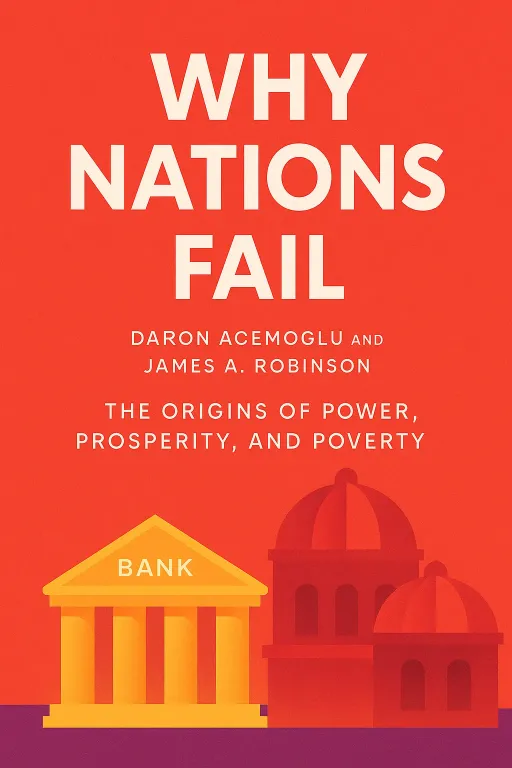
Nova: Exactly! Today, we're diving into a profound shift in perspective, one that challenges our common focus and reveals the true architects of our political reality. We’re exploring the vital insights from works like Daron Acemoglu and James A. Robinson's widely acclaimed, and the Nobel-winning research of Elinor Ostrom in. These books, which have fundamentally reshaped how we understand economic and political development, push us to look beyond the individuals and ideologies we usually debate.
Atlas: That makes me wonder, for our listeners who are deeply engaged in civic life, how does shifting our attention from individual actors to these underlying frameworks actually change where we focus our energy? It sounds like a deeper dive than just following the news cycle.
The Unseen Architects: Why Institutions, Not Just Leaders, Shape Destiny
SECTION
Nova: It absolutely is, Atlas. And that's where the concept of the "blind spot" comes in. We have this almost instinctive tendency to blame or praise individuals. A charismatic leader, a corrupt official, an inspiring activist – they grab our attention. But the real leverage, the true architects of a society's destiny, are the institutions themselves.
Atlas: Wait, are you saying that even a 'good' leader can't overcome a flawed institution? That sounds a bit out there, because we see leaders making huge differences all the time.
Nova: It's a powerful and often counterintuitive idea, but yes, largely. Think of it like this: imagine a city plagued by chronic unemployment, failing schools, and a crumbling infrastructure. People might elect a new mayor, then another, each promising change. They might even be genuinely good, well-intentioned leaders. But if the city's institutions – its deeply ingrained bureaucratic processes, its outdated property laws, its entrenched systems of patronage, or its very electoral rules – remain unchanged, those leaders are essentially trying to build a skyscraper with a broken foundation. They’ll struggle, they’ll fail, and the cycle continues, regardless of their individual brilliance or virtue.
Atlas: So, basically you’re saying we're talking about the operating system of society, not just the software running on it. You can install an excellent new app, but if the OS is buggy or designed to crash, it won't matter much.
Nova: Precisely! An institution isn't just a building; it's the stable, valued, recurring patterns of behavior that shape interactions. It's the rules of the game, formal or informal. Think of property rights, electoral systems, the rule of law, banking regulations, even cultural norms around trust and cooperation. These are the "unseen architects" because they dictate the incentives, constraints, and opportunities for everyone within that system.
Atlas: That’s a great way to put it. I imagine a lot of our listeners, especially those deeply engaged in civic efforts, might feel frustrated by this focus on institutions over individual action. It sounds like it takes agency away from citizens. We choose our leaders, after all.
Nova: It's not about taking away agency, Atlas, but about understanding where that agency is most effectively applied. It’s about shifting our focus from merely changing the players to changing the game itself. When we understand how institutions shape incentives, we can advocate for systemic changes that have far more profound and lasting effects than simply replacing one individual with another. It’s about building a field where can thrive, not just hoping for a superstar player.
Atlas: I see. So, instead of just cheering on a new player, we should be asking: what are the rules of this game, who made them, and how can we change them for the better? That makes me wonder, what makes a 'good' institution versus a 'bad' one? How do we even begin to categorize them?
Inclusive vs. Extractive & The Power of Self-Governance
SECTION
Nova: That's a perfect segue into the groundbreaking work of Acemoglu and Robinson. They argue that the long-term prosperity and stability of nations depend crucially on whether they have what they call or.
Atlas: Could you unpack 'extractive institutions' a bit more for our listeners? What does that really mean?
Nova: Absolutely. Extractive institutions are designed to concentrate power and wealth in the hands of a small elite. They often lack secure property rights, enforce laws selectively, and stifle innovation from the broader population. Think of a resource-rich nation where all the profits from oil or minerals flow to a ruling family and their cronies, while the rest of the population remains impoverished, with no real say in governance or economic opportunity. This creates massive inequality, disincentivizes hard work and innovation for the majority, and ultimately leads to stagnation and conflict. They extract wealth and power from the many for the benefit of the few.
Atlas: Wow, that sounds like a recipe for disaster. So, what's the alternative then? What do inclusive institutions look like?
Nova: Inclusive institutions, by contrast, distribute political power broadly. They ensure secure property rights for everyone, provide a level playing field for economic activity, and create incentives for innovation and investment across society. A classic example often cited is the Glorious Revolution in 17th-century England. Before that, the monarchy could arbitrarily seize property or change laws, stifling innovation. After the Revolution, parliamentary power grew, property rights became more secure, and a more inclusive political system emerged. This shift in institutions laid the groundwork for the Industrial Revolution and sustained economic growth, because people finally had the incentive and security to invest, innovate, and participate.
Atlas: That’s a great example. It really highlights how changing the rules of the game can unlock immense potential. But that also sounds incredibly difficult to change, like a grand, national-scale project. Is there any hope for more localized, bottom-up change? Because that's where a lot of our listeners, the engaged citizens, are often working.
Nova: That’s a brilliant question, and it leads us directly to the inspiring work of Elinor Ostrom. Her Nobel-winning research in offers a powerful counter-narrative to the idea that common resources always need privatization or top-down government control to be managed sustainably.
Atlas: Oh, I love that. So, it's not just about grand national institutions. Local communities can be "unseen architects" too! How does that actually work?
Nova: Ostrom studied countless examples globally – from Swiss alpine meadows managed by villagers for centuries, to complex irrigation systems in Spain, to forest management in Nepal. She found that local communities could successfully manage common-pool resources by developing their own sophisticated, self-governing institutions. They created clear rules about who could use what and when, developed effective monitoring systems, established graduated sanctions for rule-breakers, and created accessible, low-cost ways to resolve conflicts.
Atlas: So, it's like a micro-level version of inclusive institutions, where the community itself designs the rules to benefit everyone who relies on that resource, rather than letting a few extract from it?
Nova: Exactly! It's a testament to the power of self-governance and collective action. These communities weren't waiting for a distant government or a private corporation to solve their problems. They were actively designing and maintaining their own institutional frameworks, proving that trust, clear communication, and local accountability can create resilient systems that serve shared interests. It challenges the idea that human nature is inherently selfish and incapable of cooperation on a larger scale.
Atlas: That’s actually really inspiring. It gives me chills, thinking about how that connects to what we discussed earlier about civic duty. For someone driven by a sense of civic duty, understanding these different institutional designs offers a new lens through which to view their efforts. It’s not just about electing a good person; it’s about participating in the design and maintenance of the rules that govern their community.
Synthesis & Takeaways
SECTION
Nova: Absolutely, Atlas. The core takeaway from is that our political reality isn't just a product of individual choices or ideological battles. It's profoundly shaped by the underlying institutional frameworks – the rules of the game. Whether we're talking about national prosperity driven by inclusive institutions, or local sustainability achieved through self-governance, the design of these structures dictates the outcomes.
Atlas: And that means, for our listeners who are deeply engaged in trying to build a more equitable and engaged world, the focus shifts. It's not just about advocating for a particular policy, but asking: 'Is the system itself designed to enable or hinder progress?' It's about understanding those deeper levers for change.
Nova: Precisely. It’s about recognizing that even small, local institutional changes – like reforming how a neighborhood association makes decisions, or how a local park is managed – can have profound ripple effects, fostering greater participation and more equitable outcomes. It offers a tangible pathway for action beyond just electoral politics.
Atlas: So, for our listeners, what's one practical shift in perspective or action they can take, armed with this deeper understanding of institutions?
Nova: I’d say, start by considering a political challenge you care deeply about. And then ask yourself: How much of that challenge is rooted in the design of existing institutions – the rules of the game – rather than just the players or the immediate events? What institutional changes would you prioritize? It’s a powerful question that reframes the entire problem.
Atlas: That’s a fantastic challenge. It shifts the conversation from reactive to proactive, from symptoms to systemic causes. I encourage all our listeners to reflect on that question in their own communities and spheres of influence.
Nova: This is Aibrary. Congratulations on your growth!