

Mastering Strategic Thinking: Your Stanford Blueprint
Golden Hook & Introduction
SECTION
Nova: What if I told you that most of what people call "strategy" isn't strategy at all? It's just a wish list, a set of goals, or a glorified to-do list masquerading as something profound.
Atlas: Hold on, Nova. I think I just felt a collective sigh of frustration from every high-achiever listening right now. You're saying all those meticulously crafted "strategic plans" we painstakingly develop might be... fluff? That's a bold claim.
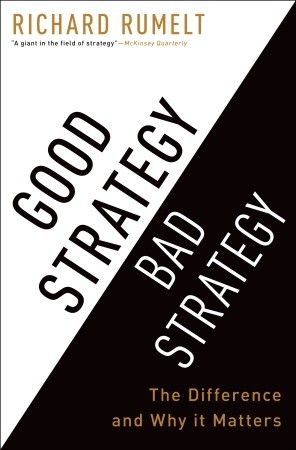
Nova: It is a bold claim, but it's one that deeply resonates when you dive into the work of brilliant minds like Richard Rumelt and the powerhouse duo A. G. Lafley and Roger L. Martin. Today, we're cutting through the noise, thanks to their incredible books: Rumelt's "Good Strategy Bad Strategy" and Lafley and Martin's "Playing to Win: How Strategy Really Works."
Atlas: Ah, Rumelt. He's a renowned professor from UCLA, isn't he? His work is celebrated for its clarity in demystifying what makes a strategy truly effective. And Lafley, of course, the former CEO of Procter & Gamble, alongside Martin, a strategic advisor—their combined experience offers such a practical, boots-on-the-ground perspective. This is exactly the kind of cutting-edge knowledge our listeners, who are natural architects of their future and driven by impact, are craving.
Nova: Absolutely. These aren't just academic exercises. These are frameworks forged in the fires of real-world challenges, designed to help you not just aim for success, but meticulously plan for it. They're about refining your path, whether it's to a top-tier institution like Stanford or to launching the next big innovation.
The 'Kernel' of Good Strategy: Beyond Buzzwords
SECTION
Nova: So, let's start with Rumelt and what he calls the "kernel" of good strategy. It’s deceptively simple, yet profoundly powerful. A good strategy, he argues, always has three core components: a diagnosis, a guiding policy, and coherent actions.
Atlas: Okay, 'diagnosis, guiding policy, coherent actions.' That sounds incredibly rigorous, almost like a medical approach to business. But how do we spot strategy? Because I imagine many people they're being strategic, but they're missing this kernel. What's a common trap that aspiring leaders fall into?
Nova: That's a brilliant question, Atlas. Rumelt identifies several hallmarks of bad strategy. The first is "fluff"—using high-sounding words and jargon that obscure a lack of substance. Think mission statements that sound inspiring but offer no real direction. Another is "failure to face the problem"—avoiding the actual obstacles and pretending they don't exist, which, as we know, is a recipe for disaster.
Atlas: Oh, I know that feeling. It's like trying to build a bridge without acknowledging there's a river to cross.
Nova: Exactly! A third trap is "mistaking goals for strategy," which brings us back to my opening statement. "Our strategy is to be number one in the market." That's a goal, not a strategy. A strategy explains you intend to achieve that goal. And finally, "bad strategic objectives" – setting objectives that are either impossible, inconsistent, or simply don't address the core problem.
Atlas: So, for someone trying to meticulously plan their path, say, to a top-tier institution like Stanford, how would they apply this kernel to personal strategy? What would their 'diagnosis' look like?
Nova: For an aspiring innovator aiming for Stanford, the diagnosis would involve a brutally honest assessment of their current academic standing, their extracurriculars, their unique skills, and critically, their weaknesses. Where are the gaps between their current profile and Stanford's expectations? What specific research interests do they have, and are they aligned with faculty there? It’s about understanding the current landscape and identifying the specific challenge: "How do I make myself an undeniable candidate for program?"
Atlas: And the guiding policy? Would that be like, "I will focus on deep, impactful research in AI ethics"?
Nova: Precisely. That guiding policy would then dictate the coherent actions. It's not just "study hard." It's "I will dedicate X hours to mastering advanced algorithms," or "I will seek out a research assistant position in a lab focused on AI ethics," or "I will publish a paper on this specific topic." Every action, every decision, from which courses to take to which summer internships to pursue, must cohere with that guiding policy, all stemming from that initial diagnosis. It's about a disciplined focus, not just throwing everything at the wall and hoping something sticks.
The 'Cascade of Choices': Building Your Strategic Blueprint
SECTION
Nova: That rigorous diagnosis and the subsequent coherent actions set the stage perfectly for our second framework, one that offers a truly integrated blueprint for turning strategic intent into actionable results. We're talking about the "cascade of choices" from Lafley and Martin's "Playing to Win."
Atlas: A 'cascade of choices'? That sounds like a hierarchical approach, almost like building blocks. What exactly are these choices, and how do they build on each other to create a winning plan that resonates with someone driven to lead and make an impact?
Nova: It's a brilliant, interconnected system of five questions that, when answered rigorously, form your complete strategy. It starts with:
Atlas: Wow, that's incredibly comprehensive. It's not just a set of steps; it's a living, breathing system where each answer feeds into the next. But for our listeners who are natural architects of their future, always seeking impactful leadership roles, isn't there a risk that this much planning can become paralyzing? How do you avoid 'analysis paralysis' when every choice has such cascading effects?
Nova: That's a critical point, and Lafley and Martin emphasize that this isn't about endless deliberation. It's about making and then committing to them, while also building in mechanisms for learning and adaptation. The framework provides clarity, not rigidity. Think of it like a seasoned architect. They don't just sketch a building; they meticulously plan every beam, every pipe, every electrical conduit, knowing that each decision impacts the whole. But they also know that sometimes, a foundation needs adjusting, or a material changes. The plan is robust, but not brittle.
Atlas: So, it's about having a strong compass, but being able to adjust your sail. I can see how this would appeal to someone who wants to lead with impact, because it forces you to think through the entire value chain of your intentions. It's about building a coherent system, not just a list of initiatives that might contradict each other.
Nova: Exactly. And the beauty is that these choices are interconnected. If your "how to win" strategy relies on a capability you don't possess, you either need to acquire that capability or rethink your "how to win." It forces a brutal honesty about what's achievable and what resources are truly necessary. This is where true strategic excellence emerges—not from grand pronouncements, but from this disciplined, integrated cascade of choices.
Synthesis & Takeaways
SECTION
Nova: So, bringing these two powerful frameworks together, Rumelt’s "kernel" gives us the quality control—the litmus test for whether a strategy is truly good, or just an illusion. It forces us to diagnose, guide, and cohere. Lafley and Martin’s "cascade of choices" then provides the operational blueprint—the step-by-step methodology for building and executing that good strategy, ensuring every piece fits. Both are absolutely crucial for anyone serious about turning ambition into tangible impact.
Atlas: That's a profound synthesis, Nova. It’s not just about having a goal, or even a good plan. It's about a relentless, coherent alignment of every single action, every resource, every capability, towards a clearly diagnosed problem and a clearly articulated winning aspiration. That’s a profound shift in thinking for many, moving from hopeful aspiration to architected achievement.
Nova: Exactly. It makes you wonder, doesn't it? What's one area in your own life—perhaps your next big career move, a personal project, or even a new habit you're trying to build—where you could apply this strategic lens, moving from a mere 'wish list' to a truly coherent, winning strategy? Start with the diagnosis, then define your guiding policy, and finally, make sure every action is coherent.
Atlas: That's a question I'm definitely taking with me this week. For anyone feeling their strategic gears turning, we'd love to hear your thoughts and practical applications on social media. Share how you’re turning your aspirations into a cascade of winning choices.
Nova: This is Aibrary. Congratulations on your growth!