

Mastering Strategic Foresight: Anticipating Tomorrow's Mining Landscape Today
Golden Hook & Introduction
SECTION
Nova: Atlas, if I say 'strategy,' what's the first thing that pops into your head? No overthinking.
Atlas: Oh, man. Immediately I picture a boardroom, a huge whiteboard, and a lot of very serious people trying to predict exactly what's going to happen five years from now. Usually with a very fancy PowerPoint.
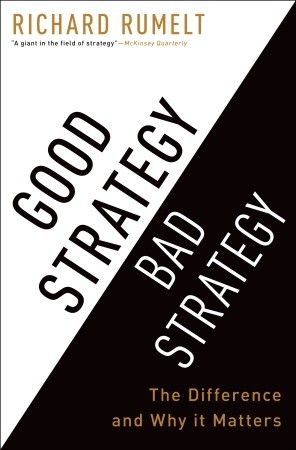
Nova: Exactly! That's the common image, right? But what if I told you that often, what we strategy, what we present in those boardrooms, isn't strategy at all? It's just a bunch of goals, dreams, and wishful thinking. That's the provocative starting point for our deep dive today into Richard Rumelt's seminal work, 'Good Strategy Bad Strategy: The Difference and Why It Matters.' Rumelt, who spent decades advising governments and corporations, pulls no punches, arguing that much of what passes for strategy today is, frankly, 'bad strategy.'
Atlas: Okay, but then what good strategy? Because for a lot of our listeners, especially those in high-stakes operational environments like mining, 'strategy' isn't just a buzzword; it's about making real-world decisions with massive implications.
Nova: Fantastic question, and that's precisely what Rumelt unpacks. He argues that good strategy isn't about grand visions or impossible targets. It's about a coherent response to a significant challenge. It has what he calls a 'kernel': a diagnosis, a guiding policy, and coherent actions. And that naturally leads us to our second big idea: how do you make those coherent actions smarter when the future is inherently uncertain? That's where Annie Duke's brilliant 'Thinking in Bets: How to Make Smarter Decisions When You Don't Have All the Facts' comes in. Duke, a former World Series of Poker champion turned decision strategist, teaches us how to embrace probabilistic thinking, not to predict the future perfectly, but to navigate its inherent uncertainties and seize opportunities.
Atlas: Whoa, a poker champion teaching strategy? That’s definitely not your typical boardroom consultant. I'm intrigued. So we're talking about moving beyond just setting goals to actually building robust mental models for navigating the unpredictable. That sounds incredibly valuable for anyone leading teams or managing complex systems.
Good Strategy vs. Bad Strategy: The Kernel of Coherent Action
SECTION
Nova: Absolutely. Let's start with Rumelt. He argues that much of what passes for strategy is 'bad strategy.' It's fluffy, it's generic, it's full of buzzwords, but it lacks a clear path. It's like saying, 'Our strategy is to grow quickly and be the best.' That's a goal, not a strategy.
Atlas: I can see that. I imagine a lot of our listeners have sat through presentations where the 'strategy' slide is just a list of ambitious targets, but not they're going to get there, or even those are the right targets.
Nova: Precisely. Rumelt's core insight is that good strategy has a 'kernel.' Think of it like a seed. It contains three essential elements. First, a. This means truly understanding the nature of the challenge. What are the critical obstacles? What's the fundamental problem you're trying to solve? It’s not just stating the obvious.
Atlas: So, it's like a doctor's diagnosis, not just saying 'you're sick,' but 'you have this specific bacteria causing this specific infection.'
Nova: Perfect analogy! For a mining operation, a bad diagnosis might be 'we need to increase profits.' A good diagnosis might be: 'our current extraction method in the northern vein is facing diminishing returns due to unexpected geological shifts, leading to escalating operational costs and safety concerns, which impacts profitability.' That's specific.
Atlas: Okay, I can already see how that shifts the entire conversation. If you deeply understand the problem, the solutions start to become clearer.
Nova: Exactly. Which brings us to the second element: a. This is your overall approach to overcoming the obstacles identified in the diagnosis. It's a high-level plan that channels and focuses your efforts. It's not a detailed action plan, but it sets the direction.
Atlas: So, if the diagnosis is 'geological shifts causing cost increases,' a guiding policy might be 'explore and implement advanced remote sensing technologies to improve geological mapping and optimize drilling patterns.'
Nova: You've got it. It's a coherent policy that addresses. It's not just a generic 'innovate more.' And finally, the third element:. These are the specific steps, resource allocations, and operational moves that implement the guiding policy. They are coordinated and mutually reinforcing.
Atlas: So, the actions would be 'invest in specific drone mapping technology, retrain geological teams, and pilot a new drilling algorithm in a controlled environment.' All aligned with the diagnosis and the guiding policy.
Nova: Exactly. Rumelt emphasizes this coherence. Bad strategy often has a diagnosis, but then a guiding policy that doesn't really address it, or actions that are all over the place. He gives a fascinating example of General Motors in the 1980s. They had a goal to 'be number one in quality and customer satisfaction.' Sounds great, right?
Atlas: Sounds like every company's mission statement.
Nova: But their diagnosis of the problem was vague, and their guiding policy was essentially just 'copy the Japanese.' Their actions were disparate: they bought robotics, redesigned some cars, but there was no coherent strategy. They spent billions but failed to achieve their goal because the 'kernel' was missing.
Atlas: That’s a stark contrast. It’s like they were buying all the ingredients for a five-star meal, but didn't have a recipe or even a clear idea of what they wanted to cook. It sounds like Rumelt is really pushing for intellectual honesty – not just about what you want to achieve, but about the brutal reality of the challenge and the disciplined path to overcome it.
Nova: He is. And for anyone in a complex, resource-intensive industry like mining, where investments are huge and the stakes are incredibly high, confusing goals with strategy can be catastrophic. Good strategy cuts through complexity, focuses limited resources, and leads to decisive action. It’s about leveraging your strengths against a specific weakness.
Embracing Probabilistic Thinking: Smarter Decisions Under Uncertainty
SECTION
Nova: And this brings us beautifully to Annie Duke and 'Thinking in Bets,' because even with a perfectly coherent strategy, you're still operating in a world of profound uncertainty. You don't have all the facts.
Atlas: That's the daily reality for a strategic operator. You're constantly making decisions with incomplete data, often under pressure. You have to make a call, and sometimes it works out, sometimes it doesn't.
Nova: And that's where the critical distinction Duke makes comes in: separating the quality of a decision from the quality of its outcome. We often judge a decision as 'bad' if the outcome was poor, even if it was the best possible decision given the information available at the time. Conversely, a terrible decision can sometimes lead to a good outcome purely by luck.
Atlas: Oh, I've seen that. Someone takes a huge, uninformed gamble, and it pays off, and suddenly they're a genius. But if it had failed, they'd be branded reckless.
Nova: Exactly! Duke argues that this outcome bias prevents us from learning. If we only look at outcomes, we don't improve our decision-making process. Her core message is to embrace probabilistic thinking.
Atlas: Probabilistic thinking. Is that just about calculating odds? Because in the field, things feel a lot more nuanced than a simple coin flip.
Nova: It’s so much more than that. It's about acknowledging that very few things in life are 100% certain or 0% certain. Everything exists on a spectrum of probability. And skilled decision-makers, like elite poker players, think in terms of ranges, not absolutes. They ask, 'What's the likelihood of this happening? What's the likelihood of that happening?'
Atlas: So, instead of saying, 'This new drilling technique reduce costs by 15%,' it's more like, 'There's a 70% chance it reduces costs by 10-20%, a 20% chance it's neutral, and a 10% chance it increases them.'
Nova: Precisely. And then, you factor in the potential upside and downside of each of those probabilities. Duke talks about asking 'What's the worst-case scenario if I'm wrong?' and 'What's the best-case scenario if I'm right?' And then, instead of trying to predict the future, you try to put yourself in the best possible position for a range of futures.
Atlas: That sounds incredibly powerful for someone trying to optimize systems. It shifts the focus from being right all the time to being resilient and adaptable, even when you're wrong.
Nova: It does. Duke also introduces the idea of 'resulting,' which is when we judge the quality of a decision solely based on its outcome. She gives an example of a football coach who decides to go for it on fourth down. If they make it, he's a genius. If they don't, he's an idiot. But the quality of the decision should be judged by the information available the play, the probabilities of success, and the strategic implications, not just whether the ball crossed the line.
Atlas: So, a smart decision can still have a bad outcome, and a bad decision can have a good outcome. And if you don't differentiate, you never truly learn. This is huge for fostering a learning culture within an organization. It means you can't just punish 'failures' without understanding if the decision was sound at the time.
Nova: Exactly. It encourages a culture where people can honestly assess their decisions, learn from them, and improve their mental models for navigating uncertainty. It’s about continually updating your beliefs as new information comes in, rather than clinging to your initial assessment. For a future-focused innovator, this is gold. It’s not about avoiding risk, it’s about making smarter bets.
Synthesis & Takeaways
SECTION
Nova: So, bringing Rumelt and Duke together, we have this incredible framework. Rumelt gives us the structure for a coherent, actionable strategy, grounded in a clear diagnosis. And Duke gives us the mindset to execute that strategy in an unpredictable world, by embracing uncertainty and separating decision quality from outcome.
Atlas: That’s a really profound connection. You need the clear direction from Rumelt, but you also need Duke's agility and probabilistic thinking to navigate the inevitable curveballs. For our listeners in mining, where geological data is constantly evolving, market prices fluctuate wildly, and new technologies emerge daily, this isn't just theory; it's survival.
Nova: It's about developing that robust mental model we talked about at the beginning. It's not about being a prophet; it's about being prepared, adaptable, and making the best possible moves given incomplete information. And it really elevates leadership impact because you're leading with clarity and resilience.
Atlas: I imagine a lot of leaders feel pressured to project certainty, to have all the answers. But what you're saying is the truly resilient leader acknowledges the uncertainty, and then applies a rigorous process to make the best possible decisions within that reality. That’s a game-changer.
Nova: It truly is. It's about moving beyond mere goal-setting to a coherent action plan, and then executing that plan with a deep understanding of the probabilities involved. It’s about turning the unknown from a source of fear into a landscape for calculated opportunity.
Atlas: So, the deep question for our listeners is: how can you apply the principles of good strategy – that diagnosis, guiding policy, and coherent actions – to a current challenge within your operational domain, moving beyond just setting a goal to crafting a truly robust action plan? That’s going to resonate with anyone who's trying to optimize systems and drive sustainable progress.
Nova: Absolutely. This is Aibrary. Congratulations on your growth!