

The 'Ecosystem' Trap: Why You Need to Master Product Strategy, Not Just Build Features
Golden Hook & Introduction
SECTION
Nova: What if I told you that your meticulously crafted product roadmap, the one filled with all those exciting features, might actually be preventing you from achieving your grand vision?
Atlas: Whoa, Nova, that's a bold statement right out of the gate! I imagine many of our listeners, the strategists and architects among them, are probably nodding along, yet also feeling a pang of terror. We spend so much time on those roadmaps, believing they the vision.
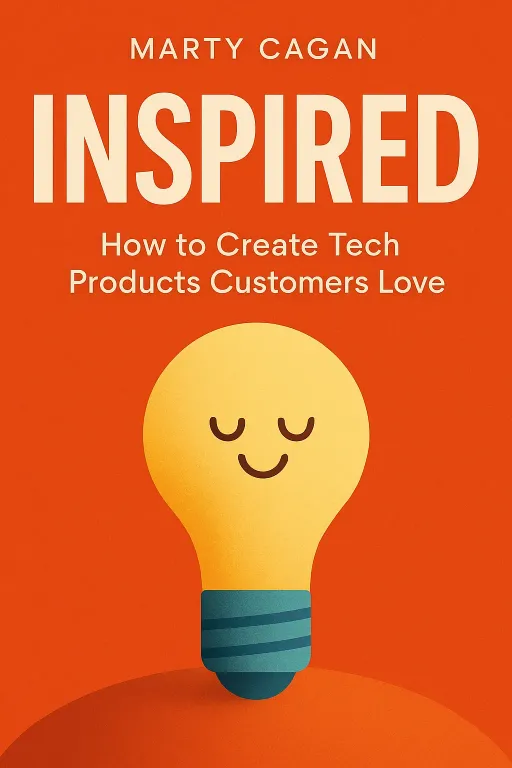
Nova: Exactly! It's a common, almost universal trap. And that's precisely what we're dissecting today, pulling insights from two absolute titans in the field. We're diving into by Marty Cagan, which is widely considered a foundational text, practically the bible for product leaders, and by Richard Rumelt, a book celebrated for its rigorous, no-nonsense approach to strategy that cuts through corporate jargon.
Atlas: That's a powerful combination. It sounds like we're not just talking about incremental improvements, but a fundamental shift in how we think about building and leading. For anyone looking to define a clearer path and build a sustainable ecosystem, this feels incredibly relevant.
Nova: Absolutely. Today, we're going to explore why a feature roadmap isn't a strategy and how to move beyond what we call the 'feature factory' trap, then we'll discuss how to identify and build a truly 'good' strategy by understanding its core components and avoiding common pitfalls. It's about translating that big, holistic vision into an executable, impactful reality.
The Feature Factory Trap: Beyond Roadmaps
SECTION
Nova: So, let's start with Marty Cagan's profound insight. He argues that product strategy is not just a roadmap of features. It's a guiding set of principles designed to solve market problems and achieve business goals through continuous discovery and delivery.
Atlas: Okay, so you’re saying a roadmap, which is essentially a list of what you plan to build, isn't enough. Many leaders, myself included, often see that roadmap as the tangible output of our strategy. Where does this disconnect happen?
Nova: It happens when we confuse with. Think of it like this: imagine a construction crew. They have a detailed list of tasks – build this wall, install that window, lay this tile. That's their roadmap. But if they don't have the architect's master plan, the guiding principles of what kind of building this is, what purpose it serves, how it connects to the landscape – they're just a feature factory, churning out components without a coherent vision.
Atlas: That's a great analogy. It makes me think of a team diligently building, but if they don't know they're building it, or what problem it solves for the end-user, they could be building the most beautiful, perfectly crafted thing.
Nova: Precisely! Cagan points out that many organizations fall into this trap. They become expert at executing, at delivering features, but they haven't truly figured out what to build or why. They're busy, but not necessarily effective. The 'feature factory' is a place of constant motion, but often without meaningful progress towards a larger, more impactful goal.
Atlas: That’s going to resonate with anyone who struggles with feeling busy but not productive. For someone who sees themselves as an architect of an entire product ecosystem, how do you empower your team to move beyond just building features and truly engage in that 'continuous discovery' Cagan talks about? It sounds like a big cultural shift.
Nova: It is. It starts with leadership providing clarity on the to solve, not just the to build. Instead of saying, "Build me a new dashboard with these five charts," a leader might say, "Our users are struggling to understand their data trends; how might we help them gain clearer insights?" This shifts the focus from prescribed features to desired outcomes.
Atlas: I see. It's about framing the challenge, not dictating the answer. That allows the team to engage their creativity and expertise in finding the best solution, rather than just mechanically executing a list. It also sounds like it fosters a deeper sense of ownership and impact within the team.
Nova: Absolutely. And that's where continuous discovery comes in. It's the ongoing process of interacting with customers, testing ideas, gathering feedback, and iterating you commit to building a massive feature set. It’s about learning as you go, ensuring every piece you add serves a strategic purpose.
The Anatomy of Good Strategy
SECTION
Nova: Now, once you understand what strategy, which is just a list of features, you need to know what it. This is where Richard Rumelt's work becomes indispensable. He argues that good strategy has a coherent diagnosis, a guiding policy, and a set of coherent actions.
Atlas: Diagnosis, guiding policy, coherent actions. That sounds like a solid framework for anyone looking for strategic clarity. Let's break that down. What does Rumelt mean by a 'coherent diagnosis'?
Nova: A diagnosis means truly understanding the challenge. It’s not just stating the obvious, but identifying the critical points of leverage, the obstacles, and the underlying forces at play. Rumelt offers a vivid example of Apple's strategy under Steve Jobs. The diagnosis identified a technology shift and weaknesses in competitors. It wasn't just "make good phones"; it was a deep understanding of the market landscape and user pain points.
Atlas: So it's about seeing the problem clearly, not just at a surface level. It's about identifying the true nature of the competitive landscape or the user's struggle, the root causes.
Nova: Exactly. From that diagnosis flows the 'guiding policy.' This is the overall approach chosen to overcome the obstacles identified in the diagnosis. It’s not a goal; it’s a method. For Apple, the guiding policy was to integrate hardware, software, and services tightly, creating a superior, user-friendly experience that competitors couldn't easily replicate. It was a clear strategic choice.
Atlas: That’s a powerful distinction. A goal is "become number one in the market," but a guiding policy is you intend to get there. It’s the strategic compass. But the final piece, 'coherent actions,' seems to be where many strategies fall apart. How does a guiding policy translate into those concrete, daily actions for a team building an ecosystem?
Nova: That's the linchpin. Coherent actions are the coordinated steps that implement the guiding policy. For Apple, this meant investing heavily in R&D for user interface design, building the App Store, cultivating developer relationships, and creating iconic retail experiences. Every single action, from product design to marketing, was coherent with the guiding policy of integrated excellence.
Atlas: I can see how that would be critical for building a truly holistic ecosystem. If your diagnosis is scattered, or your guiding policy is vague, then your actions will be fragmented, leading to wasted effort and a product that feels disjointed. That’s a bit like an architect having a beautiful vision but then using mismatched materials or ignoring structural engineering.
Nova: Precisely. Rumelt argues that bad strategy, in contrast, is often just fluff – vague rhetoric, lofty goals without a plan, or a simple list of things to do without any underlying logic. It lacks that kernel of diagnosis, guiding policy, and coherent action. Many companies declare their strategy is "to grow revenue by 20%," but that's a goal, not a strategy. A good strategy articulates they will achieve that growth, by addressing specific challenges with specific, coordinated approaches.
Synthesis & Takeaways
SECTION
Nova: So, by bringing together Cagan's call to move beyond feature factories and Rumelt's framework for what makes a strategy truly good, we see a powerful path forward. It's about intelligent problem-solving and intentional, coordinated action, not just busywork. It’s about translating that big, holistic vision of your product ecosystem into an executable path for real impact and sustainable growth.
Atlas: That makes so much sense. It’s not enough to have a grand vision; you need the strategic clarity to articulate the problem, define your guiding principles, and then line up every single action to be coherent with that policy. It’s the difference between hoping for success and actively engineering it.
Nova: Exactly. It's about being a true architect of your product's future. And for all our listeners who are leading teams, cultivating growth, and striving for that strategic clarity, here's a tiny, powerful step you can take this week.
Atlas: What's that?
Nova: Take 15 minutes to articulate your product's current 'guiding policy' in one clear sentence. Not a goal, but the method you've chosen to overcome your biggest challenge. Then, share it with a trusted team member for feedback. See if it truly resonates as a coherent, actionable direction.
Atlas: That’s a brilliant challenge. It forces you to distill the essence of your strategic intent. It makes me wonder, how many of us have a guiding policy that we can actually articulate in a single, clear sentence? It’s a powerful way to test your own strategic clarity.
Nova: It absolutely is. And that clarity is the first step toward empowering your team and building something truly impactful.
Atlas: Incredible insights today, Nova. Thank you.
Nova: My pleasure, Atlas.
Atlas: This is Aibrary. Congratulations on your growth!