The Architect of Intent
Golden Hook & Introduction
SECTION
Nova: What if I told you the biggest obstacle to getting what you want isn't out there, in the world, but hiding inside your own head, and often, in how you try to other people?
Atlas: Whoa, that's a bold claim, Nova. I’d argue it’s usually the person across the table from me, or the overwhelming to-do list that feels like a mountain. Tell me more about this internal culprit.
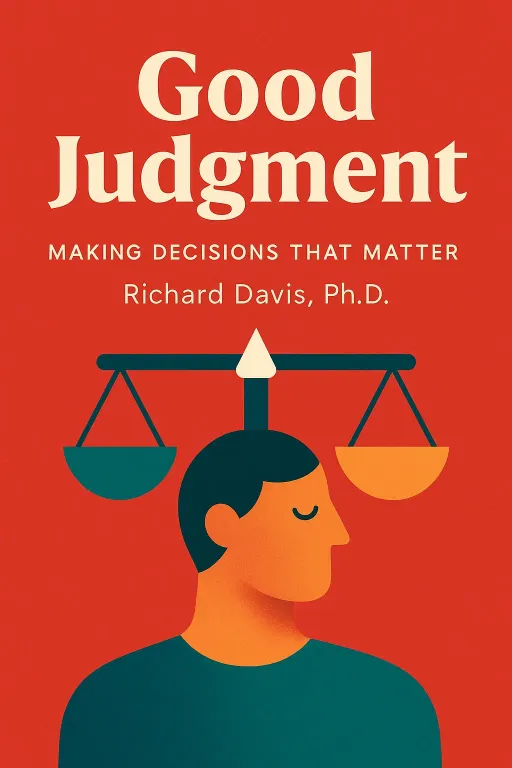
Nova: Well, today we’re diving into the heart of what we call "The Architect of Intent." It's about consciously shaping your outcomes, and it hinges on two crucial skills, brought to us by two profound thinkers. We’re talking about Richard Davis’s insights from "Good Judgment" and John C. Maxwell’s transformative ideas from "Thinking for a Change."
Atlas: Ah, two powerhouses. What’s the common thread here?
Nova: The common thread is mastery. Davis, known for his work in high-stakes negotiations and diplomatic strategy, developed his framework after observing countless leaders falter not from lack of intelligence, but from fundamental misreadings of their counterparts. He gives us a blueprint for understanding others. Maxwell, on the other hand, a true titan in leadership development with over 100 books to his name, distilled decades of coaching executives into an actionable guide, emphasizing that true change starts from within.
Atlas: So, one for reading the outside world, and one for mastering the inside world. I’m intrigued. Where do we begin?
The Art of External Assessment: Reading the Room
SECTION
Nova: We start with the external, with Richard Davis and his concept of "Good Judgment." He argues that success, especially in influence, hinges on your ability to read others accurately. It’s not just about intuition, Atlas.
Atlas: Hold on, Nova. "Reading the room" sounds a bit like… gut feeling. How is Davis's approach different from just, you know, being intuitive? Because for people like our listeners, who are always short on time and need to make quick decisions, intuition can be a risky bet. It’s often just a collection of our own biases.
Nova: Exactly. Davis pushes past that. He provides a framework for understanding the of the people you influence. He breaks down how to observe patterns in past behavior, listen for underlying values in their language, and identify their core drivers. It’s about moving from vague impressions to concrete, predictable insights.
Atlas: Can you give me an example? Because that still sounds a bit abstract. Like, how does this play out in a real-world, high-stakes scenario?
Nova: Imagine a product launch meeting. A brilliant junior executive, let's call her Sarah, has an innovative idea. She’s passionate, articulate, and presents her vision with incredible energy. But the CEO, Mr. Thompson, remains unswayed. Sarah leaves feeling deflated, convinced the CEO just doesn't "get it."
Atlas: Classic scenario. I’ve seen it a hundred times. What did she miss?
Nova: Sarah misread Mr. Thompson’s character. His primary concern wasn't innovation; it was market risk and quarterly earnings. He was a data-driven, risk-averse leader who valued stability over groundbreaking, unproven concepts. Sarah’s pitch, while inspiring, lacked the hard data and risk mitigation strategies he needed to hear. If she had applied Davis’s framework, she would have seen Mr. Thompson's pattern of prioritizing security, his language emphasizing "ROI" and "proven track record," and his core driver being financial stability.
Atlas: Wow, that's a perfect example. So it's not just about what people, but understanding their underlying operating system. Like having a mental profile for everyone you interact with.
Nova: Precisely. It’s about having a mental checklist instead of just winging it. It allows you to tailor your message, anticipate reactions, and ultimately, influence more effectively. It’s a huge leap beyond just "vibes."
Atlas: That makes sense. It’s about being strategic in your external interactions. So, we've talked about observing others. But what about the observer? What's happening inside our own heads when we're trying to make these assessments?
The Power of Internal Discipline: Changing Your Thinking
SECTION
Nova: That’s where John C. Maxwell steps in with "Thinking for a Change." He argues that to truly change your life, you must first change your thinking patterns. It’s a profound shift from passively reacting to actively architecting your internal world.
Atlas: Okay, I get the idea of changing your thinking, but honestly, that sounds like a massive undertaking. For our listeners who are already juggling a million things, how do you even begin to "change your thinking patterns"? Is it like positive affirmations, or is there something more structured to it?
Nova: It’s far more structured than affirmations, though those can be part of it. Maxwell identifies specific types of thinking that are essential for growth. Let’s focus on two: strategic thinking and reflective thinking. Strategic thinking is future-oriented, problem-solving, envisioning long-term outcomes. Reflective thinking is about learning from the past, self-awareness, and extracting wisdom from experience.
Atlas: So, one looks forward, the other looks back. How does cultivating these specifically help someone who feels stuck?
Nova: Consider a team leader, Mark, who consistently faces project delays and team burnout. Every time, he reacts by pushing harder, demanding more hours, and micromanaging. He’s stuck in a reactive, short-term problem-solving loop.
Atlas: I know that feeling. It’s like being on a hamster wheel, doing the same thing but expecting a different result.
Nova: Exactly. Maxwell would say Mark needs to change his thinking. If Mark engaged in, he’d step back and envision the ideal project flow, anticipate bottlenecks before they happen, and plan for contingencies, rather than just reacting. If he applied, he’d dispassionately analyze past project failures, identify the root causes beyond just "lack of effort," and learn what structural or communication issues led to burnout.
Atlas: That's powerful. It's like upgrading your internal operating system from always putting out fires to proactively fireproofing the building. I can see how strategic thinking helps you navigate complexity, but reflective thinking often feels like a luxury when you're just trying to keep your head above water. How do you integrate reflection when time is your scarcest resource?
Nova: That’s a common misconception. Maxwell emphasizes that reflection doesn't need to be hours in an ivory tower. Even five to ten minutes of structured reflection can be incredibly impactful. Before you start your day, ask: "What's the one most important outcome I need today?" At the end, ask: "What went well, what could have been better, and what did I learn for tomorrow?" These small, consistent practices rewire your brain.
Atlas: So, we're talking about reading others, and then consciously shaping our own thoughts. They feel like two sides of the same coin, but how do they truly connect? How do they amplify each other?
Synthesis & Takeaways
SECTION
Nova: This is where the magic happens. The takeaway from combining Davis and Maxwell is profound. Before your next high-stakes meeting, spend five minutes reflecting. Not just on the strategic outcome you desire, but on the of your audience. Who are they? What drives them? What are their fears?
Atlas: That five-minute rule is golden! It’s not just about knowing the theory; it's about the deliberate practice. So, for the impact-driven learner, the one who values growth but is short on time, how does this combination accelerate their journey?
Nova: It creates a powerful feedback loop. Better understanding of others, thanks to Davis, leads to more effective internal strategy and communication, informed by Maxwell. This internal clarity allows for better external judgment, which in turn improves your influence. You become a true architect of intent, not just reacting to situations, but consciously designing your interactions and outcomes. You’re not just reading the room, you're also reading and refining your own mind to respond optimally.
Atlas: It's about being proactive, not just reactive, in both your external interactions and your internal world. That's actually really inspiring. It means we have far more control than we often give ourselves credit for.
Nova: Absolutely. It’s about building a better future, one thoughtful interaction and one refined thought at a time. As John C. Maxwell himself once said, "You will never change your life until you change something you do daily. The secret of your success is found in your daily routine."
Atlas: That perfectly encapsulates it. Small, consistent efforts. And for our listeners, we'd love to hear how you apply these insights in your high-stakes meetings or daily decision-making. Share your thoughts with us online!
Nova: This is Aibrary. Congratulations on your growth!