The Network Effect: Building Influence Beyond Your Direct Control
Golden Hook & Introduction
SECTION
Nova: Okay, Atlas, quick game. I'll give you a common business belief, and you tell me the most counter-intuitive, almost heretical thought that pops into your head about it. Ready? "To get ahead, you have to look out for number one."
Atlas: Oh, I love this! My heretical thought? "No, actually, to get ahead, you need to look out for first. And I mean."
Nova: That is beautifully heretical! And it perfectly sets the stage for what we’re diving into today. Because that cold, hard truth, that your ability to achieve large-scale goals often depends on others, it's something we all wrestle with. Today, we're talking about "The Network Effect," and how to build influence far beyond your direct control.
Atlas: Right? Because relying solely on authority, on your title, that's like trying to move a mountain with a spoon. It's incredibly limiting.
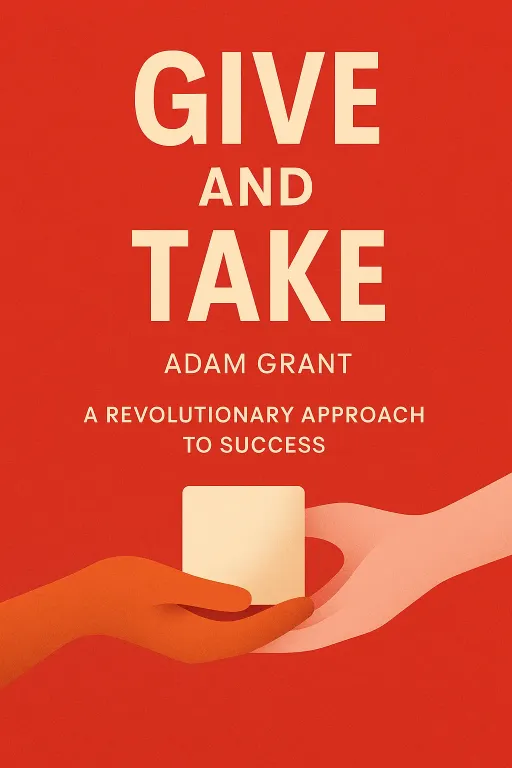
Nova: Exactly. And to unpack this, we're going to pull insights from two foundational texts that, when combined, offer a masterclass in ethical influence. First, we have Adam Grant’s seminal work, "Give and Take," a book that truly flipped conventional wisdom on its head. Grant, a renowned organizational psychologist at Wharton, brought rigorous scientific study to the often fuzzy world of generosity and reciprocity in the workplace, showing us the real data behind what works.
Atlas: That's fascinating, because most people probably think of "giving" as a soft skill, not a strategic advantage.
Nova: Absolutely. And then, we pair that with Robert Cialdini’s "Influence: The Psychology of Persuasion." Cialdini is famous for his truly immersive research, where he went undercover, working in various sales and marketing roles to understand the core psychological triggers of persuasion from the inside out. His insights are timeless.
Atlas: So, we're talking about a blend of strategic generosity and the hard science of persuasion. This sounds like a playbook for anyone who wants to build something bigger than themselves.
Nova: Precisely. And that brings us directly to our first deep dive: the strategic art of giving. Because it’s not just about being nice.
Deep Dive into Core Topic 1: The Strategic Art of Giving: Beyond Self-Interest
SECTION
Nova: So, Adam Grant, in "Give and Take," identifies three main reciprocity styles: givers, takers, and matchers. Takers are self-explanatory; they're always looking to get more than they give. Matchers aim for an even exchange. But givers, the truly selfless ones who offer help, share knowledge, and make introductions without expecting anything in return—you'd think they'd be at the bottom, right? Burned out, taken advantage of?
Atlas: That's definitely the conventional wisdom. For an analytical strategist, giving without an immediate, clear return sounds like a recipe for depleted resources and wasted effort. It feels inefficient.
Nova: And that's where Grant's research delivers a profound twist. He found that, initially, givers tend to be at the bottom of the success ladder. They get exploited. But, and this is the critical part, the successful people? They are also givers. The difference lies in how they manage their generosity. They are givers.
Atlas: Wait, so the same trait leads to both the lowest and highest levels of success? That's a paradox begging for explanation. How does a confident builder, someone focused on tangible growth, manage that?
Nova: It's about understanding the subtle art of managing your generosity. It's not about being a martyr; it's about being a connector, an enabler, a resource. Let me tell you about Eleanor, a rising star in the sustainable tech space. When she started her first venture, she wasn't just cold-calling investors or pitching constantly. Instead, she spent a significant amount of her time connecting people in the ecosystem.
Atlas: Connecting people? How does that directly translate to building her own company?
Nova: She'd hear about a startup struggling with a specific manufacturing challenge and remember a mentor who had solved something similar. She'd introduce them. She’d read a fascinating report on green energy financing and immediately forward it to three people she knew would benefit, adding a personal note. She’d offer to review a pitch deck for a peer, giving honest, constructive feedback, even though it took hours. She wasn't asking for anything in return, not even an acknowledgment.
Atlas: So, she was essentially building a web of goodwill and trust, almost invisibly. But still, for someone trying to launch something, time is a finite resource. How did she avoid being stretched too thin, or worse, being taken advantage of?
Nova: That's where the "strategic" part comes in. Eleanor chose her giving wisely. She focused on areas where she had genuine expertise or connections, making her contributions high-impact. She also learned to set boundaries, saying no when a request didn't align with her values or her limited capacity. She wasn't just giving; she was in her network's success.
Atlas: Ah, so it's not a blanket generosity. It's targeted. It’s like, in a complex system, you identify the leverage points where your input creates maximum positive ripple effects. That makes sense for an analytical mind.
Nova: Exactly. The outcome for Eleanor was profound. When her own company faced a critical funding gap, the network she had cultivated, people she had helped over years, rallied. Investors she’d connected, advisors whose decks she’d reviewed, even competitors she’d shared insights with, all came forward. They trusted her. They knew her character. Her proactive, wise giving paid off exponentially, not because she for it, but because she had genuinely invested in others' success first.
Atlas: That's a powerful narrative. It fundamentally shifts the idea of networking from a transactional "what can you do for me" to a foundational "how can I contribute to the ecosystem." It's about building a reputation as a genuine resource.
Nova: Precisely. And once you've built that foundation of trust and reciprocity through strategic giving, you then need to understand how to ethically leverage it, and other psychological principles, to truly multiply your impact. This naturally leads us to the science of persuasion.
Deep Dive into Core Topic 2: Mastering Ethical Persuasion: The Cialdini Playbook for Influence
SECTION
Nova: So, Robert Cialdini, through his extensive research, outlined six universal principles of persuasion. These aren't sneaky tricks; they're deeply ingrained human psychological shortcuts that, when understood, allow you to influence others ethically and effectively. Two of the most powerful, especially in the context of network building, are Reciprocity and Social Proof.
Atlas: Reciprocity, I can see how that connects to what we just discussed with Adam Grant. If Eleanor was giving, then people would feel a natural inclination to reciprocate.
Nova: Exactly! It's a fundamental human impulse. When someone does something for us, we feel an obligation to return the favor. Eleanor's giving activated this. But Cialdini shows it in action across so many contexts. Think about a free sample at a grocery store. You're more likely to buy the product, not just because you liked the taste, but because you feel a subtle obligation from receiving something for free.
Atlas: Okay, so it's not just about grand gestures. Even small acts of giving can trigger that response. What about Social Proof? How does that play into building influence?
Nova: Social Proof is incredibly potent. It's the idea that we look to others for cues on how to think, feel, and behave. If everyone else is doing it, it must be right. For building a network, or even a personal brand, this is huge.
Atlas: So, if I see a hundred thousand people following someone, I'm more likely to follow them too, even if I don't know why. That's a bit unsettling, but undeniably true in the age of AI-driven marketing and personal branding.
Nova: It is. But you can use it ethically. Consider Marcus, a community builder who wanted to launch a new line of eco-friendly home products. He knew he needed to build trust, not just push sales. His strategy wasn't just about the product; it was about the community around it.
Atlas: How did he apply these principles without it feeling like manipulation? Because for a practical achiever, the line between persuasion and manipulation can feel dangerously thin.
Nova: Marcus leveraged Reciprocity by offering free, high-value content—detailed guides on sustainable living, workshops on reducing household waste, even free starter kits for composting. He wasn't asking for sales; he was genuinely trying to help people live more sustainably. This built immense goodwill.
Atlas: So, he was giving value first, just like Eleanor, which then primed his audience for later engagement.
Nova: Exactly. Then, for Social Proof, instead of just saying "buy my product," he actively highlighted the positive experiences of his early adopters. He featured testimonials, shared user-generated content, and created forums where customers could discuss their positive results. He even showed statistics of how many people had already switched to his products and the collective environmental impact they were making.
Atlas: So, he wasn't just telling people his product was good; he was them that thought it was good, and that they were part of a larger, positive movement. That makes it feel less like a sales pitch and more like an invitation to join something meaningful. It's a strategic way to deepen impact.
Nova: Precisely. The result was a groundswell of genuine interest and advocacy. People weren't just buying a product; they were joining a cause, influenced by the genuine value Marcus provided and the evidence that others were already on board. His launch was incredibly successful, not through aggressive advertising, but through ethical influence and community building.
Atlas: That's a masterclass in applying these principles for tangible growth. It's about demonstrating value and belonging, rather than just asserting it. It shifts the focus from "what can I get" to "what can we achieve together," which I imagine resonates deeply with anyone trying to build something lasting.
Synthesis & Takeaways
SECTION
Nova: You've hit on the core insight, Atlas. Building influence beyond your direct control isn't about hoarding power or manipulating people. It’s a sophisticated dance between proactive, strategic giving, as Adam Grant brilliantly articulates, and understanding the deeply human, psychological levers of ethical persuasion, as Robert Cialdini reveals.
Atlas: So, it's really about engineering trust and genuine connection, not just transactional exchanges. It's a long game for tangible growth, where your reputation as a giver and an ethical influencer precedes you. It fundamentally changes how one approaches networking or even personal branding.
Nova: It does. It means every interaction, every shared insight, every act of help, contributes to a robust, reciprocal ecosystem. You create win-win situations, build profound trust, and your impact naturally multiplies, allowing you to achieve goals that would be impossible alone. It's the ultimate strategy for an analytical mind seeking to build with purpose.
Atlas: That's a powerful thought. It makes me rethink every single interaction I have. So, what's a tiny, practical step someone could take this week to start building this kind of network effect?
Nova: Here’s your tiny step, and it’s straight from the heart of these ideas: This week, identify one person you could genuinely help, without expecting anything in return. Just one genuine act of giving. It could be an introduction, a piece of advice, sharing a resource, or offering a skill.
Atlas: One person, one genuine act. That's incredibly actionable for a practical achiever. It takes the overwhelming concept of "networking" and distills it into something manageable and impactful.
Nova: Absolutely. Because true influence isn't about power over others; it's about power others. It's a collaborative force that amplifies your ability to achieve meaningful goals, not just for yourself, but for everyone around you. It’s about being a force multiplier in your own life and in the lives of others.
Atlas: That leaves me with a question for our listeners: How might rethinking your approach to giving and influencing change the trajectory of your biggest goals?
Nova: A fantastic question to leave us with. This is Aibrary. Congratulations on your growth!