The Network Advantage: Building Connections That Fuel Your Vision.
Golden Hook & Introduction
SECTION
Nova: You know, Atlas, when most people hear the word "networking," they often picture a sterile conference room, lukewarm coffee, and a stack of business cards that will probably just gather dust. It’s almost a dirty word.
Atlas: Oh, I know that feeling! It conjures images of awkward small talk and a desperate hunt for someone who can "do something for you." It feels… transactional. Like you're just tallying up contacts for a future favor.
Nova: Exactly! And that perception is precisely what holds most people back from truly unlocking the power of their connections. We’ve fundamentally misunderstood what a robust, supportive network actually is. It's not about what you can, but what you can.
Atlas: That’s a bold claim, especially for our listeners who are out there building, cultivating, seeking impact. They’re strategic thinkers; they need things to. Is this just a feel-good platitude, or is there real substance behind this idea of generous connection?
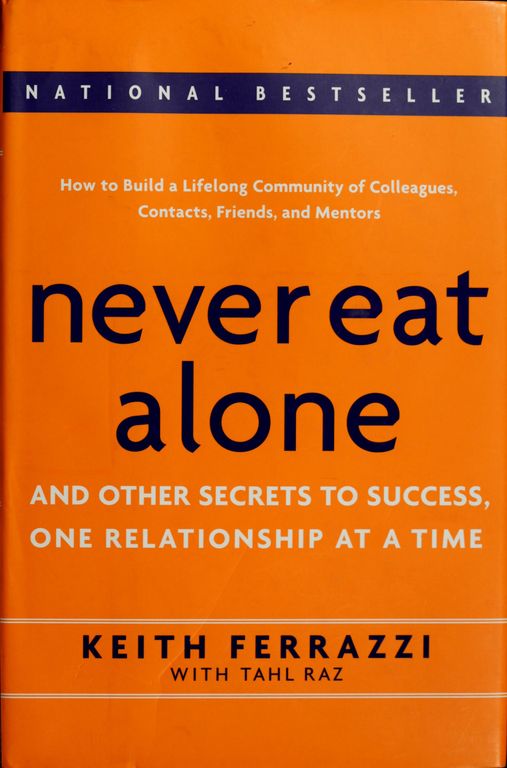
Nova: Substance, Atlas, and then some! Today, we're diving into two seminal works that completely reframe this concept: "Never Eat Alone" by the incredible Keith Ferrazzi, and "Give and Take" by the brilliant Adam Grant. Ferrazzi, a self-made man from a working-class background, rose to the pinnacle of corporate America not through cutthroat tactics, but by genuinely connecting with people. And Grant, a Wharton professor, backed up these principles with rigorous academic research, showing that generosity isn't just nice, it's a strategic advantage. It's about cultivating that thriving ecosystem you're always talking about.
The Art of Generous Connection
SECTION
Nova: So let's start with Ferrazzi's core philosophy. He argues that true networking isn't about 'networking' as we typically understand it. It's about building deep, authentic relationships where you're consistently adding value to others without immediately expecting anything in return. Think of it less like a vending machine, and more like a vibrant, interconnected garden.
Atlas: I can see how that would be appealing, especially for our listeners who cultivate entire ecosystems around their visions. But wait, how does someone who's strategizing, building, and often resource-constrained actually that? It sounds a bit like a luxury, not a necessity, when you're trying to scale ethically or build founder resilience.
Nova: That’s a great question, and it’s where Ferrazzi gets really practical. He doesn't advocate for aimless generosity. He talks about generosity. He emphasizes that you need to be proactive in reaching out, sharing insights, making introductions, and offering support. His own story is a masterclass in this. He started with very little, but by consistently offering help, making connections for others, and being genuinely interested in their success, he built an unparalleled network. He wasn't just collecting names; he was investing in people.
Atlas: Right, like being a connector. I’ve been thinking about the 'Cultivator' aspect of our audience. They’re not just growing products; they’re growing communities. So, is Ferrazzi saying we should all be like super-connectors, constantly facilitating? That sounds… exhausting, honestly. For someone embracing the messy middle and just trying to make progress, it might feel like another demand on their already stretched time.
Nova: Not exhausting, Atlas, but enriching! Ferrazzi's insight is that this isn't about being a social butterfly at every event. It's about being deeply present and thoughtful in your interactions. For instance, he'd suggest simple, consistent actions: remembering key details about people's lives, sending relevant articles, or making a thoughtful introduction between two people who could genuinely benefit from knowing each other. It’s about building a reputation as someone who gives freely, which then naturally attracts opportunities back to you. It's about quality over quantity, always. You're cultivating these relationships, not just harvesting them.
The Reciprocity Advantage
SECTION
Atlas: Okay, so if we’re talking about giving without immediate expectation, that leads me straight to Adam Grant. His work on 'givers' and 'takers' and 'matchers' in "Give and Take" really challenges conventional wisdom. But what about the dark side? Isn't there a risk that givers just get taken advantage of, especially in competitive environments? This is a concern for anyone building a legacy and needing to protect their vision.
Nova: Absolutely, and Grant tackles that head-on. He categorizes people into givers, takers, and matchers. Takers are self-focused, givers are other-focused, and matchers operate on an "eye for an eye" principle. What's fascinating about Grant's research is that while the performers are often givers—the selfless, burned-out ones who give too much without protecting themselves—the performers are givers.
Atlas: Whoa, that's incredibly counterintuitive. So you’re saying the most successful people are givers, but also the least successful? How does that even work? That makes me wonder about founder resilience – how do you give strategically without burning out?
Nova: It’s the nuance, Atlas, and it’s critical for anyone who values impact and legacy. Grant distinguishes between selfless givers, who sacrifice their own interests, and, who care about others but also protect their own interests. The successful givers are the latter. They're not doormats. They set boundaries, they know when to say no, and they understand that their own energy and resources are finite. They're still generous, but they're about it. They build a reputation for generosity that creates a reservoir of goodwill and trust, which then leads to unexpected opportunities, support, and insights.
Atlas: So basically you’re saying it’s not about being a naive philanthropist, but a strategic one. It's like building your inner strength, as we often talk about for founder resilience. You can't pour from an empty cup.
Nova: Exactly! Grant's work shows that givers build what he calls "social capital." It's not a direct quid pro quo, but an accumulation of goodwill that eventually pays dividends. Think of it as planting seeds. You don't know exactly which seed will grow into a fruit-bearing tree, or when, but by consistently planting and nurturing, your garden eventually flourishes. This is crucial for ethical scaling, too. When your network is built on genuine giving, your growth is supported by a community, not just transactions.
Synthesis & Takeaways
SECTION
Nova: So, bringing it all together, what Ferrazzi and Grant illuminate for us is that our network isn't just a list of contacts; it's a living, breathing ecosystem. It's a testament to your legacy. Nurturing it with authentic, generous connections isn't just a soft skill; it's a foundational strategy for anyone looking to build something truly impactful and lasting.
Atlas: That’s actually really inspiring. For our listeners who are architects of their own future, cultivating their vision, and seeking profound impact, this really reframes the whole idea of "networking." It shifts from a chore to a core value. So for someone who's already building, cultivating, and seeking impact, what's one tiny, powerful step they can take to shift their network from transactional to truly transformative?
Nova: It’s simple, yet profound. Reach out to one person in your network you haven't spoken to in a while. Offer a genuine compliment, share something you think they'd find valuable, or just check in. Do it with no agenda, no expectation of an immediate return. Just connect. That tiny step can be the beginning of cultivating a truly resilient and supportive network that fuels your grandest vision.
Atlas: I love that. It’s about making progress, not chasing perfection. Building those genuine bridges, one thoughtful connection at a time. It's the blueprint for an enduring legacy.
Nova: Precisely. It’s about realizing that your vision, no matter how grand, thrives in connection, not isolation.
Atlas: Absolutely.
Nova: This is Aibrary. Congratulations on your growth!