The Human Network: Mastering Connections Beyond the Transaction.
Golden Hook & Introduction
SECTION
Nova: Most people are doing networking all wrong. You're probably spending hours trying to 'network,' but are you actually building connections, or just collecting business cards that gather dust?
Atlas: Oh man, that hits home. I know I've been to those events where it feels more like a competitive sport than a conversation. You walk away with a stack of cards and feel… strangely emptier than when you went in. Like, did I actually with anyone?
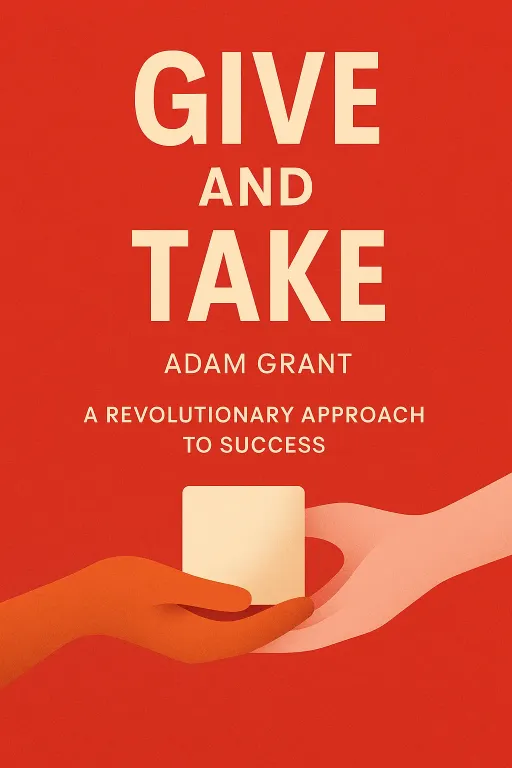
Nova: Exactly! It’s that feeling of isolation despite your efforts. Today, we’re diving into the transformative ideas around building genuine connections, drawing inspiration from the insights of organizational psychologist and bestselling author, Adam Grant, particularly his groundbreaking work on 'givers' and 'takers.'
Atlas: I'm curious, because for so many of us, especially those trying to build something solid and stable, the first instinct is always "what can get?" It's a survival mechanism. Our deep question today from the book is: "Consider your last networking interaction: Was your primary focus on what you could give, or what you could get?" I think a lot of us would reluctantly admit to the latter.
Nova: And that's precisely the blind spot we need to illuminate. That transactional approach, while seemingly logical, is actually the very thing sabotaging our efforts to build truly impactful relationships.
The Transactional Trap: Why Traditional Networking Leaves Us Empty
SECTION
Nova: Think about it: the classic networking event. You walk in, business cards in hand, rehearsing your elevator pitch. Your goal is to identify someone who can help you, someone you can "leverage" for a job, a client, or an introduction. You scan the room, looking for the "right" person, and once you've extracted what you need, or realize they can't offer anything immediate, you move on. It's a series of mini-transactions.
Atlas: But wait, isn't that just how business is done? How do you survive, let alone thrive, if you're not looking out for number one? For someone trying to build a resilient business or a stable career path, that transactional approach feels like a necessary evil sometimes. You're trying to build, and you need resources.
Nova: I hear you, and it’s a common misconception. But here’s the crucial part: that hyper-focus on immediate gains creates superficial connections. It signals to others that you're primarily self-interested, eroding trust before it even has a chance to form. Imagine you're at a party, and someone approaches you, clearly only interested in what you can do for them. How eager are you to help that person?
Atlas: Not very. I'd probably try to politely escape. It feels… disingenuous.
Nova: Precisely. This approach depletes what we call 'social capital.' It’s like constantly withdrawing from a bank account without making any deposits. You might get a few quick wins, but you're not building a lasting reservoir of goodwill or support. It leaves you feeling isolated, because you haven’t actually forged bonds; you’ve just executed a series of one-off exchanges.
Atlas: Can you give an example of someone who networked transactionally, and how that actually hurt their career or business in the long run? Because I think a lot of people see the immediate benefits of that kind of aggressive networking.
Nova: Absolutely. Consider 'Mark,' a high-achieving sales executive I once encountered. Mark was a master of the transactional approach. He could walk into any room, identify key players, make his pitch, and secure a sale or an introduction. His quarterly numbers were impressive, but his team retention was abysmal. He'd burn through contacts, always moving on to the next "target." When he faced a major professional crisis – a product recall that threatened his entire division – he found himself shockingly alone. His vast network of 'contacts' vanished because none of those relationships had any depth beyond the immediate transaction. There was no loyalty, no genuine desire to help him weather the storm, because he had never invested in them beyond what they could immediately provide. He literally had no one to call for support or advice, and it ultimately cost him his position.
The Giver's Advantage: Building Networks of Reciprocal Growth
SECTION
Nova: Mark’s story highlights the critical flaw in the transactional mindset. But what if there's a fundamentally different, and ultimately more effective, way to approach this? This brings us to a profound shift, inspired by Adam Grant's insights into what he calls "givers." He argues that givers, those who focus on contributing value to others without immediate expectation of return, often achieve greater success than takers or matchers.
Atlas: Wait, so you're saying being 'nice' is actually a strategy? That sounds a bit naive, especially when you're trying to build a resilient business in a competitive world. What about the 'takers' in the room? How does a 'giver' not get completely exploited and end up doing everyone else's work for them? For a strategic builder, that feels like a massive risk.
Nova: That's a great question, and it's where the nuance comes in. Effective giving isn't about being a doormat or a martyr. It’s about being with your generosity. It’s about building a reputation as someone who is helpful, knowledgeable, and genuinely invested in others' success. When you consistently offer value – whether it’s an insightful idea, a helpful introduction, or simply your time and attention – you're making deposits into that social capital bank account. Over time, this builds an enormous reservoir of goodwill.
Atlas: So it's not just about random acts of kindness, it's about building a reputation, almost like a 'generosity bank account'? That makes a lot more sense for someone who's building a future. Tell me more about how this actually plays out.
Nova: Think of 'Sarah,' a software developer. Instead of just coding her own projects, Sarah dedicates a few hours a week to answering questions on online forums, helping junior developers debug their code, and sharing open-source tools she's created. She doesn't ask for anything in return, she just genuinely enjoys solving problems and supporting her community. Over time, Sarah became known as an invaluable resource. When she decided to launch her own startup, she didn't have to network in the traditional sense. Investors and talented engineers sought out, because her reputation as a giver had preceded her. People were eager to support her because she had consistently supported them, or their peers, for years. Her network wasn't built on what she, but on what she.
Atlas: That's a perfect example. It sounds like she wasn't just being altruistic; she was building an incredibly robust, reciprocal network through authentic contribution. That’s a powerful mechanism for collective growth and support, especially for someone who values purpose and stability.
Nova: Exactly. It's about understanding that long-term success, resilience, and even personal fulfillment aren't found in isolated transactions, but in the strength and reciprocity of your collective relationships. When you focus on giving, you're not just helping others; you're building a foundation of trust and support that becomes your greatest asset.
Synthesis & Takeaways
SECTION
Nova: So, the core shift here is profound: moving from the pressure of transactional networking, where everyone is trying to extract something, to the liberating power of genuine contribution. It's about recognizing that being a strategic giver creates a far more resilient and rewarding path to success and meaning.
Atlas: For our listeners who are strategic builders and purpose seekers, it sounds like this isn't just a soft skill, but a foundational strategy for both resilience and meaning. It's about investing in the ecosystem, not just extracting from it. It aligns perfectly with building a fulfilling future, where your work and your connections have deeper value.
Nova: Absolutely. So, consider your next interaction, whether it's at an event, online, or even just with a colleague. Instead of asking yourself, 'What can I get from this person?', try asking, 'How can I genuinely help this person, or introduce them to someone who can?' Even a small act of giving can start a powerful ripple effect, transforming your network into a true human network.
Atlas: That's a great challenge. It reframes the entire interaction from a potential chore into an opportunity to genuinely connect and contribute. And I imagine that feeling of contributing brings its own kind of satisfaction, too.
Nova: It absolutely does. It’s a path to building not just a successful career, but a truly meaningful life.
Nova: This is Aibrary. Congratulations on your growth!