Stop Chasing Perfection, Start Embracing 'Good Enough': The Guide to Shipping and Learning.
9 minGolden Hook & Introduction
SECTION
Nova: What if I told you the single biggest enemy to your brilliant ideas isn't a lack of talent or resources, but something far more insidious: your relentless pursuit of perfection? It’s a paradox, isn’t it?
Atlas: Whoa, that's a bold claim, Nova. I mean, common sense tells us that perfection is the goal. We're always striving for the best, right? For a lot of our listeners, the idea of chasing perfection might feel… counterintuitive, maybe even a little scary.
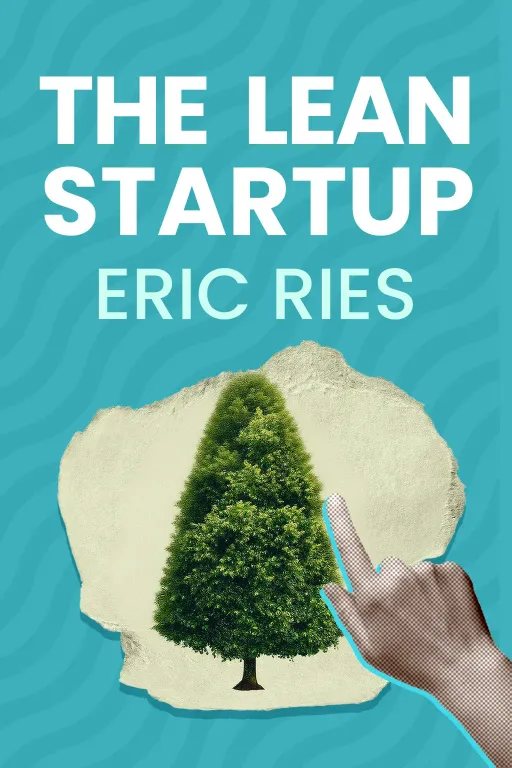
Nova: Exactly! And that's the core insight we're dissecting today, drawn from a powerful synthesis of modern thinking encapsulated in a guide we're calling "Stop Chasing Perfection, Start Embracing 'Good Enough': The Guide to Shipping and Learning." This isn't a single author's manifesto, but a brilliant distillation of wisdom from influential minds like Eric Ries, the visionary behind "The Lean Startup," and David Allen, whose "Getting Things Done" revolutionized productivity. It's a modern compass for a world that demands both speed and quality.
Atlas: So, it's less about a specific book and more about a strategic philosophy. I like that. It immediately makes me think about all those projects I've seen, or even personal goals, that just… never quite launch.
Nova: Precisely. And that brings us headfirst into our first core idea: the very real peril of perfectionism.
The Peril of Perfectionism: Analysis Paralysis and Missed Opportunities
SECTION
Nova: Many truly brilliant ideas never see the light of day, not because they're bad ideas, but because their creators are trapped in an endless loop of trying to make them flawless. This pursuit of flawlessness often leads to what we call "analysis paralysis."
Atlas: Oh, I know that feeling. It's like you're so busy polishing the concept, refining the details, that you never actually… do the thing. It’s the invisible quicksand of ambition.
Nova: It absolutely is. Imagine a brilliant inventor. Let's call her Dr. Anya Sharma. She has this groundbreaking design for a new, eco-friendly energy device. It could change the world. But Dr. Sharma is a perfectionist. She spends five years, then seven, then ten, tweaking, optimizing, running endless simulations in her lab. She wants it to be absolutely perfect before she shows it to anyone, before she even builds a prototype for external testing.
Atlas: Right, because what if it's not perfect? What if someone points out a flaw? That's a huge fear.
Nova: Exactly. But while she's perfecting, the world moves on. Other, less perfect, but solutions emerge. Technology shifts. The market changes. By the time Dr. Sharma finally feels her device is 'perfect' – if she ever does – it might be irrelevant, or someone else has already shipped something similar, albeit 'good enough,' and captured the market. The tragedy isn't just that her device might be outdated; it's that she missed out on years of crucial feedback.
Atlas: Oh man, that's such a powerful example. It makes me think of all the creators out there, the entrepreneurs, even someone just trying to start a new hobby. They get stuck in this loop where the fear of not being perfect outweighs the desire to actually. But isn't perfectionism a good thing? Don't we high quality? For a lot of our listeners who pour their heart into their work, this might feel like a betrayal of craftsmanship.
Nova: That's a critical distinction, Atlas. It's not about abandoning quality altogether. It's about understanding that 'perfect' is often an elusive, moving target, especially at the outset. The "peril" isn't quality itself, but the it causes. The missed opportunities for learning. When Dr. Sharma spent those ten years, she wasn't getting real-world data. She was guessing. And even the most brilliant guesses can be wrong if they're not tested against reality.
Atlas: So, the real cost of perfectionism isn't just the time, it's the you never received, the lessons you never learned from actual users or the real world. That makes so much sense. It's like trying to learn to swim by reading every book on swimming, but never getting in the water.
Nova: A perfect analogy! You can read all you want, but your body needs to feel the water, adjust, make mistakes, and learn. That brings us to the liberating alternative: embracing 'good enough.'
Embracing 'Good Enough': The Power of Shipping and Iteration
SECTION
Nova: So if perfectionism is the trap, what's the escape route? It's all about strategically choosing 'good enough' to start, not as a compromise on your vision, but as a deliberate strategy for learning and growth.
Atlas: Okay, so 'good enough' isn't about being sloppy. It's about intentionality. But how do you actually that? What does 'good enough' even look like in practice?
Nova: This is where Eric Ries's concept of the "Minimum Viable Product," or MVP, from "The Lean Startup" becomes incredibly powerful. An MVP isn't a shoddy product; it's the version of a new product that allows a team to collect the maximum amount of validated learning about customers with the least amount of effort. It's the absolute simplest thing you can build to test your core hypothesis with real users.
Atlas: Can you give an example? Because for a lot of our listeners who have big, complex projects, whether it's a new business idea or even just organizing their home, how do you break something down into an 'MVP' without feeling like you're just cutting corners?
Nova: Absolutely. Let's say you want to launch a new fitness app. Your 'perfect' vision might include AI-powered custom workouts, social sharing, gamification, a built-in nutrition tracker, and a meditation module. That's a massive undertaking. An MVP, however, might just be a simple app that tracks daily steps and lets users manually input their water intake. It tests the core idea: "Will people use an app to track basic health metrics?" You ship that. You get real users, you see how they interact, what they complain about, what they praise.
Atlas: I see! So the MVP isn't the finish line; it's the starting gun. And the feedback you get from those initial users is gold. It tells you what to build next, instead of you guessing in a vacuum. It’s like, you don’t build a whole restaurant and then realize nobody likes your main dish. You start with a food truck, test a few dishes, and then scale up.
Nova: Exactly! And the beauty of this is that it directly addresses the 'how' for those big, complex projects you mentioned. This is where David Allen's "Getting Things Done" methodology synergizes beautifully. Allen emphasizes breaking down overwhelming tasks into "next actions." If your goal is to "launch a fitness app," that's too big. The "next action" for your MVP might be "research app development platforms," then "sketch wireframes for step tracking," then "find a freelance developer for MVP."
Atlas: That's a great way to put it. So it’s not about being sloppy; it’s about strategic decomposition. You can't build a skyscraper all at once. You build the foundation first, then the first floor, and so on, testing and getting permits as you go. Each phase is a 'good enough' version of that specific part of the project.
Nova: Right. Each 'next action' is a mini-shipment, a tiny step that moves you closer to your 'good enough' launch. It’s about creating momentum, gathering incremental feedback, and learning your way forward, rather than waiting for an elusive, perfect moment that may never arrive. It’s about building a learning machine, not just a product.
Atlas: That makes so much more sense. It reframes 'good enough' from a compromise to a competitive advantage. It's about being agile, not just busy.
Synthesis & Takeaways
SECTION
Nova: The synergy here is incredibly powerful. Ries gives us the 'what' – ship an MVP, a 'good enough' version to learn. Allen gives us the 'how' – break it down into manageable, actionable steps. Together, they create a potent antidote to analysis paralysis and the hidden costs of perfectionism. It's about moving from ideation to execution with confidence, knowing that every small step is a learning opportunity.
Atlas: It really reframes 'good enough' not as a sign of laziness, but as a dynamic strategy for continuous improvement and real-world intelligence gathering. It’s about progress over paralysis.
Nova: So, here's a challenge for our listeners. Think about one project you've been sitting on, one idea you've been nurturing, waiting for it to be 'perfect.' What is the absolute simplest, smallest version you could put out there, even if it's just to one person, or even just for your own feedback, within the next 24 hours? What's your tiny, learnable step?
Atlas: That's a powerful challenge. It's about moving from intention to action, and gathering that crucial real-world intelligence you talked about. Don't wait for perfect; start with good enough to learn and grow.
Nova: Absolutely. Take that step. You'll be amazed at how much you learn and how much faster you progress.
Atlas: You heard it here first! Take that tiny step.
Nova: This is Aibrary. Congratulations on your growth!